















Dead stock refers to inventory that sits unsold for long periods and no longer generates value for a company. When products remain idle, they stop supporting revenue and instead drain cash, space, and attention. Therefore, dead stock quietly weakens daily operations if left unmanaged.
Holding excess inventory creates a constant trade-off. Stocking too little limits sales, yet stocking too much locks money into items customers no longer want. As a result, products that do not move eventually shift from assets into financial burdens.
For companies managing wide distribution networks, a stock management system helps maintain control and prevent inventory risks. Without clear monitoring, slow sellers can turn into dead stock unnoticed, affecting cash flow and warehouse efficiency.
Key Takeaways
Dead stock is inventory with no realistic chance of selling, often after 12 months of zero movement. It consumes cash, space, and operational attention without delivering returns.
Dead stock ties up working capital, raises holding costs, and weakens profitability. When left unchecked, it limits investment in fast-moving, revenue-generating products.
Turnover ratios, Days Sales of Inventory, and ageing reports reveal products losing demand. Early detection allows corrective action before inventory becomes a total loss.
Accurate forecasting, flexible ordering, SKU reduction, and cross-team alignment prevent inventory from stagnating. Prevention reduces losses more effectively than clearance.

What Is Dead Stock?

Dead stock describes inventory that has not sold or moved for around 12 months and shows little chance of future sales. These items occupy storage space while steadily losing value. Over time, they deliver no return and become cost centres.
Most inventory enters a warehouse with expected turnover. However, when demand changes or forecasts miss the mark, some products stall. Once sales stop entirely, the business must classify the inventory as dead and recognise its financial impact.
Understanding this definition matters because dead stock needs decisive action. Unlike slow sellers, these items rarely recover. Therefore, the focus shifts from profit to loss control and space recovery.
Dead Stock vs Slow-Moving Stock vs Obsolete Stock
Inventory does not stagnate overnight. Instead, products pass through different conditions that require different responses. Clear classification helps businesses act before losses deepen.
| Features | Slow-Moving Stock | Dead Stock | Obsolete Stock |
|---|---|---|---|
| Sales Activity | Low | None | None |
| Demand | Weak | Gone | Irrelevant |
| Usability | Functional | Functional | Not usable |
| Recommended Action | Promote | Clear | Dispose |
Slow-moving stock still attracts buyers, even if sales are infrequent. Businesses can revive demand using discounts, bundles, or better placement.
Dead stock, however, has no realistic chance of selling at standard pricing. At this point, companies must remove it quickly to limit further costs.
Obsolete stock loses relevance entirely. New models, technology shifts, or regulations remove its value altogether. While all obsolete stock is dead, not all dead stock is obsolete.
Why Dead Stock Matters for Businesses
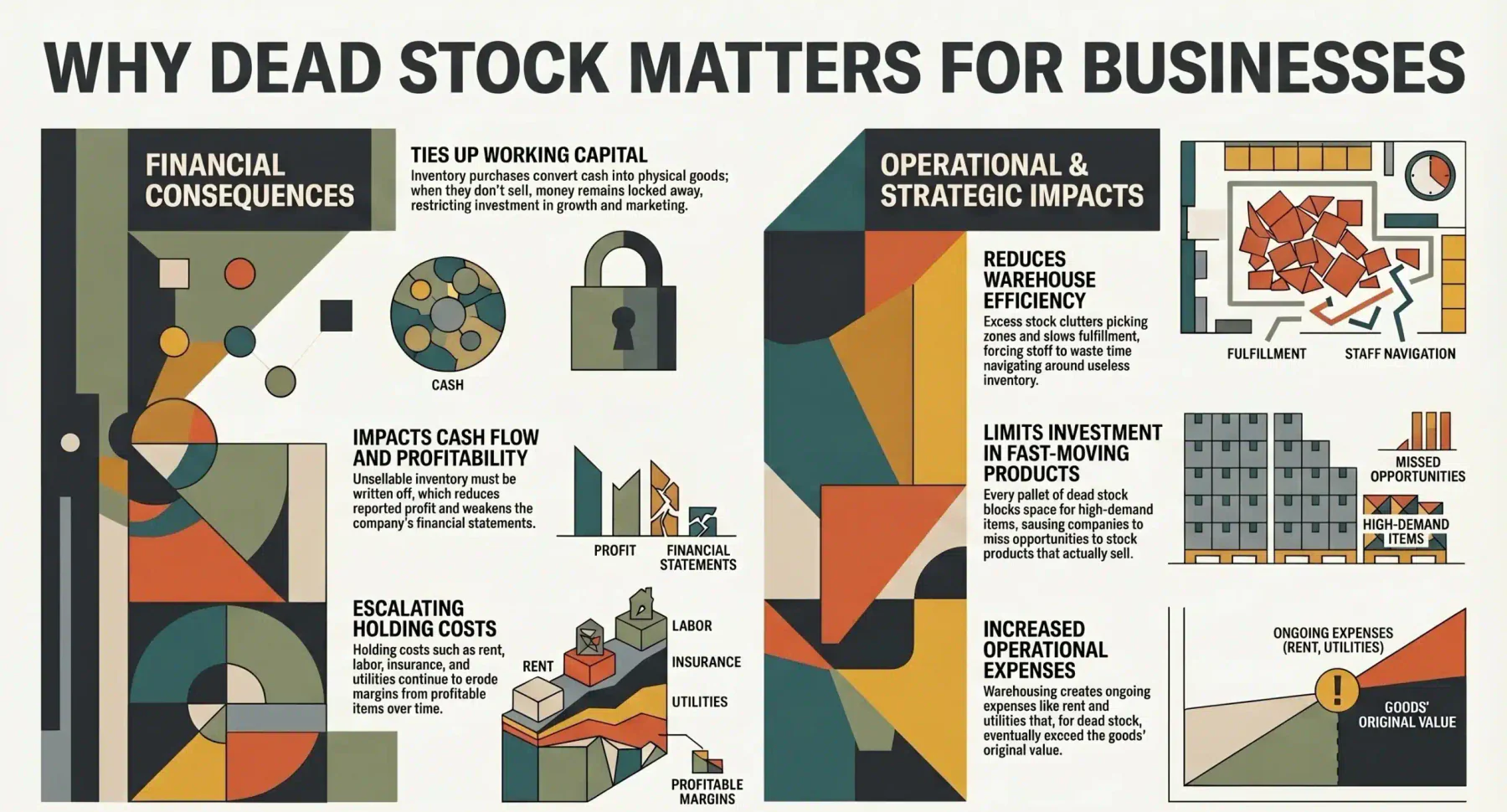
Dead stock affects more than warehouse appearance. It directly impacts cash flow, profit margins, and operational efficiency. Addressing it early protects financial stability.
1. Ties up working capital
Inventory purchases convert cash into physical goods. When those goods do not sell, money remains locked away. This restricts investment in growth, marketing, or new products, especially for smaller companies managing tight cash flow.
2. Increases storage and holding costs
Warehousing creates ongoing expenses such as rent, labour, insurance, and utilities. Dead stock consumes space without generating income. Over time, these costs exceed the original value of the goods.
3. Impacts cash flow and profitability
When inventory becomes unsellable, the business must write it off. This reduces reported profit and weakens financial statements. Meanwhile, holding costs continue to erode margins from profitable items.
4. Reduces warehouse efficiency
Excess stock clutters picking zones and slows order fulfilment. Staff waste time navigating around useless inventory, which raises labour costs and increases fulfilment delays.
5. Limits investment in fast-moving products
Every pallet of dead stock blocks space for high-demand items. As a result, companies miss opportunities to stock products that actually sell, allowing competitors to move faster.






Common Causes of Dead Stock
Dead stock rarely comes from one mistake. Instead, it develops through repeated misjudgements across purchasing, forecasting, and supply planning.
1. Poor demand forecasting
Weak forecasting leads to incorrect order volumes. When businesses rely on outdated data or assumptions, they overestimate demand and accumulate excess stock.
2. Overstocking and bulk purchasing
Bulk discounts appear attractive but often create oversupply. Although unit costs drop, storage expenses and write-offs quickly outweigh the savings.
3. Seasonal demand changes
Seasonal products sell within narrow timeframes. When timing or volume misses the mark, leftover items lose relevance and stop moving altogether.
4. Long supplier lead times
Extended lead times push companies to over-order as protection against stockouts. By the time goods arrive, demand may already have faded.
5. Product obsolescence and market trends
Trends fade quickly. When businesses continue ordering declining products, inventory becomes outdated before it leaves the warehouse.
Types of Inventory Most Affected by Dead Stock
Certain inventory types face higher risk due to limited selling windows or rapid value loss.
- Seasonal products
Items linked to weather or holidays lose demand immediately after the season ends. - Trend-based or fashion items
Styles shift quickly, making last season’s designs difficult to sell. - Perishable goods
Expiry dates turn unsold stock into total loss and disposal costs. - Discontinued or replaced products
New releases reduce interest in older versions overnight. - Excess safety stock
Overestimating buffer stock leads to permanent oversupply.
How to Identify Dead Stock Early
Early detection limits financial damage. Businesses that monitor inventory health can act before items lose all value.
Tracking inventory turnover and Days Sales of Inventory reveals slowing products. When these figures worsen, they signal reduced demand and rising risk.
Inventory ageing reports group stock by time in storage. Regular reviews highlight items drifting into danger zones, allowing teams to intervene earlier.
ABC analysis also helps prioritise attention. While low-value items move slowly by nature, zero movement should trigger immediate review.
How to Reduce and Prevent Dead Stock
Preventing dead stock is key to managing stock, protecting cash flow, and keeping warehouses productive. Instead of focusing only on clearance, companies benefit from tighter planning and coordination. Long-term control starts before orders are placed.
Accurate demand forecasting aligns purchasing with real sales patterns. By using live sales data and seasonal indicators, businesses order closer to actual needs. This reduces excess stock risk significantly.
Supplier flexibility and SKU rationalisation further strengthen prevention. Smaller order quantities limit exposure, while trimming underperforming products simplifies inventory. Together, these actions reduce the chance of stagnation.
Clear communication across sales, marketing, and procurement keeps stock aligned with demand. Promotions, slow sellers, and new launches stay visible to all teams. As a result, inventory decisions stay informed and timely.
Ways to Clear Existing Dead Stock

Once inventory qualifies as dead stock, delaying action only increases losses. The goal then shifts from margin recovery to freeing cash and space. Clear decisions help stop further cost accumulation.
Discounting moves dead stock quickly through clearance sections or seasonal sales. Prices must reflect urgency rather than original cost. This approach attracts price-sensitive buyers and clears shelves faster.
Bundling combines unsellable items with popular products to boost perceived value. Customers see added benefit, while the business reduces stagnant inventory. At the same time, warehouse space opens up.
Liquidation offers fast removal when direct sales no longer work. Although recovery rates stay low, stock exits the warehouse immediately. This improves cash flow and operational efficiency.
Donations allow companies to claim tax deductions while supporting community causes. This option also strengthens brand perception. It turns a total loss into partial value recovery.
Recycling or scrapping becomes necessary when no resale option exists. While it generates no income, it stops ongoing holding costs. Compliance with waste rules also protects the business from penalties.
How Inventory Software Helps Manage Dead Stock
Manual tracking struggles to keep up with complex inventory movement. As product ranges grow, visibility gaps appear and risks increase. Inventory software, including inventory solution options in Australia, gives businesses clearer control over stock health
Real-time inventory visibility allows teams to see exact stock levels across all locations. Managers track movement, ageing, and availability from one dashboard. As a result, slow-moving items no longer go unnoticed.
Automated alerts highlight SKUs with declining or zero sales activity. Instead of searching reports manually, teams receive notifications early. This allows corrective action before stock becomes dead.
Better data alignment also improves coordination between purchasing, sales, and warehouse teams. Everyone works from the same information. Therefore, inventory decisions become faster and more accurate.
Industry Use Cases: How Different Sectors Manage Dead Stock
Different sectors face dead stock for different reasons, then respond with tailored solutions. Understanding these patterns helps businesses choose clearance strategies that suit their products and customers.
Fashion and apparel
Fashion retailers deal with short trend cycles and seasonal demand. Many move unsold items through outlet channels or off-price partners to recover value. Others donate or repurpose materials to reduce waste and storage pressure.
Consumer electronics
Electronics sellers often face rapid product replacement. Older accessories move through bundles or bulk sales to resellers. When items lose all relevance, certified recycling programs recover materials and ensure compliance.
Food and beverage
Expiry dates make stock control critical in this sector. Retailers discount items close to their use-by dates to drive quick sales. Unsellable goods often convert into compost or animal feed to limit disposal costs.
Moving from awareness to ac
Implementation Steps for a Dead Stock Reduction Strategy
tion requires structure and discipline. A clear approach helps businesses remove stagnant inventory without disrupting daily operations.
- Conduct an inventory audit
Run detailed reports to identify SKUs with prolonged zero sales. Define clear criteria so all teams assess dead stock consistently. - Isolate affected inventory
Move unsellable items away from active picking zones. This improves fulfilment speed and keeps operations efficient. - Choose a removal method
Discount, bundle, liquidate, donate, or dispose based on item value. Select the option that limits further losses. - Update records accurately
Record write-offs and adjustments promptly. This ensures clean financial reporting and proper tax treatment.
Common Pitfalls in Dead Stock Management
Even with a clear plan, companies often make mistakes when dealing with dead stock. Recognising these issues early helps limit losses and prevents the same problems from recurring.
- Holding onto sunk costs
Many companies delay heavy discounting because they want to recover the original spend. This decision only increases storage and holding costs. Accepting the loss early allows capital to be redirected into products that actually sell. - Fixing outcomes instead of causes
Clearing dead stock without reviewing forecasting, purchasing volumes, or supplier terms leads to repeat issues. Businesses must address why the stock accumulated, not just remove it. - Overlooking holding expenses
Storage, insurance, utilities, and depreciation add up quietly over time. When these costs go unmeasured, decisions get delayed and losses grow larger than expected.
Advanced Practices for Preventing Dead Stock
Strong planning turns inventory systems into a platform for streamlining inventory operation, reducing dead stock risk. Instead of reacting late, businesses can anticipate demand shifts earlier and make prevention part of daily control.
Predictive analytics improves forecasting accuracy by analysing real-time sales data, customer behaviour, and external signals. This approach allows businesses to adjust purchase volumes before demand declines. Therefore, over-ordering becomes far less likely.
Just-In-Time inventory models reduce the amount of stock held at any given time. Goods arrive closer to actual demand, which limits exposure to changing trends. When suppliers perform reliably, this model keeps warehouses lean and flexible.
Dynamic reorder points adjust automatically as sales patterns change. When demand slows, the system reduces replenishment levels accordingly. This prevents declining products from being reordered and turning into dead stock.
Conclusion
Dead stock drains cash flow, limits warehouse efficiency, and blocks growth when left unchecked. By identifying stagnant inventory early and acting decisively, businesses protect working capital and keep operations agile. Clear visibility and disciplined planning make the difference between control and constant loss.
Long-term success comes from prevention, not repeated clearance. Strong forecasting, flexible purchasing, and accurate data reduce risk before inventory stalls. For tailored guidance, you can get free consultation to assess stock health and improvement opportunities.

Frequently Asked Question
Dead stock should be reviewed at least quarterly, with monthly reviews recommended for high-volume or seasonal businesses. Regular reviews prevent inventory from turning into write-offs unnoticed.
In limited cases, dead stock can be reintroduced through repackaging, alternative sales channels, or new customer segments. Success depends on timing and remaining product relevance.
The decision depends on accounting and tax strategy. Immediate write-offs improve inventory accuracy, while gradual write-downs can reduce short-term financial impact.
Dead stock can overstate inventory values under FIFO, LIFO, or weighted average methods if not adjusted. Proper write-downs ensure financial statements reflect true asset value.