















A quotation template helps businesses create clear and consistent price estimates for goods or services. It ensures important details are included while saving time on repetitive formatting and calculations.
For Australian businesses, a well-structured quote also supports professionalism and reduces the risk of pricing disputes. It can improve communication with clients and help convert quotes into confirmed sales faster.
In this guide, you will learn what a quotation template is, what it should include, common types, and how to write a compliant and effective quote.
Key Takeaways
Understand the fundamentals of business quoting.
Ensure your quotes are legally compliant.
Explore various formats for different industries.
Step-by-step guide to crafting winning quotes.

What Is a Quotation Template?

A quotation template is a pre-formatted document used to provide pricing details before a sale is confirmed. It outlines the scope of work, costs, and conditions so the client can review and approve the offer.
Businesses use quotation templates to standardise their quoting process and ensure all key information is included. This reduces errors and improves consistency across teams.
Quotation templates can be created in Word, Excel, PDF, or integrated into a platform for sales leads management and ERP systems.
What a Quotation Template Must Include in Australia
A complete quotation template should include key business, pricing, and legal details. Including the right information helps prevent misunderstandings and supports smoother transactions.
1. Business details
Include your business name, logo, address, contact details, and ABN. This helps identify your business clearly and builds trust with the client.
2. Quote number, date issued, and validity period
Assign a unique quote number and include the issue date. Adding a validity period helps avoid disputes if pricing changes over time.
3. Client and project or job site details
Include the client’s name, contact information, and job or project details. This ensures the quote is clearly linked to the correct scope of work.
4. Itemised pricing
Break down each product or service with quantities and unit prices. Businesses may also include applicable discounts or promotional pricing as a separate line item for clarity. This improves transparency and makes it easier for clients to understand the costs.
5. GST treatment
Clearly state whether GST is included or shown separately. This is important for compliance and helps avoid confusion about total pricing.
6. Payment terms and conditions
Include payment deadlines, methods, and any conditions such as deposits or milestone payments. Clear terms help set expectations early.
7. Acceptance block
Provide a section for the client to sign or confirm acceptance. This helps formalise the agreement and move the quote toward conversion.

Types of Quotation Templates
Different businesses use different types of quotation templates depending on their industry and services. Choosing the right type helps match the format to the job.
1. General business quotation
A general quotation template is suitable for most industries and includes standard pricing, terms, and client details. It is flexible, widely used, and fits into any sales funnel pipeline without complex setup.
2. Quotation letter
A quotation letter presents pricing in a more formal written format. It typically outlines the scope of work, timelines, and payment terms alongside the cost breakdown. It is often used for professional services or formal business communication where a structured, written record of the offer is required.
3. Service quote
A service quote focuses on labour, time, and service-based pricing. It may include hourly rates, project fees, or service packages.
4. Construction and trade quote
This type of quote is used by builders and trades. It often includes materials, labour, timelines, and site-specific details.
5. Product sales quote
A product quote lists physical goods, quantities, unit prices, and totals. It is commonly used in retail, wholesale, and distribution.
Ready-to-Use Quotation Templates
Using ready-made templates can help businesses save time and maintain a consistent format. Different templates can be used based on business needs.
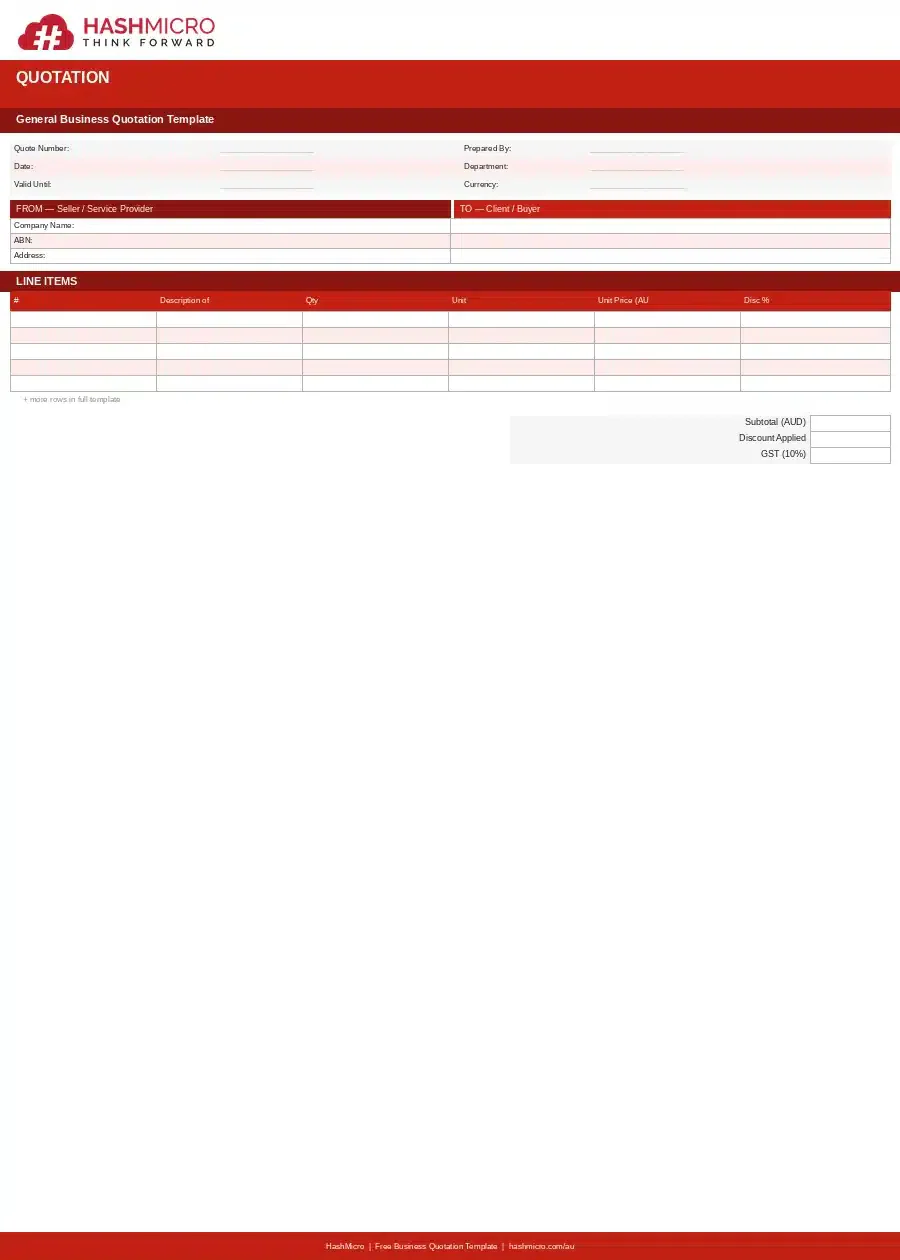
1. General business quotation template
This template includes standard fields such as business details, itemised pricing, GST, and payment terms. It is suitable for most general quoting needs.
General Business Quotation Template
2. Quotation letter template
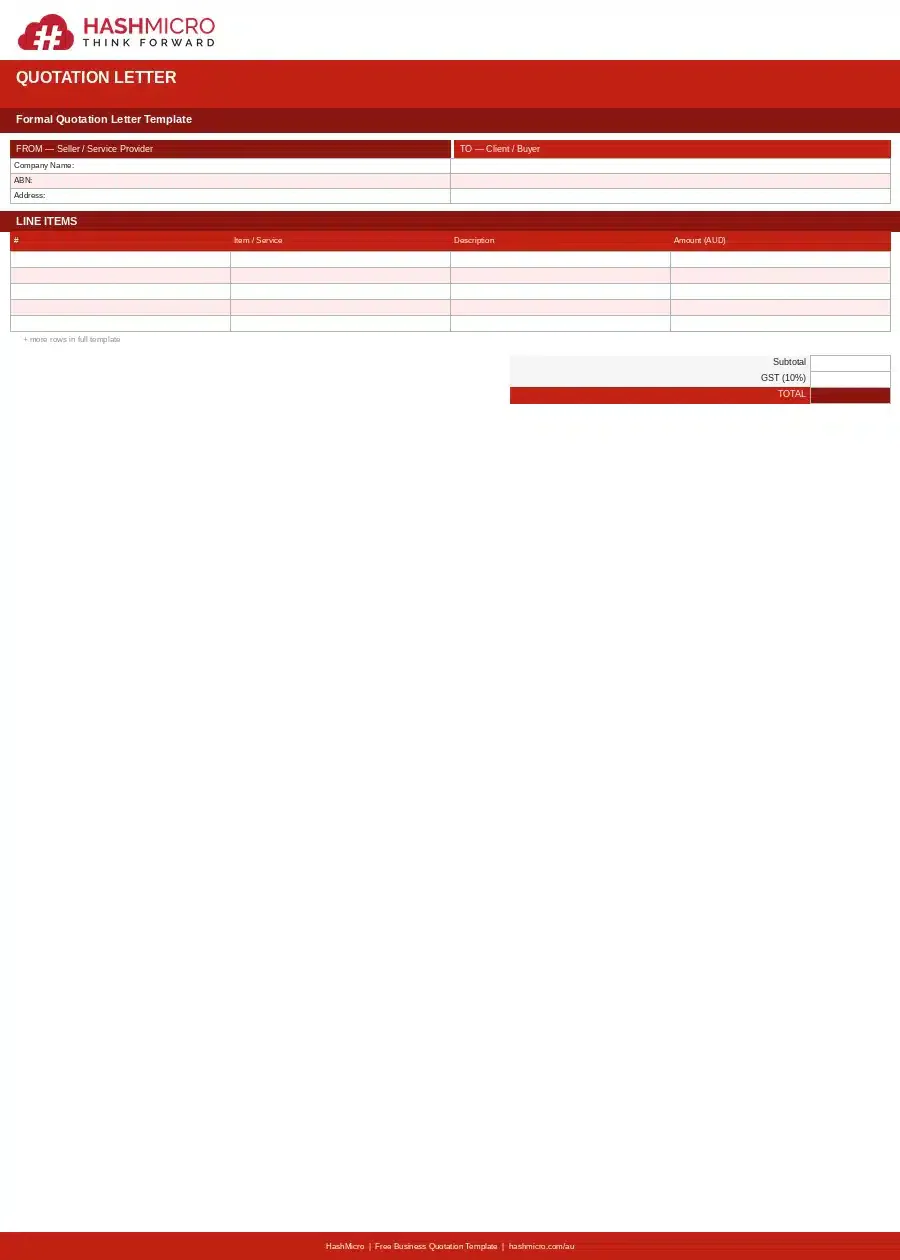
A quotation letter template is ideal for formal communication. It combines pricing details with a professional written message.
Quotation Letter Template
3. Product sales quote template
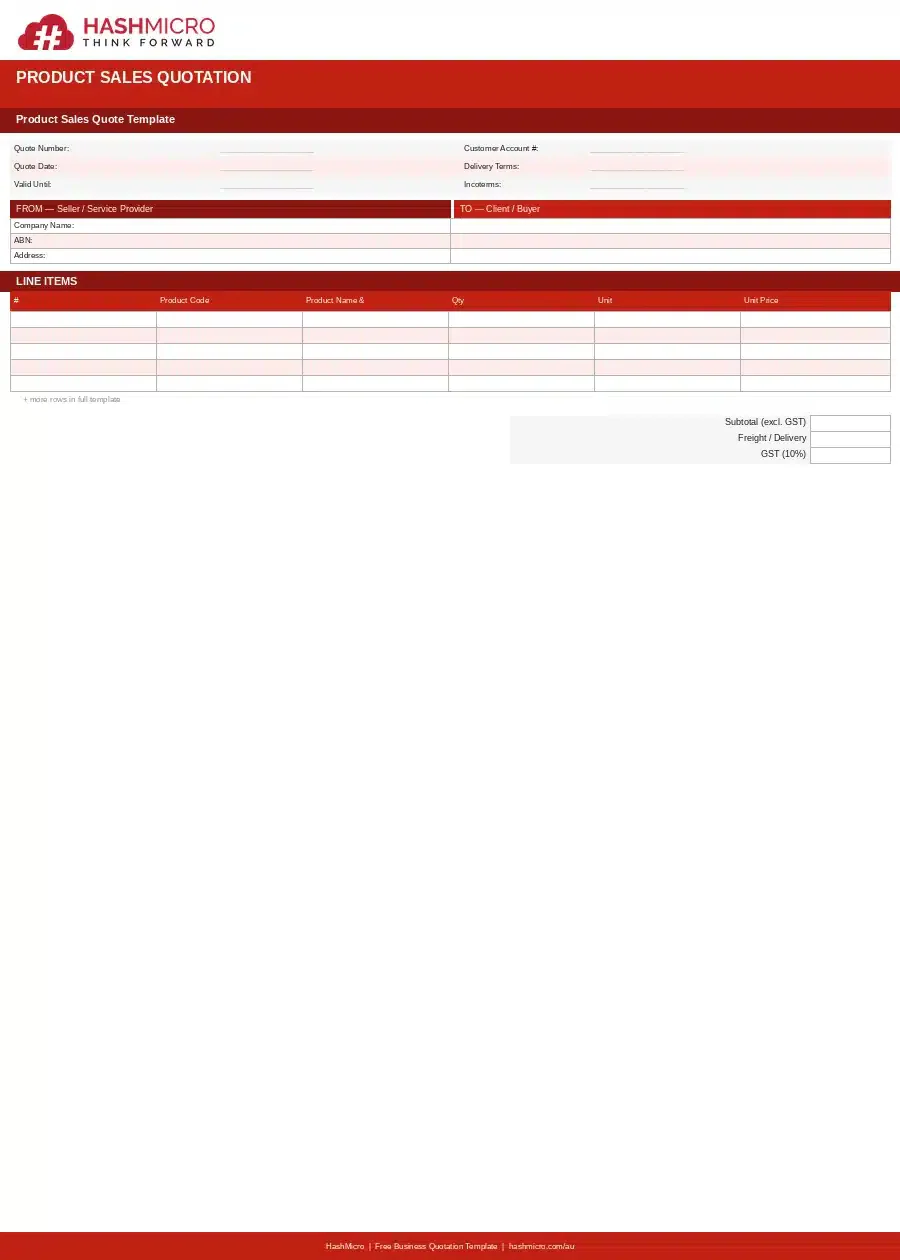
This template focuses on listing products, quantities, and pricing clearly. It is useful for businesses selling goods.
Product Sales Quote Template
4. Service quote template
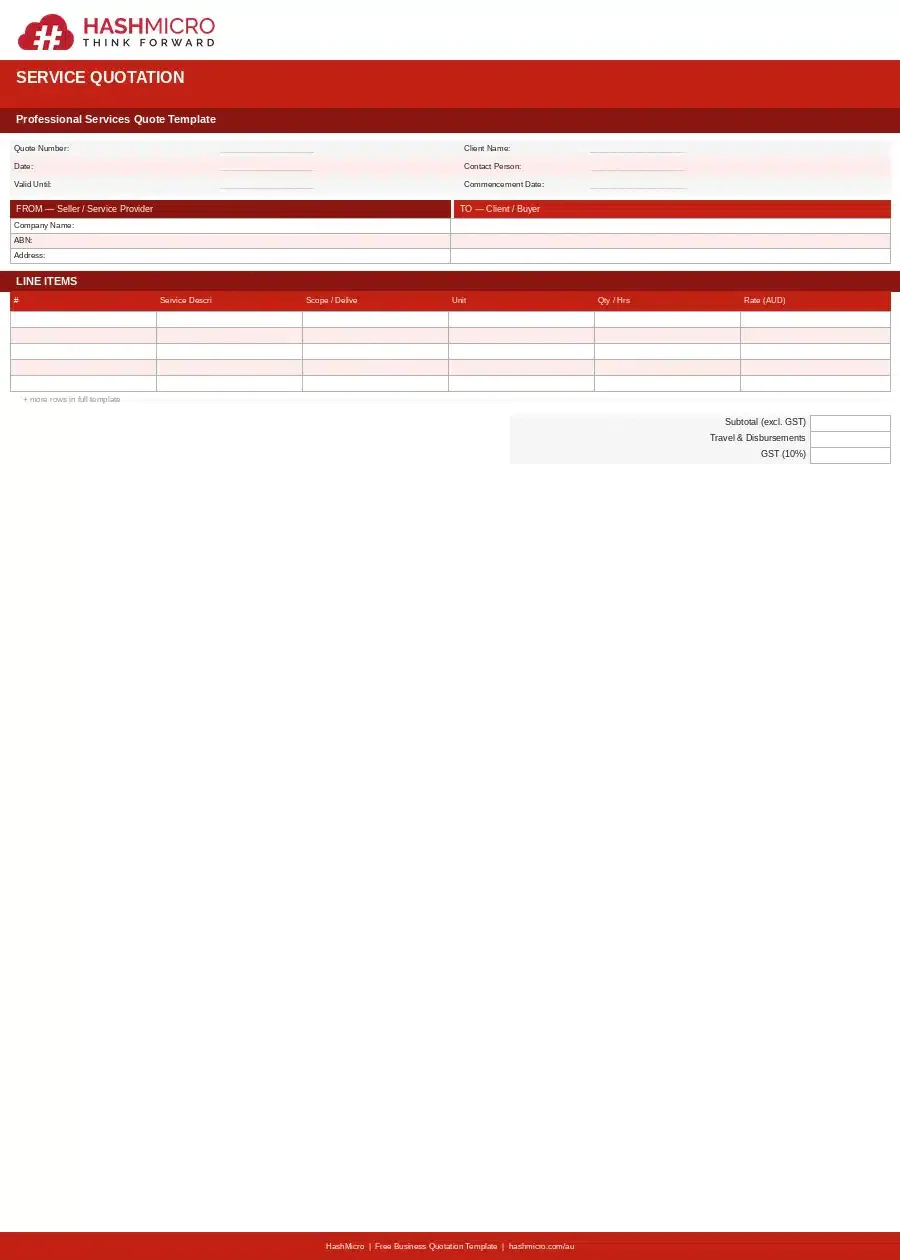
A service quote template is designed for labour-based pricing. It may include time estimates, service descriptions, and total costs.
Service Quote Template
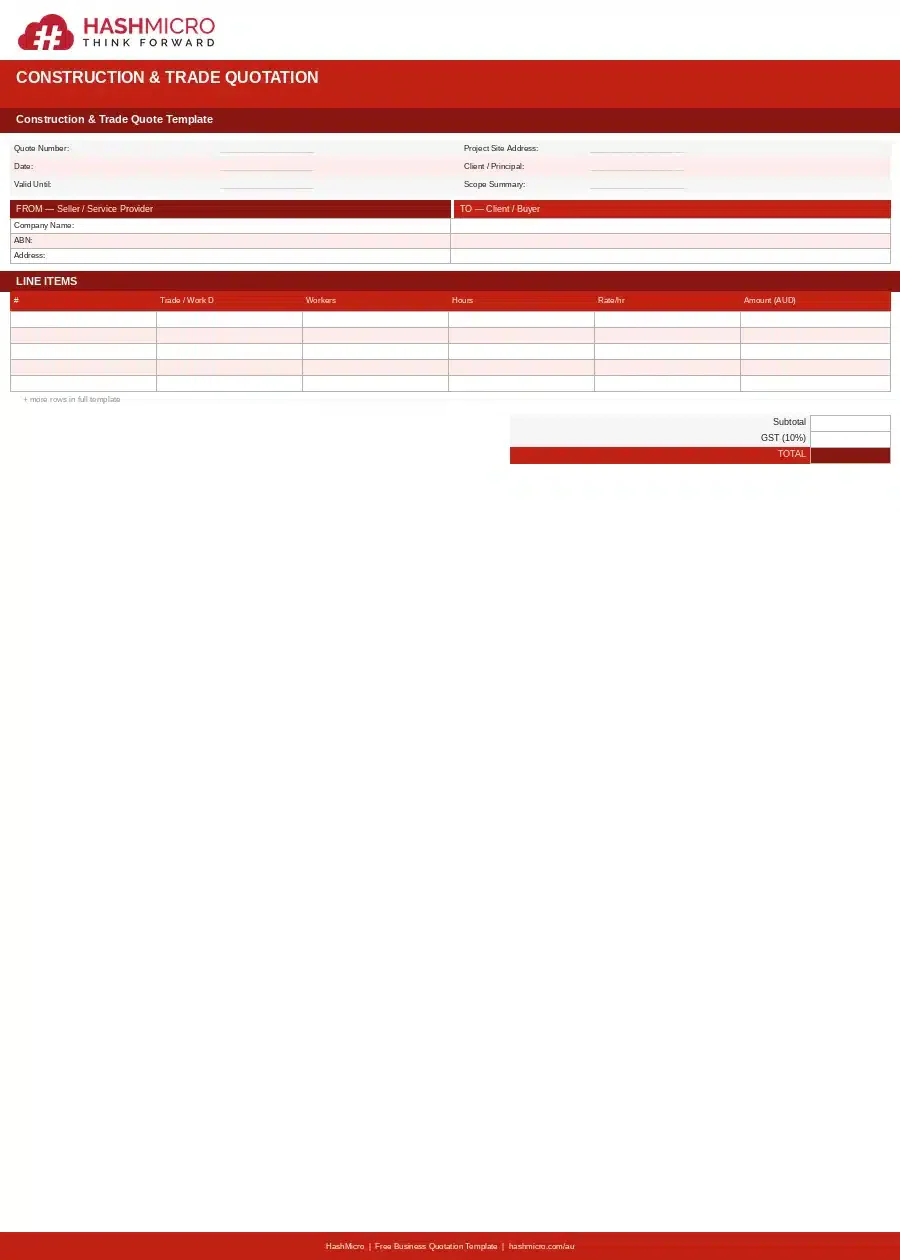
5. Construction and trade quote template
This template includes detailed breakdowns of materials, labour, and project scope. It is commonly used in building and trade industries.
Construction and Trade Quote Template
How to Write a Business Quotation
Writing a clear and accurate quotation helps improve client trust and increases the chances of winning work. Following a structured approach ensures nothing is missed.
1. Include your ABN, business name, and licence number (if a licensed trade)
Add your business details and ABN at the top of the quote. Licensed trades should also include relevant licence numbers where required.
2. Assign a quote number and state the validity period
Use a unique quote number for tracking and include how long the quote is valid. This helps manage pricing changes and follow-ups.
3. Describe each line item clearly with quantities and unit prices
Provide clear descriptions for each product or service. Including quantities and unit prices improves transparency and reduces confusion.
4. Apply GST correctly and show the total
Show whether GST is included or listed separately. Always include a clear total amount so the client understands the final cost.
5. State your payment terms and any special conditions
Include payment deadlines, deposit requirements, and any additional conditions. This helps avoid disputes later.
6. Send the quote, follow up before expiry, and convert to a tax invoice on acceptance
Send the quote promptly and follow up before it expires. Once accepted, convert the quote into a tax invoice for payment processing, and track sales performance against each converted quote in your records.
5 Quotation Mistakes Australian Businesses Make
Avoiding common quoting mistakes can help improve professionalism and reduce disputes. Small errors can impact trust and delay sales.
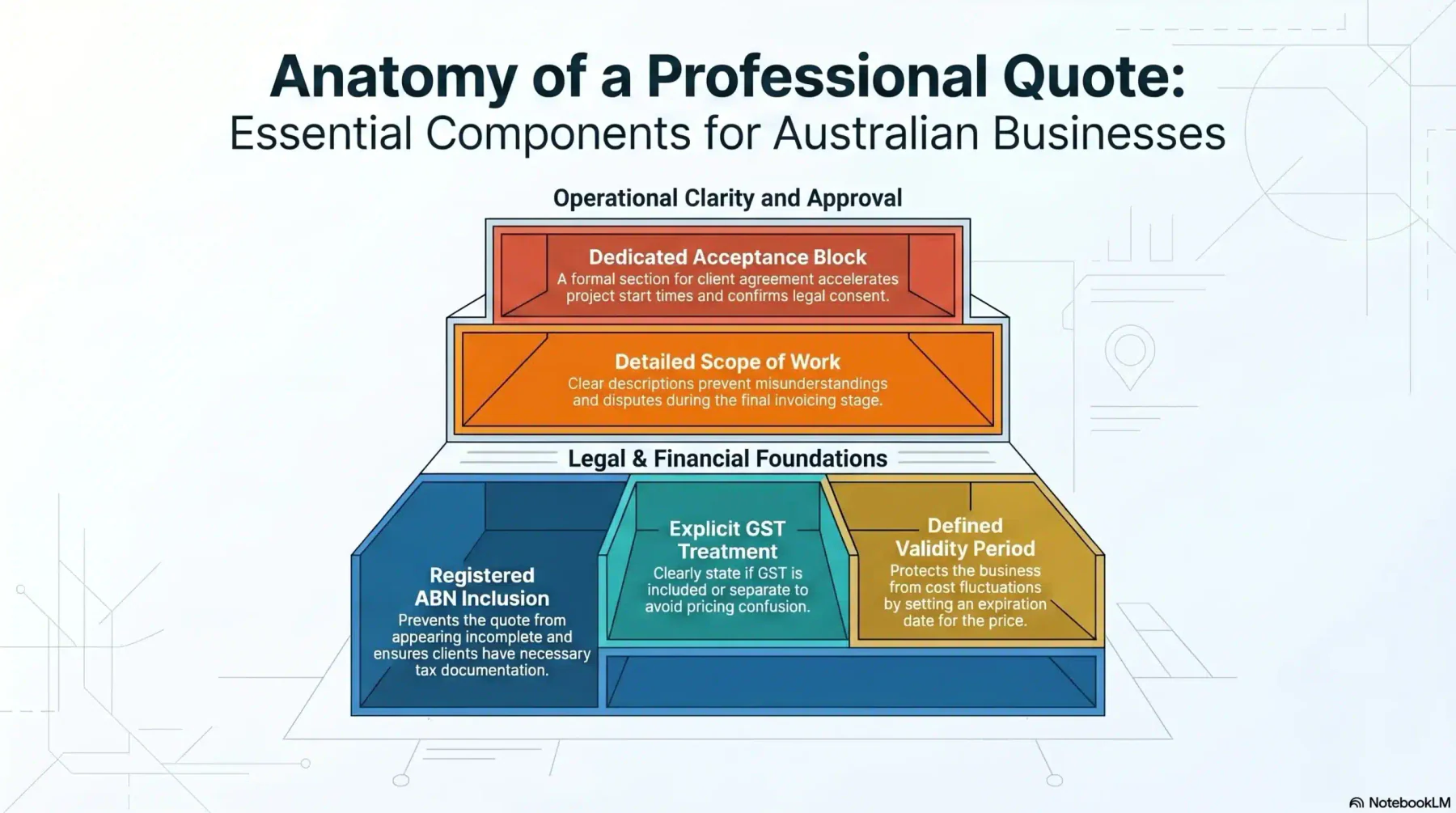
1. Not including ABN
Missing your ABN can make the quote look incomplete or unprofessional. It may also cause issues for clients who need proper documentation.
2. Ambiguous GST treatment
Not clearly stating GST can lead to confusion about pricing. Always show whether GST is included or separate.
3. No validity period
Without a validity period, clients may assume the price remains open indefinitely. This can create problems if costs change.
4. Vague scope of work that leads to disputed invoices
Unclear descriptions can result in misunderstandings about what is included. This often leads to disputes during invoicing.
5. No acceptance block
Without an acceptance section, it may be harder to confirm agreement. This can delay approval and project start times.
When Should You Move from Manual Quotes to Sales or ERP Software?
Manual quotation templates work well for small businesses, but growing operations may need more advanced systems. Software can improve speed and accuracy.
1. Signs your manual quoting process is slowing down your sales cycle
Delays in creating, sending, or tracking quotes may indicate inefficiencies. Missed follow-ups and inconsistent pricing are also warning signs.
2. What quote automation software does that a Word template cannot
Quote software can automate sales processes including calculations, approval tracking, record storage, and invoicing integration. Within an ERP or CRM platform, a quotation can be created directly from a client record, with product pricing pulled automatically from the system. The completed quote can then be sent to the client and tracked through the sales pipeline, without switching between separate tools.
Conclusion
A quotation template is an essential tool for creating clear, professional, and accurate price estimates. It helps businesses standardise their quoting process and improve communication with clients.
For Australian businesses, including the right details such as ABN, GST treatment, and payment terms can reduce disputes and support smoother transactions. A well-prepared quote can also increase the chances of winning new business.
As your business grows, moving from manual templates to quoting software can improve efficiency and help manage your sales pipeline more effectively. Get a free consultation with our experts to find the right solution for your business.

Frequently Asked Question
A quotation template is a structured document used by businesses to provide pricing details for goods or services before a sale is confirmed. It helps standardise quotes and improve consistency.
In Australia, a quotation template should include business details, ABN, quote number, issue date, validity period, itemised pricing, GST treatment, payment terms, and an acceptance section.
A quotation is not usually legally binding until it is accepted by the client. Once accepted, it may form part of a contract depending on the terms and conditions.
A quotation is issued before a sale to outline pricing and scope, while an invoice is issued after goods or services are delivered to request payment.
A quotation is commonly valid for 7 to 30 days, depending on the business and industry. Including a validity period helps avoid pricing disputes.
`