















Fixed assets are long-term assets that businesses use to support daily operations and generate revenue. Common examples include buildings, machinery, vehicles, computers, and office equipment.
These assets are not purchased for resale and are typically expected to provide value for more than one year. As a result, they play an important role in financial reporting, depreciation, and business planning.
This guide explains what fixed assets are, common examples, how they are recorded in accounting, and how businesses can manage them more effectively.
Key Takeaways
Fixed assets are long-term tangible assets that businesses use to support operations, generate revenue, and create value over multiple years.
Common fixed asset examples include buildings, machinery, vehicles, office furniture, and IT equipment used in daily business operations.
Understanding fixed asset accounting helps businesses record assets correctly, manage depreciation, and maintain accurate financial statements.
Accounting software simplifies fixed asset management by automating depreciation, tracking asset records, and connecting data with financial reports.

What Are Fixed Assets?

Fixed assets are tangible assets that a business owns and uses for more than one year. They support business operations and are usually recorded as non-current assets on the balance sheet.
Unlike current assets, fixed assets are not intended to be converted into cash quickly. Instead, they provide long-term value and are commonly classified as property, plant, and equipment (PP&E).
Businesses typically capitalise fixed assets and allocate their cost over time through depreciation based on the asset’s useful life.
Fixed Assets Examples
Fixed assets differ between businesses and industries, but they all provide long-term value and support daily operations. Common examples include property, machinery, vehicles, furniture, and IT equipment.
1. Buildings and Property
Buildings and property include offices, warehouses, factories, retail stores, and other business premises. These assets often represent a significant investment and are used to support operations over many years.
2. Machinery and Production Equipment
Machinery and production equipment include manufacturing machines, forklifts, packaging systems, tools, and other equipment used to produce goods or support operations. These assets typically require regular maintenance and depreciation tracking.
3. Vehicles
Business vehicles such as cars, vans, trucks, and fleet vehicles are fixed assets when used for more than one year. They help support transportation, deliveries, sales activities, and field operations.
4. Office Furniture and Fixtures
Office furniture and fixtures include desks, chairs, cabinets, shelving, partitions, and fitted office equipment. Although lower in value than property or machinery, they still provide long-term business use.
5. Computers and IT Equipment
Computers, laptops, servers, printers, and networking equipment are common fixed assets. Businesses often track these assets closely due to their shorter useful lives and ongoing technology upgrades.

Fixed Assets vs Current Assets
Fixed assets and current assets are both important business resources, but they serve different purposes. Fixed assets support long-term operations, while current assets are expected to be used, sold, or converted into cash within one year.
1. Key Differences in Time Frame, Liquidity, and Business Use
Current assets are more liquid and include cash, inventory, and accounts receivable. Fixed assets are less liquid and include long-term resources such as buildings, machinery, vehicles, and equipment.
2. Fixed Assets vs Current Assets Comparison
Current assets support day-to-day business activities, while fixed assets help businesses operate and grow over the long term. Fixed assets are also typically depreciated over their useful lives.
3. Why Correct Classification Matters
Accurate asset classification helps businesses produce reliable financial reports, measure liquidity correctly, and make better financial decisions.
How Fixed Assets Work in Accounting
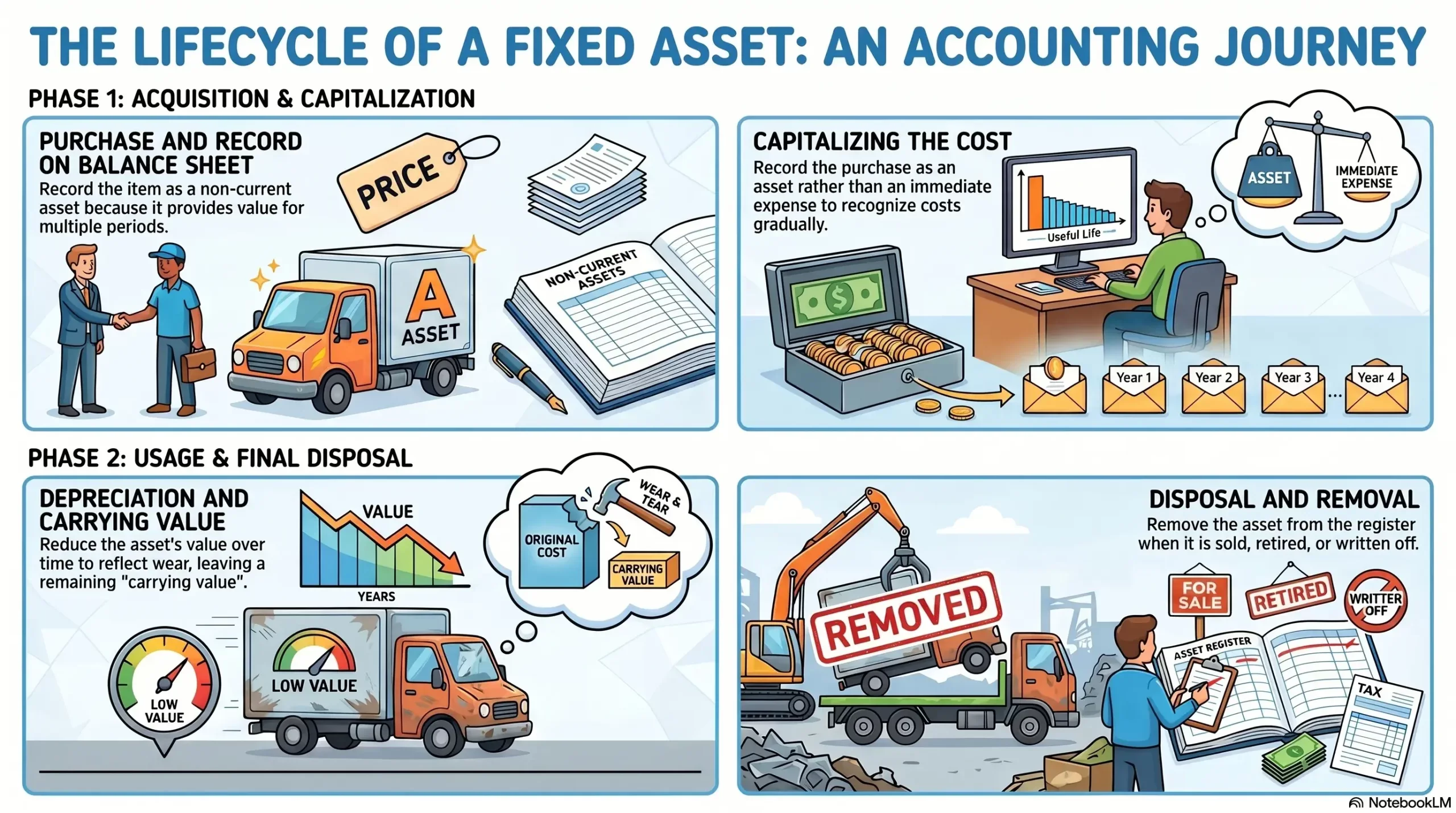
Fixed assets are recorded at their purchase cost and reported as non-current assets on the balance sheet. Rather than being expensed immediately, their cost is allocated over time through depreciation.
1. Recording Fixed Assets on the Balance Sheet
When a business purchases a fixed asset, it is recorded on the balance sheet as an asset because it provides value for more than one accounting period.
2. Capitalising Fixed Assets Instead of Expensing Them
Capitalising means recording a purchase as an asset rather than an immediate expense. This allows the cost to be recognised gradually over the asset’s useful life, forming an important part of the asset cost allocation process used in financial accounting.
3. Depreciation and Carrying Value
Depreciation reduces the value of a fixed asset over time to reflect wear and usage. The remaining value after depreciation is known as the carrying value.
4. Disposal, Sale, and Write-Off of Fixed Assets
When a fixed asset is sold, retired, or written off, it should be removed from the asset register and accounting records to maintain accurate financial reporting.
What Is a Fixed Asset Register?
A fixed asset register is a record of all fixed assets owned by a business and often serves as the foundation of an asset tracking platform that supports asset visibility and reporting.
It typically includes information like the asset name, purchase date, cost, useful life, depreciation method, and current carrying value. This ensures all asset data is organised and easy to manage.
Accurate fixed asset records support financial reporting, audits, maintenance planning, and replacement decisions. A register may include assets such as vehicles, machinery, and office equipment, along with their cost, depreciation, and location.
How to Calculate Net Fixed Assets
Net fixed assets represent the value of a company’s fixed assets after accumulated depreciation has been deducted. This figure helps businesses understand the remaining value of their long-term assets.
1. Net Fixed Assets Formula
Net fixed assets are calculated using the following formula:
Net Fixed Assets = Total Fixed Asset Cost − Accumulated Depreciation
2. Example Calculation
If a business has total fixed assets worth AUD 180,000 and accumulated depreciation of AUD 55,000, its net fixed assets would be AUD 125,000.
3. Gross Fixed Assets vs Net Fixed Assets
Gross fixed assets refer to the original cost of assets before depreciation, while net fixed assets reflect their value after depreciation has been deducted.
Why Fixed Assets Matter for Business Decisions
Fixed assets help businesses evaluate long-term operational capacity, support financial planning, and make informed investment decisions as part of modern asset management practices.
- They show long-term operating capacity, with assets like buildings, machinery, and vehicles supporting production, services, and business growth.
- They support financing and valuation, as lenders and investors assess them for financial stability and collateral value.
- They help plan maintenance, replacement, and capital spending by improving visibility over asset condition and lifecycle, supporting more effective asset lifecycle planning strategies.
How Accounting Software Helps Manage Fixed Assets
Accounting software simplifies fixed asset management by centralising records, automating depreciation, and improving reporting accuracy, making it one of the top tools for asset visibility across the business.
It allows businesses to track asset cost, location, ownership, and useful life in one system, making it easier to manage large asset portfolios.
It also automates depreciation calculations and connects fixed asset data directly with financial reports, helping ensure accurate and up-to-date accounting records.
Conclusion
Fixed assets are long-term tangible assets that help businesses support daily operations and generate value over time. Common examples include buildings, machinery, vehicles, office furniture, and IT equipment.
Properly managing fixed assets helps businesses maintain accurate financial records, calculate depreciation correctly, and make informed decisions about maintenance, replacement, and future investments.
With the right accounting software, businesses can simplify fixed asset management, improve reporting accuracy, and gain better visibility into their long-term assets.
To learn how your business can manage fixed assets more efficiently, schedule a free consultation with our experts today.

Frequently Asked Question
No. Fixed assets are a type of non-current asset that includes tangible resources such as buildings, machinery, and vehicles. Non-current assets can also include intangible assets and long-term investments.
No. Inventory is classified as a current asset because it is intended to be sold or used within normal business operations, usually within one year.
No. Intangible assets such as patents, trademarks, and goodwill are non-current assets, but they are not considered fixed assets because they do not have a physical form.
Gross fixed assets represent the original cost of assets before depreciation. Net fixed assets are the remaining value after accumulated depreciation has been deducted.
A fixed asset register helps businesses track asset details, depreciation, ownership, and location. It also supports accurate financial reporting, audits, and asset management.