













Most companies think their procurement process is “good enough.” Orders get placed, suppliers get paid, things arrive on time, mostly.
But “good enough” has a cost. It shows up as RM800 spent on items you already had in stock. Or a supplier invoice paid twice because nobody checked. Or a better deal you missed because comparing three quotes manually took too long, so your team just went with the usual vendor.
Procurement software doesn’t fix problems you can see. It shows you problems you didn’t know you had. This guide compares 12 options in Malaysia so you can pick one that matches your company size and budget.
Key Takeaways
Most purchasing problems start because nobody tracks purchases properly until finance finds out too late. The right software puts requests, approvals, and supplier records in one place.
Enterprise tools like Oracle and Dynamics 365 suit companies with 200+ employees. For SMEs, lighter options like Precoro, Kissflow, or HashMicro get you running faster.
Before choosing, check three things: does it connect to your current systems (accounting, inventory), can your team learn it without heavy training, and does the vendor offer reliable support after go-live.
Fragmented procurement cycles often lead to manual data entry errors and a complete lack of spending visibility. Implementing a specialized purchase order platform automates these workflows, ensuring every requisition is instantly tracked and aligned with your budget.
What Can Purchase Order Software Do for Your Business?
Purchasing software handles the full buying process, from request to payment, in one system. Your team submits a request. The system sends it to the right approver automatically. Once approved, it creates the purchase order and sends it to the supplier. When goods arrive, the system matches what was received with the original PO and the invoice.
Everything is tracked. You can see every purchase order’s status, how much each department has spent, and which suppliers give the best deals. No more chasing approvals on WhatsApp or creating POs in Excel.
Hashy AI Fact

Need to know!
Hashy AI collects vendor quotations, reads them using OCR, and uploads the data directly into the system for seamless processing. It also reviews and compares vendor quotes, helping you secure the best deal effortlessly.
Request a free demo today!
Which Type Fits Your Company?
Not all purchase order software does the same thing. Some only handle purchase orders. Some cover everything from finding suppliers to paying invoices. Picking the wrong type means you either pay for features you don’t use, or you’re stuck without something you actually need.
| Your Main Problem | Type You Need | Software to Consider | Best For |
|---|---|---|---|
| Approvals are slow, POs are messy | PO & Approval Tools | Precoro, ProcurementExpress, Xero | SMEs that just need faster purchase order processing and basic approval routing. |
| No visibility on department spending | Spend Management | Procurify, GEP, Kissflow | Finance teams that need real-time view of who is spending what, and where. |
| Invoices don't match what was ordered or received | AP & Invoice Matching | Xero, Ecount, ProcurePort | Companies losing money from paying invoices that don't match actual deliveries. |
| Need full cycle covered: sourcing to payment | Source-to-Pay (S2P) | GEP, Oracle, Kissflow | Large companies with complex supply chains needing end-to-end procurement control. |
| Vendor data scattered across emails and files | Vendor Management | Oracle, Procurify, ProcurePort | Businesses managing 50+ suppliers that need centralized records and performance tracking. |
| Want procurement + inventory + accounting in one system | ERP with Procurement Module | HashMicro, Odoo, Microsoft Dynamics 365 | Mid to large companies tired of copying data between separate systems. |
12 Best Purchase Order Software in Malaysia 2026
Here are 12 recommendations for the best purchasing systems in Malaysia to improve your operational efficiency:
1. HashMicro Purchasing Software
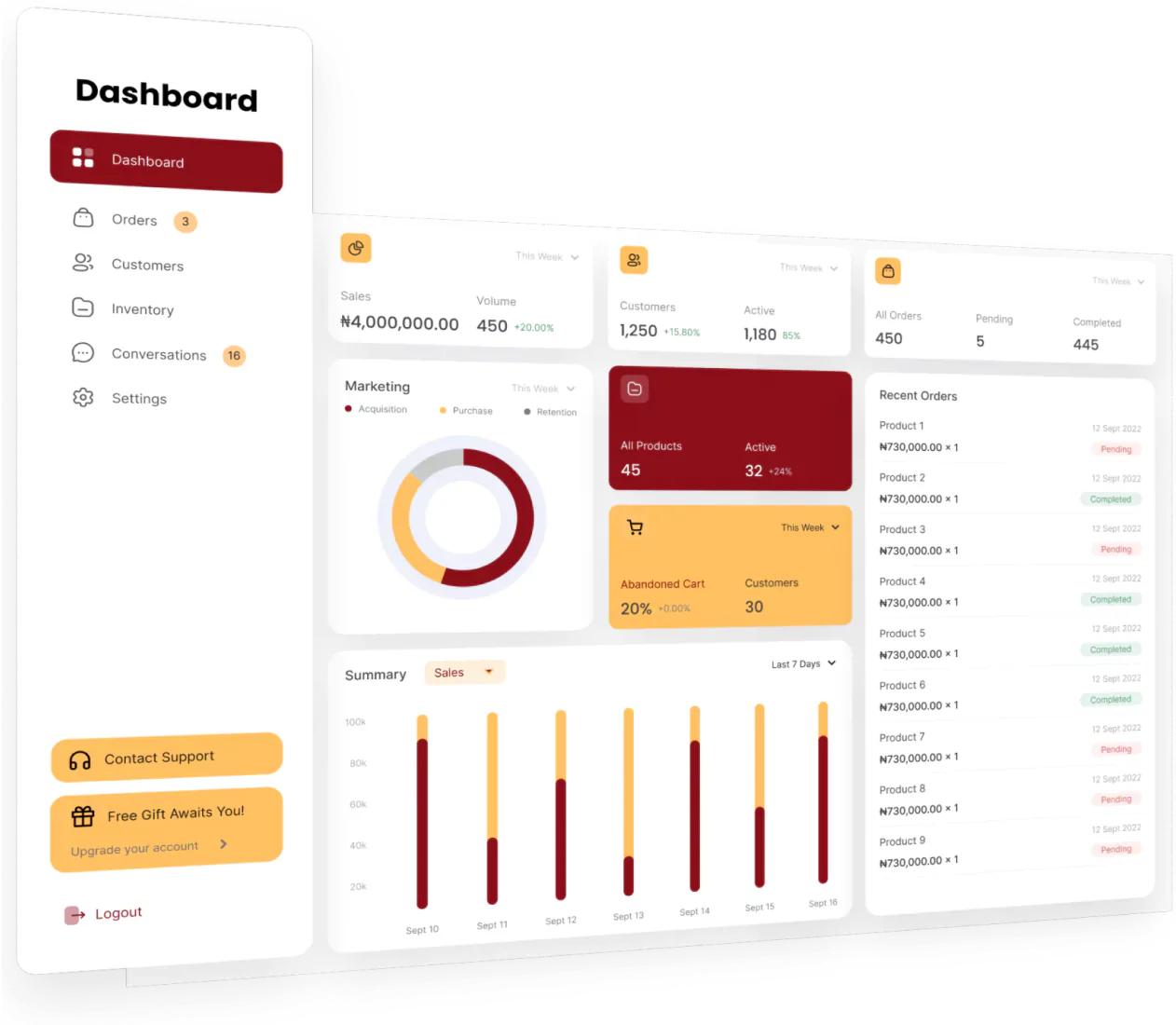
HashMicro Purchasing Software is a comprehensive procurement solution designed to help businesses automate and manage their purchasing activities more efficiently.
Known for its user-friendly interface and powerful integration capabilities, HashMicro allows companies to streamline purchase requests, approvals, vendor management, and invoice processing all within a centralized system.
With real-time tracking and customizable workflows, it supports better decision-making and ensures full visibility over procurement operations. Ideal for businesses of all sizes in Malaysia, HashMicro helps reduce manual work and improve overall procurement accuracy and compliance.
The top features offered by HashMicro’s procurement management system are:
- OCR for RFQ: Quickly converts physical Request for Quotation (RFQ) documents into digital format, minimizing manual data entry and reducing the risk of human error.
- Automated Vendor Rating: Helps ensure partnerships with reliable vendors by evaluating their performance based on order fulfillment and delivery history.
- Cost Savings Tracking & Reporting: Offers in-depth insights into cost-saving opportunities by highlighting top-performing suppliers and identifying areas where procurement efficiency can be improved.
- Vendor Promotion Program Management: Enables businesses to track which vendors offer the most valuable deals, maximize the benefits of promotional programs, and make sure no opportunity for savings is overlooked.
|
Pros |
Cons |
|
|
HashMicro offers a pricing scheme to demonstrate how intelligent automation can scale without increasing your budget. Download the pricing scheme below to know how their purchasing system works!
2. Kissflow Procurement Software
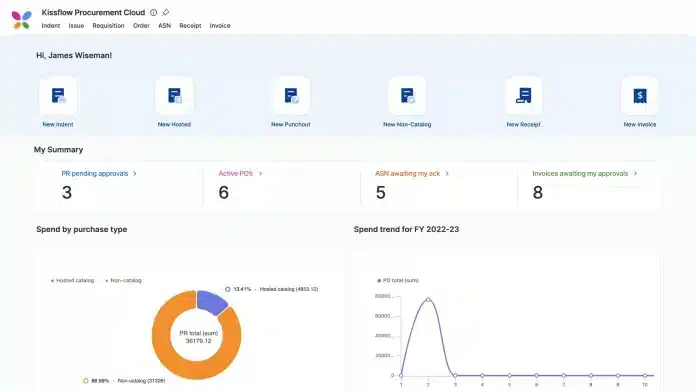
Kissflow Procurement Cloud is a flexible procurement and vendor management platform suitable for businesses of all sizes in the Philippines. It allows real-time inventory tracking, purchase requests, and order status, making the procurement process more transparent and efficient.
Admins can assess vendor performance based on compliance, product quality, delivery speed, and reputation. Suppliers also get access to a dedicated portal to manage their data and receive order updates.
Key features:
- Invoice automation
- Spend analytics
- Inventory management
- Contract management
|
Pros |
Cons |
|
|
3. Procurify Automated Purchasing Software
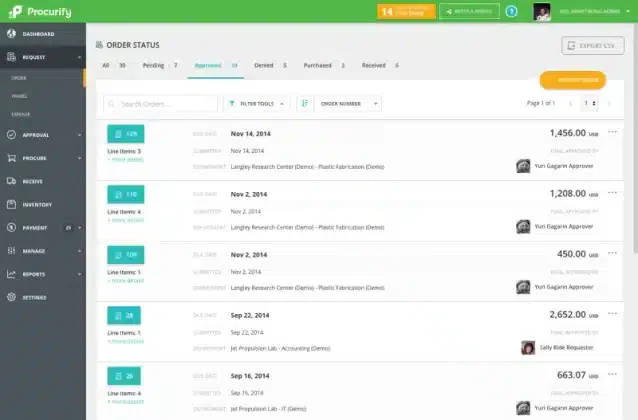
Procurify is a purchasing software designed to help businesses manage procurement in a more organized and efficient way. It streamlines the entire purchasing process with features that support each stage, from request to approval.
One key feature is the purchase request submission, which allows users to submit requests quickly and easily. This reduces delays and errors while ensuring all requests are tracked and handled within a centralized system.
Key features:
- Approval process
- Purchasing workflow
- Budget tracking
- Expense management
|
Pros |
Cons |
|
|
4. Odoo Procurement System
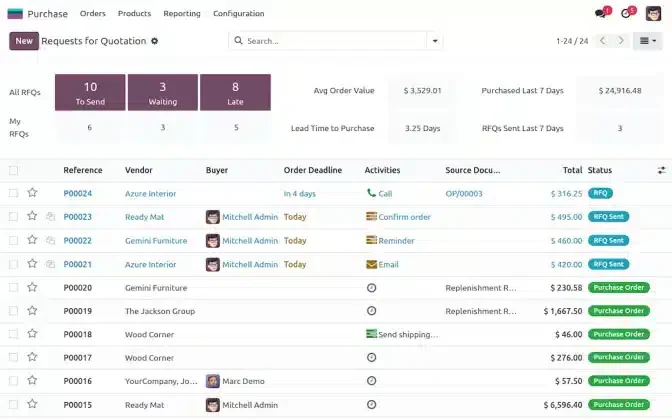
Odoo Purchase is a module within the Odoo ERP suite built to streamline and automate business procurement processes from request to payment.
With its user-friendly interface and integrated features, it helps reduce costs, improve control, and speed up purchasing workflows, making procurement more efficient and hassle-free.
Key features:
- Automated purchase requests
- Supplier management
- Purchase order
- Integration with inventory
|
Pros |
Cons |
|
|
5. Microsoft Dynamics 365
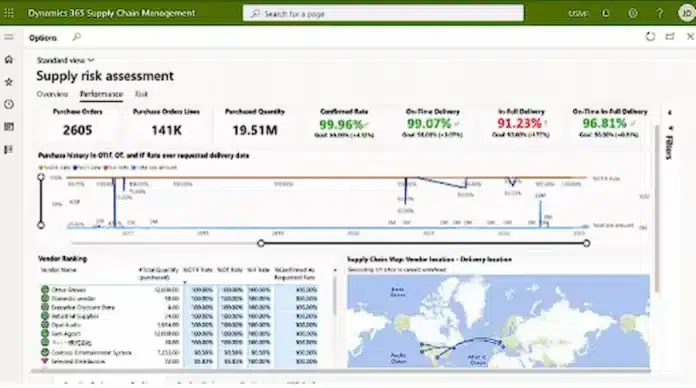
Microsoft Dynamics 365 purchasing system is an ERP solution designed to streamline and optimize a company’s procurement process.
It includes vendor management features that help businesses track and manage supplier relationships, including contracts, performance, and compliance.
Key features:
- Vendor management
- Purchase automation
- Expense analysis
- Custom workflows
|
Pros |
Cons |
|
|
6. Oracle Purchasing System
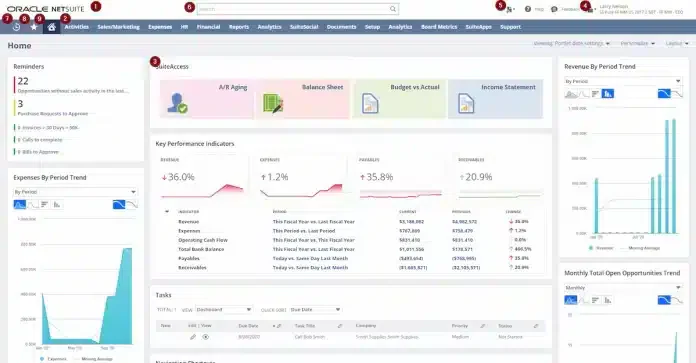
The Oracle procurement system is a web-based solution designed to simplify the procurement process. It enables employees to create, manage, and track purchase requisitions online, streamlining the ordering of goods and services.
The system also offers spend analysis, providing insights into spending patterns, supporting budget management, and identifying potential savings through real-time procurement data.
Key features:
- Web-based requisition management
- Integration with suppliers
- Expense analysis
- Process automation
|
Pros |
Cons |
|
|
7. Precoro Purchasing Requisition Software
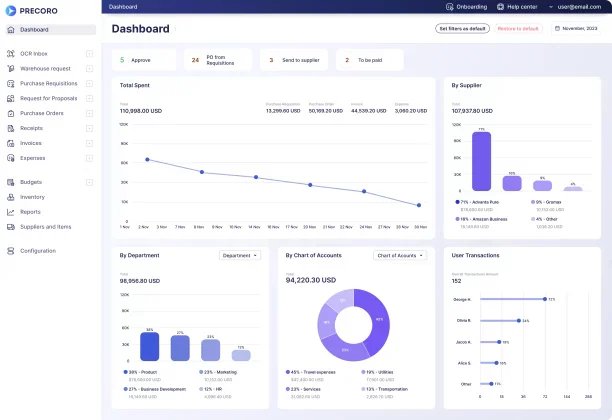
Precoro is a cloud-based procurement software in Malaysia that simplifies purchasing. Key features include purchase order management, blanket POs, visual analytics, invoicing, real-time budgeting, and catalog management with product links.
It also integrates with NetSuite and QuickBooks, offers a free API, and provides enhanced security and automated reporting for greater transparency throughout the procurement process.
Key features:
- Stock monitoring
- Real-time request handling
- Automated process management
|
Pros |
Cons |
|
|
8. Xero Procurement Software
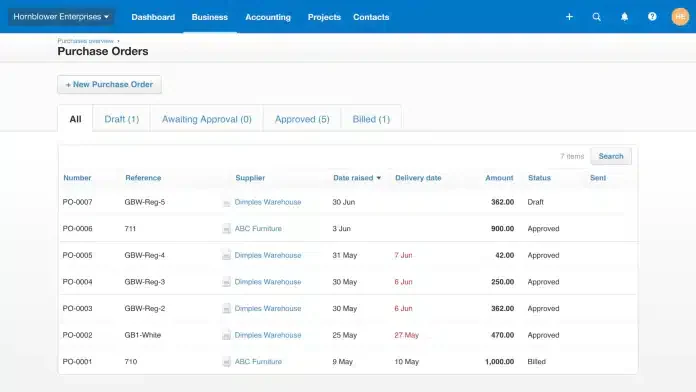
Xero offers a range of solutions to support business operations including its purchase order software. This tool helps companies streamline the procurement process by enabling efficient online creation and sending of purchase orders, reducing manual work and improving order accuracy.
It’s designed to optimize procurement workflows, ensuring timely and accurate order processing.
Key features:
- Purchase order creation and tracking
- Multi-application integration
- Automation of record keeping
|
Pros |
Cons |
|
|
9. Ecount Purchasing Software
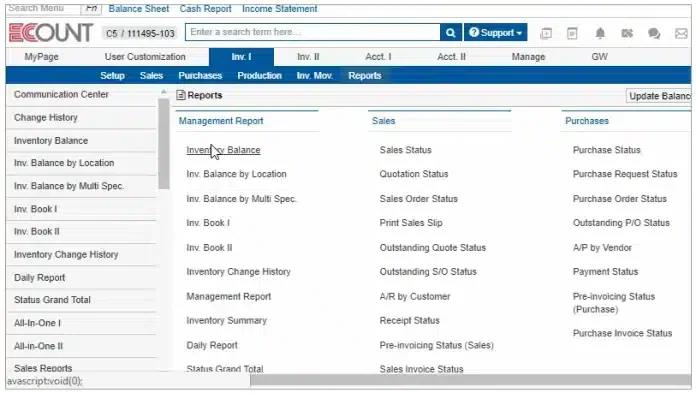
Ecount’s purchasing software, the Ecount ERP Purchasing Module, is designed to streamline and automate procurement processes within organizations. It is available in the Philippines and provides easy access to customer support.
The software improves procurement efficiency, reduces costs, and fosters better collaboration between departments and suppliers.
Key features:
- Inventory management
- Sourcing and RFQ
- Budgeting and spending analysis
|
Pros |
Cons |
|
|
10. ProcurementExpress Purchasing System
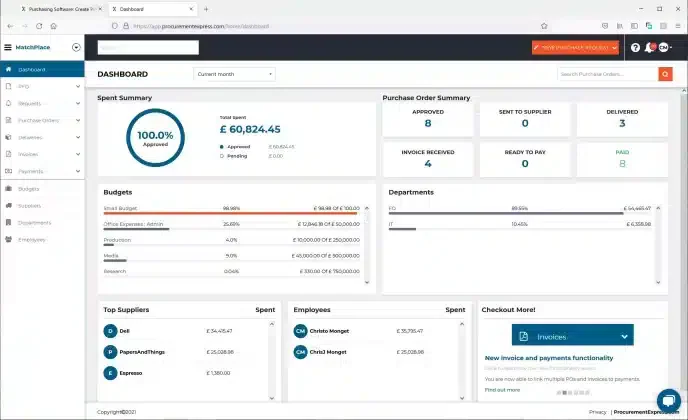
ProcurementExpress is a web-based purchase order application streamlining the purchasing process on a single cloud platform.
It integrates with accounting systems and helps management respond efficiently to customer requests recorded in the software.
Key features:
- Approval workflows
- Budget tracking
- Mobile access
|
Pros |
Cons |
|
|
11. GEP SMART Purchasing System
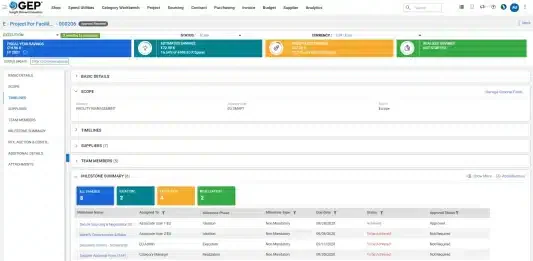
GEP SMART is a unified, cloud-based source-to-pay (S2P) solution that simplifies the management of direct and indirect spending. It combines multiple procurement tools in one platform, eliminating the need for separate systems.
The software boosts procurement efficiency, supports digital transformation, and enhances team performance. It offers advanced analytics for CPOs, comprehensive oversight for category managers, and an intuitive ordering experience for buyers.
Key features:
- Purchase to pay
- Vendor management
- Supplier sourcing
|
Pros |
Cons |
|
|
12. ProcurePort Purchasing System
ProcurePort is a purchase order solution that helps businesses manage procurement more efficiently and centrally. It streamlines purchasing workflows and enables better decision-making by leveraging real-time data.
Key features:
- Supplier management
- Contract management
- Expense analysis
|
Pros |
Cons |
|
|
Overall Comparison of the Best Purchasing Software for Businesses in Malaysia
| Provider | Connection Quality | Bank Coverage | Ease of Integration | Data Enrichment |
|---|---|---|---|---|
| Hashmicro | ||||
| Oracle | ||||
| Precoro | ||||
| Xero | ||||
| Ecount | ||||
| ProcurementExpress | ||||
| GEP SMART | ||||
| ProcurePort |
Who in Your Company Uses Purchasing Software?

Purchasing software is not just for the procurement team. Different people across your company interact with it in different ways.
1. Operations and production teams
They use it to raise purchase orders fast when materials run low. Instead of waiting days for approvals, the system routes the PO to the right person automatically so production keeps moving.
2. Finance teams
The use to track every purchase order from approval to payment. They can see which POs are pending, which invoices have been matched, and where the budget stands without pulling manual reports.
3. Staff who buy things
They use to submit requests and track their purchase orders. They pick what they need, submit, and the system handles the routing. No more filling forms and chasing approvers.
4. Management
Team use it to see the full picture. Which departments are spending the most, which vendors perform well, and whether purchase orders stay within approved budgets. Every approval is recorded, so there’s always a clear trail.
How to Choose the Right Purchasing Management
Selecting the right purchasing management system is key to streamlining procurement and improving efficiency. Choosing the purchasing system software ensures it fits your business needs, integrates smoothly, and is easy to use.
- Identify your needs: Consider your company’s size, industry, and procurement goals. The right system should automate key tasks like order processing, inventory tracking, and supplier communication to reduce manual work and errors.
- Integration: Look for a PMS that connects smoothly with existing tools like ERP software or accounting systems to ensure efficient data flow across departments.
- Ease of use: A user-friendly interface makes adoption easier and cuts down on training time, helping teams work more effectively.
- Scalability: Choose a solution that can grow with your business and adapt to changing needs, from higher volumes to new suppliers.
- Vendor reliability: Check the vendor’s reputation and customer support. Strong after-sales service ensures smoother long-term use.
- Cost-value balance: Make sure the pricing aligns with your budget while delivering strong features and long-term return on investment.
Conclusion
The best purchasing software is the one that removes the most manual work from your team’s day. For some companies, that means a simple purchase order tool. For others, it means a full procurement platform connected to inventory and accounting.
Go back to the comparison table and decision helper in this guide. Find your company size and your main problem. Shortlist two or three options. Test each one with real purchase orders, real approvals, and real supplier scenarios before deciding.
If you want to see how purchase order management works inside a full ERP system, HashMicro offers a free demo to walk through your specific workflow.

FAQ on Purchasing Software
What is the difference between purchasing software and procurement software?
Purchasing software focuses on the buying process: creating purchase orders, sending them to suppliers, and processing payments. Procurement software covers a wider scope, including finding suppliers, managing contracts, negotiating prices, and tracking compliance. Some tools like HashMicro and Odoo do both because they’re part of a full ERP system.
What is purchase order software, and do I need it separately?
Purchase order software handles one specific job: creating, sending, and tracking POs. If that’s your only problem, tools like Precoro, ProcurementExpress, or Xero’s PO module are enough. But if you also need approval workflows, spend tracking, or supplier management, you’ll want a broader purchasing or procurement platform instead of a standalone PO tool.
How does purchasing software help with compliance and audit trails?
Purchasing software helps manage compliance by keeping clear records of purchases, approvals, and vendor activities. It also simplifies audits by providing complete records and ensuring company rules and regulations are followed.