















Running a restaurant in Malaysia today means meeting higher customer expectations for fast service, easy payments, and personalized experiences. Many businesses still face manual tasks, stock inconsistencies, and long queues during peak hours. A Deloitte report (2025) shows that while 82% of global restaurant leaders plan to invest in digital tools and AI, fewer than half feel ready to use them effectively.
For Malaysian F&B businesses, especially SMEs facing tight margins and increasing costs, this readiness gap can result in lost sales, overworked staff, and tougher competition from businesses that have adopted better technology.
Choosing the right restaurant POS system is a strategic step, not just to process orders faster but to improve accuracy, support business growth, and adapt to Malaysia’s digital economy. This guide compares 15 restaurant POS systems for 2026 quick service outlets, and multi-location teams find a solution that fits their daily operations.
Key Takeaways
A POS system facilitates business transactions and enhances restaurant operations by integrating payment processing with features like inventory and table management.
For Malaysian F&B teams, a modern POS supports faster service, clearer reporting, and smoother day-to-day control. Compliance also becomes easier when your sales records stay consistent and ready for audit or tax checks.
When comparing providers, prioritise stability during peak hours, POS integration options, and reliable local support.
When service gets busy, small gaps in ordering and payment flow can quickly slow the whole operation. An integrated restaurant POS helps your team stay faster and more in control.
Our Top Picks POS System Restaurant Providers
Having compared a wide range of restaurant POS Systems tools, I’ve narrowed the list down to those delivering the best balance of performance and usability in 2026.



Best Because
Designed for growth with powerful restaurant management tools.

Best Because
Secure platform with real-time management for restaurants.

Quick POS System Comparison Overview
Still unsure which Restaurant POS Systems is right for your restaurant? Here’s a quick side-by-side comparison of all 15 systems across five key factors that matter most to Malaysian F&B businesses so you can decide faster and with confidence.
| Restaurant POS System | LHDN Compliance | Delivery Platform Integration | Offline Mode | QR Ordering Support | Local MY Support |
|---|---|---|---|---|---|
| HashMicro | Yes - Native integration with e-invoicing compliance | Yes - Delivery platform integration included | Yes - Offline capability during internet disruptions | Yes - QR ordering and table-side ordering supported | Yes - KL office with dedicated Malaysian support team |
| Eats365 | Not confirmed | Yes - Consolidates delivery orders into one platform | Not confirmed | Not confirmed | Yes - Designed for Malaysia market with RM pricing |
| StoreHub | Not confirmed | Yes - E-commerce and multi-channel integration | Not confirmed | Not confirmed | Yes - Cloud-based with RM pricing and local features |
| Klikit | Yes - LHDN ready for e-invoicing | Yes - Strong order aggregation from delivery apps | Not confirmed | Yes - Supports QR payments | Yes - Supports local Malaysia payment methods |
| Slurp! | Not confirmed | Not confirmed | Yes - Offline capability during internet disruptions | Yes - QR ordering for dine-in | Yes - Built around Malaysia F&B workflows |
| Lightspeed Restaurant | Not confirmed | Yes - Multi-channel integration | No - No offline functionality | Not confirmed | Yes - Available in Malaysia with RM pricing |
| Zeoniq | Not confirmed | Yes - Delivery integration included | Not confirmed | Yes - QR and self-ordering support | Yes - Malaysia entity with local contact details |
| BrandK POS | Yes - LHDN ready with e-invoice submission | Not confirmed | Not confirmed | Yes - QR and table-side ordering | Yes - Malaysia-based support available |
| Oracle Simphony | Not confirmed | Yes - 85+ integration partners | Not confirmed | Not confirmed | Yes - Multi-currency and multi-language support |
| QubePos | Not confirmed | Yes - Multi-channel sales integration | Not confirmed | Not confirmed | Yes - Supports Malaysia payment methods |
| iCHEF | Not confirmed | Not confirmed | No - Risk during internet outages | Not confirmed | Yes - Available in Malaysia with RM pricing |
| Qashier | Not confirmed | Yes - Multi-platform delivery integration | Not confirmed | Not confirmed | Yes - Designed for Malaysia F&B businesses |
| ARMS F&B | Not confirmed | Yes - Handles delivery orders | Not confirmed | Not confirmed | Yes - Built for Malaysian operators |
| FoodZaps | Not confirmed | Not confirmed | Yes - Offline mode/fail-safe feature | Yes - Self-ordering via mobile/tablet | Yes - Built for F&B businesses in Malaysia |
| Xilnex | Not confirmed | Yes - E-commerce/delivery platform integration | Not confirmed | Yes - QR ordering and DuitNow QR support | Yes - Designed for Malaysia and Southeast Asia |
What is a POS System Restaurant and Why It Matters
A Point of Sale (POS) system is a combination of software and hardware that handles transactions at the point of sale between customers and businesses. It connects hardware and software so payments, orders, and stock update in one step, automate order handling, and maintain accurate inventory records.
In restaurants, POS systems do more than handle sales, they manage orders, monitor inventory, support loyalty programs, and generate reports. Advanced systems also connect with kitchen displays, online orders, and reservation apps for smoother operations.
For instance, an F&B POS system Malaysia allows servers to send orders directly to the kitchen, reducing errors and speeding up service. It also tracks sales data, helping restaurant owners refine their menu and improve efficiency.
Hashy AI Fact

Need to know!
Hashy AI helps you to send customers' orders to the kitchen display/station automatically so the staff and customers can monitor the cooking status easily.
Request a free demo today!
How Does a POS System Restaurant Work at the Cashier?
In a restaurant setting, a restaurant POS Systems works as the central component for managing transactions and handling transactions, tables, and stock in one place. Here’s a detailed breakdown of how it functions:
- Order placement: Servers enter order details, including menu choices and guest count, into the POS system for processing.
- Order processing: Orders are sent to the kitchen display or printed for chefs, reducing manual errors and allowing immediate meal preparation.
- Payment handling: The POS system tallies the bill with taxes and fees, accepts multiple payment forms, and can divide the bill as required.
- Inventory management: The best POS system for restaurant monitors inventory in real-time, ensuring stock maintenance and alerting managers to low ingredients.
- Sales tracking and reporting: The POS system for restaurant Malaysia gathers sales data for reports on menu performance, busy hours, and revenue, aiding strategic business decisions.
- Customer management: POS systems may feature customer relationship management, tracking orders, preferences, and loyalty programs.
Overall, a point-of-sale system for restaurant is an F&B software that not only processes sales transactions but also enhances operational efficiency, improves customer service, and provides valuable insights into the business’s performance.
What If You Don’t Implement a Restaurant POS Systems?
Many restaurants still rely on manual processes, unaware of the challenges it brings. Without a proper restaurant POS Systems, they risk setbacks in operations, finances, and compliance. Here’s what can happen without one:
- Non-Compliance Risks: Without a POS system, businesses may struggle to meet Malaysia’s e-invoicing regulations, risking penalties and disruptions to their financial reporting.
- Operational Inefficiencies: Manual order-taking and billing are time-consuming and prone to errors. This leads to slow service, incorrect orders, and difficulty in tracking sales, affecting both customer satisfaction and business efficiency.
- Financial Inaccuracies: Without automated tracking, miscalculations in revenue, inventory shortages, and unrecorded transactions become common, leading to financial discrepancies and potential losses.
15 Best Restaurant POS Systems for F&B Businesses in Malaysia
Having explored the pivotal role of restaurant POS systems in enhancing compliance, efficiency, and profitability for Malaysian F&B businesses, it’s time to delve into the options available.
The following curated list of the best restaurant POS systems in Malaysia is designed to guide business owners through the myriad of choices.
1. HashMicro
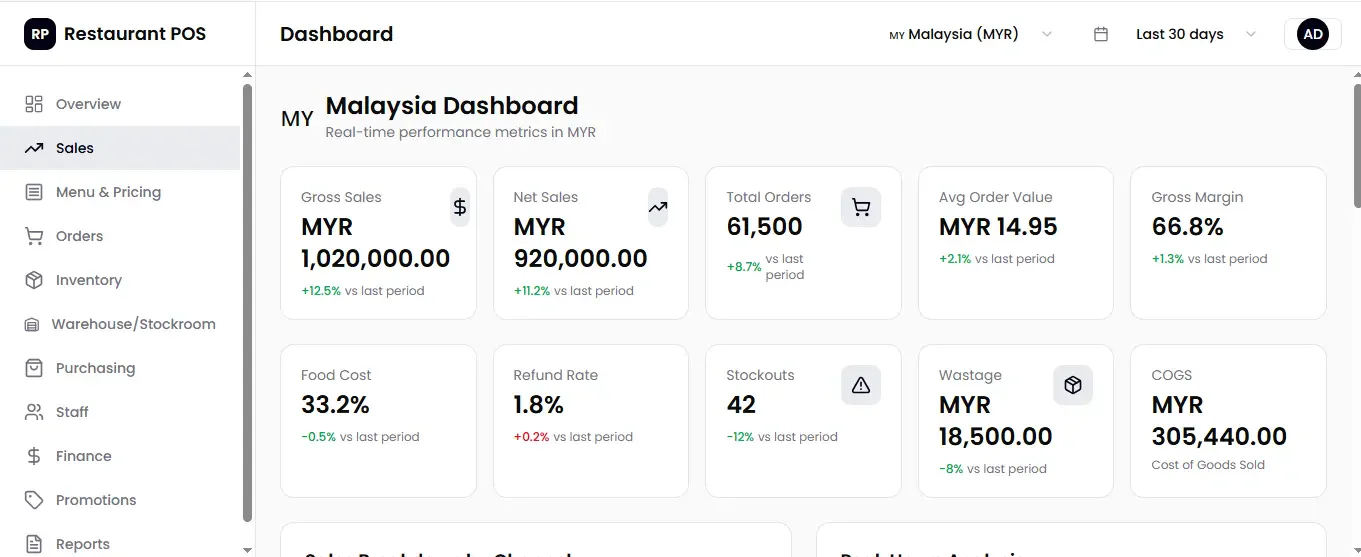
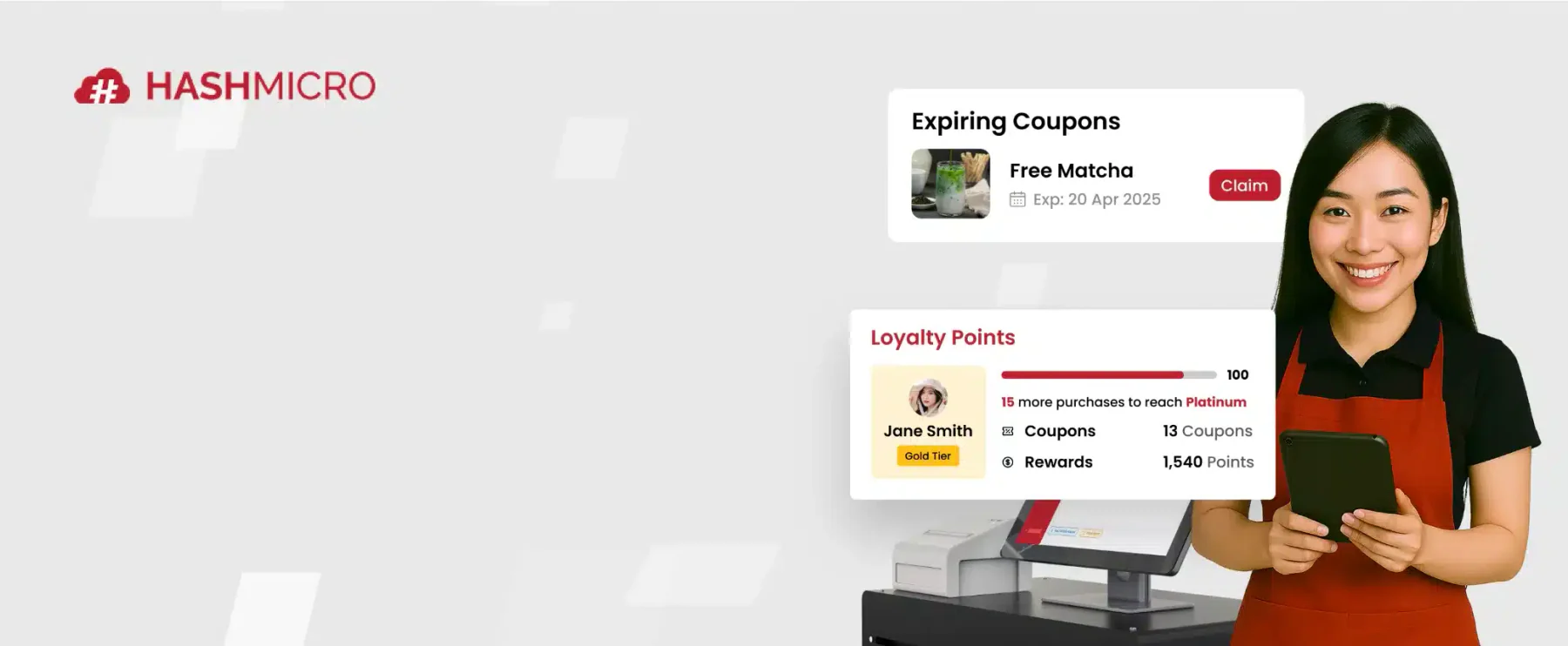
HashMicro offers a end-to-end POS built for restaurants that also need inventory, loyalty, and accounting in one system that connects orders, payments, and kitchen display in one system. This setup would keep the front-of-house and kitchen in sync, improving order flow and table service.
Over 3,000 world-class enterprises in Southeast Asian countries rely on HashMicro’s solutions, which is a testament to its reliability and effectiveness.
The system boasts modules encompassing various aspects of restaurant workforce software, automated restaurant bookkeeping, from inventory and customer relationship management to procurement and accounting integration.
This best restaurant POS Systems is highly customizable and can be integrated with third-party applications or mesh with existing systems. The software’s adaptability is particularly beneficial for businesses in Malaysia.
HashMicro offers prospective clients like you a free consultation to walk through your restaurant workflow, review key features, and confirm what needs customisation. This way, you can assess fit based on your actual operating needs before moving forward.
Here are some key features of the system:
- Complete transaction features: The system’s multi-payment and multi-pricelist capabilities ensure accurate transaction recording and tax calculation, aiding Malaysian companies in adhering to e-invoicing regulations.
- Membership management: This feature manages customer data and automates membership details in invoices to track loyalty and tax compliance, supporting e-invoicing needs.
- Program and loyalty management: HashMicro’s system automates loyalty rewards in transactions, ensuring detailed records for e-invoicing compliance with program deductions.
- Meal combo management: The system streamlines meal combo creation and tracking, ensuring invoices reflect accurate pricing for e-invoicing compliance.
- Kitchen and ordering station: The system automatically sends orders to the kitchen, aligning invoicing with order fulfillment for e-invoicing compliance.
- Sales report generation: HashMicro’s real-time sales reports from each branch support e-invoicing with detailed insights for tax reporting and compliance.
| Pros | Cons |
|
|
Pricing: Custom quotation based on business requirements.
To explore the best solutions for your business, discover our pricing plans below and find the right package for your needs.
2. Eats365
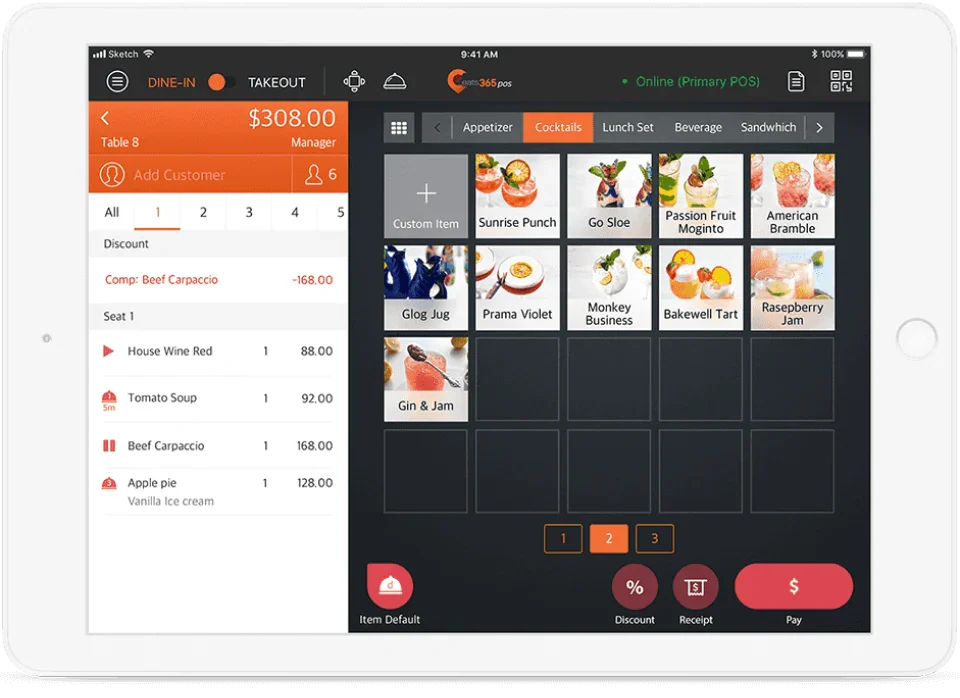
Eats365 POS System is a cloud-based restaurant cashier system that helps restaurants, cafés, and multi-outlet food businesses run daily operations from one platform. By consolidating dine-in, take-away, and delivery orders into one platform.
Features:
- Order management: The system allows restaurants to efficiently handle dine-in, take-away, and delivery orders all in one place.
- Inventory tracking: Eats365 tracks stock levels in real time, alerts staff when supplies are low, and integrates with suppliers to automate reordering.
- Customer loyalty & CRM: Restaurants can implement loyalty programs, manage promotions, and monitor customer preferences.
- Staff management: The platform allows managers to schedule shifts, track attendance, monitor employee performance, and control access permissions.
- Analytics & reporting: Eats365 provides detailed reports on sales, item performance, staff productivity, and multi-outlet operations.
| Pros | Cons |
|
|
Mid-to-large F&B operations, multi-outlet chains, and businesses that need a scalable, cloud-based POS system with integrated inventory management, and loyalty programs.
Pricing: From RM118 per month (POS Basic) and RM260 per month (POS Advanced).
3. StoreHub
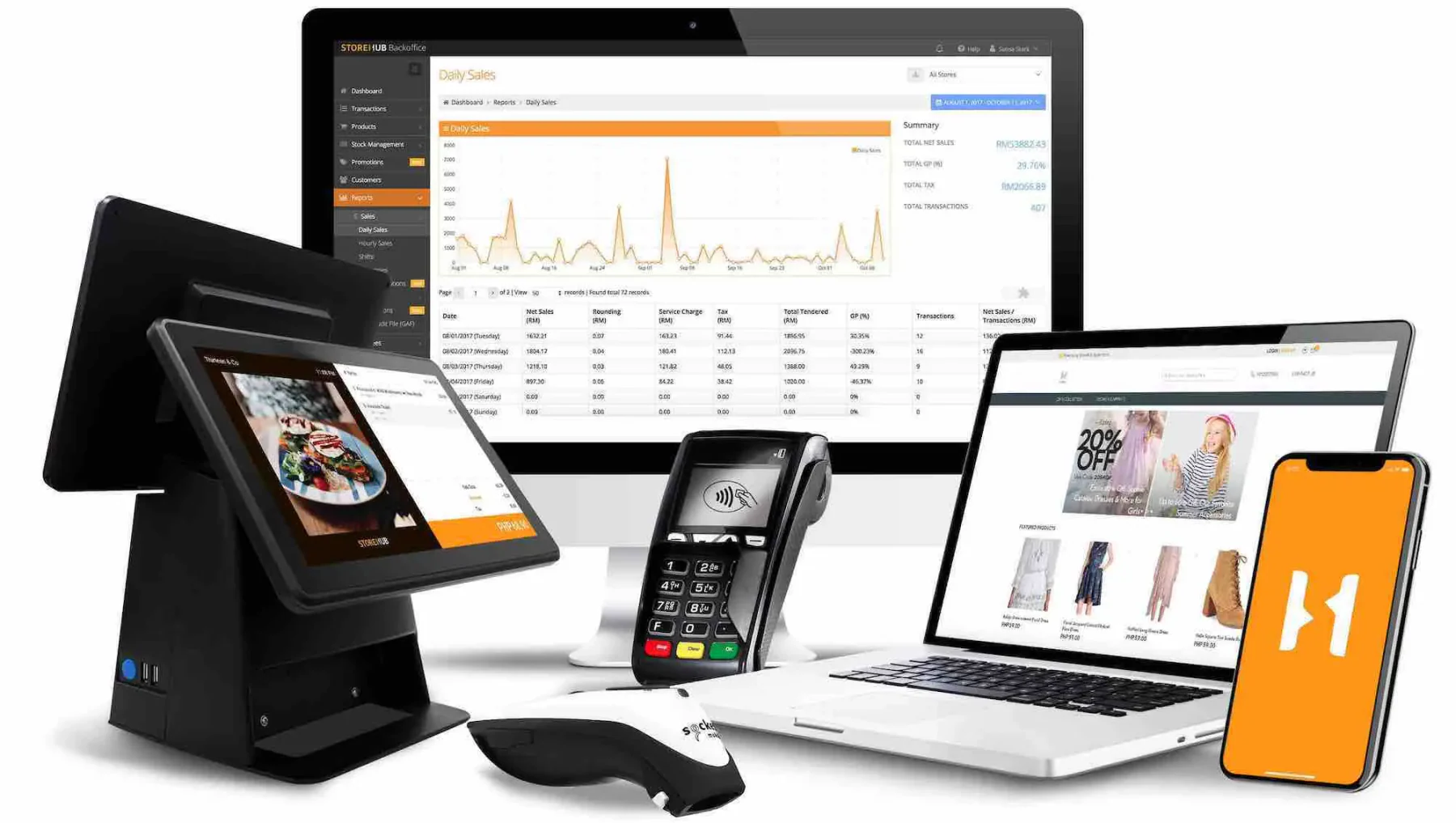
StoreHub POS System is a cloud‑based, all‑in‑one platform designed for POS system for restaurant Malaysia. It enables you to manage sales, inventory, staff, customer loyalty, online and offline channels from a single dashboard.
Features:
- Inventory management: Track stock in real time, get low-stock alerts, and manage multiple outlets.
- Employee management: Schedule shifts, track clock-in/out, and monitor staff performance.
- Loyalty programs: Run cashback, tiered rewards, and automated SMS campaigns.
- E-commerce integration: Sync sales, products, and stock across online and offline channels.
- Analytics & reporting: Access real-time insights on sales, operations, and restaurant management team.
| Pros | Cons |
|
|
Small to medium retail stores, cafés and restaurant outlets that want a cloud‑based POS with strong inventory & staff management, loyalty programs and multi‑channel sales capabilities.
4. Klikit
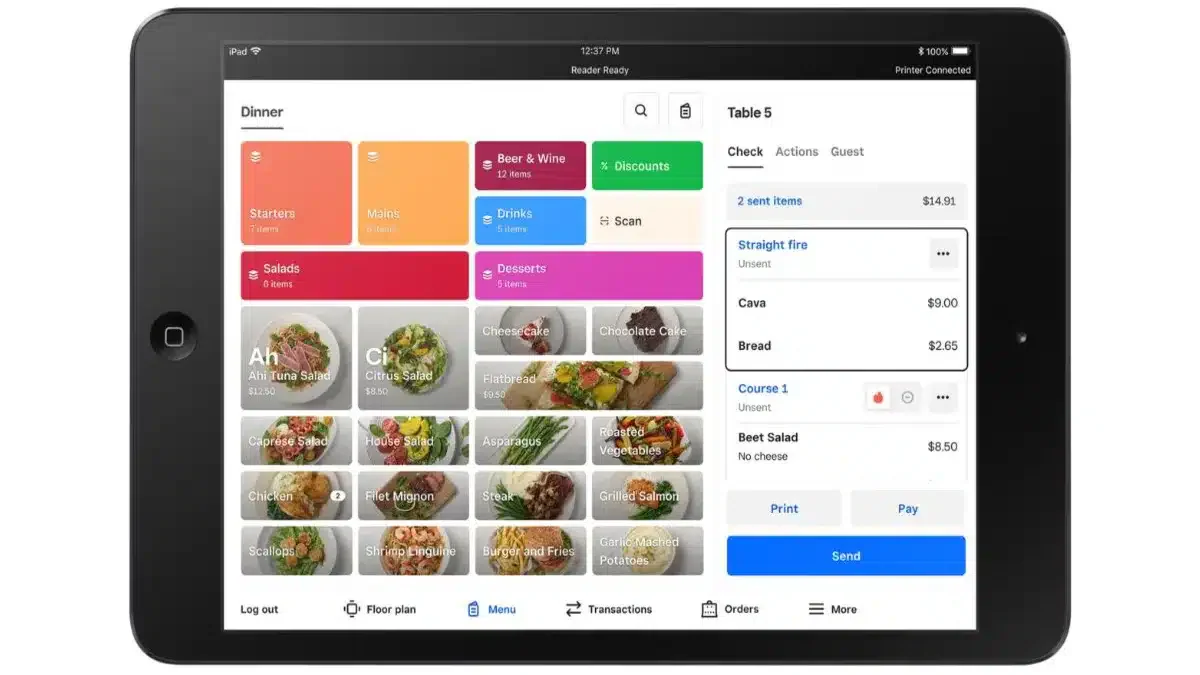
Klikit is a restaurant platform for F&B businesses that manage dine in, delivery, and online orders in one system. In Malaysia, it stands out for order aggregation, local payment support, and smoother multi channel operations.
More than a basic cashier tool, Klikit brings orders, menus, and reporting into one dashboard. This makes it a practical fit for cafés, quick service brands, and cloud kitchens that depend on delivery workflows.
Best features:
- Order aggregation: Combines orders from different apps in one place.
- Local payments: Supports common Malaysia payment methods.
- LHDN ready: Helps maintain cleaner invoicing records.
- Multi outlet control: Manages menus and branches from one system.
- Reporting: Tracks sales and order performance in one dashboard.
| Pros | Cons |
|
|
manufacturers that need inventory tied closely to production planning, multi level BoM, and material tracking across production and warehouse teams.
Pricing: Starts from RM35 per month, but it is best to confirm the latest package directly with Klikit.
5. Slurp! 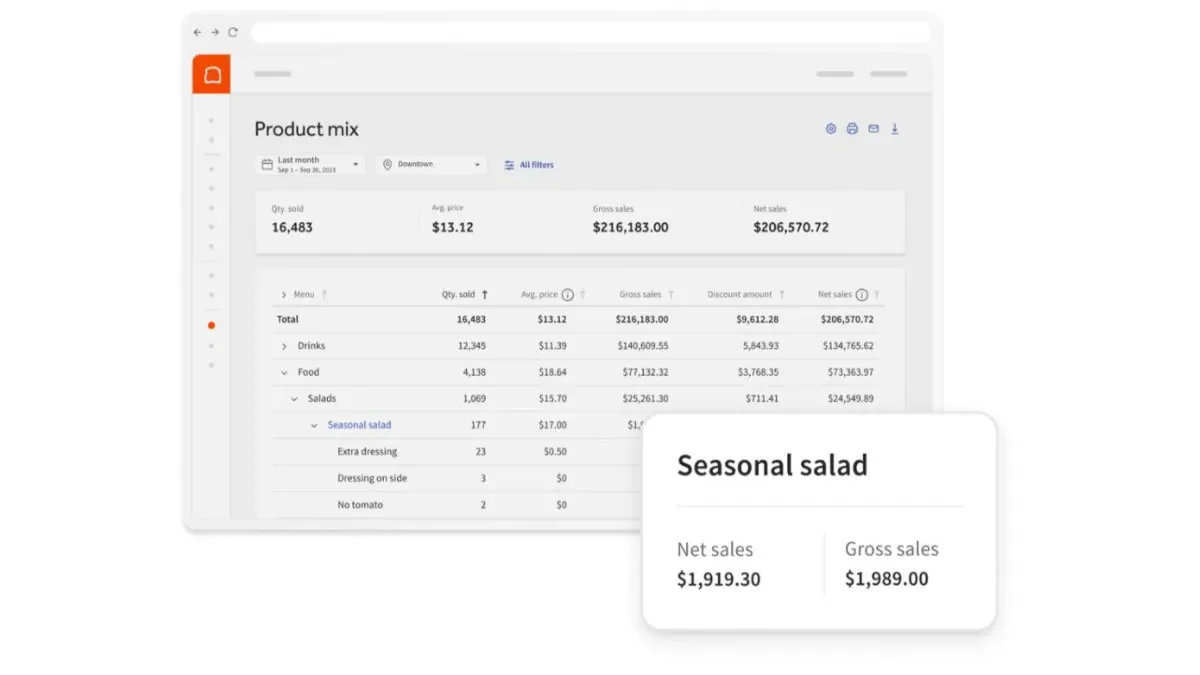
Slurp! is a cloud based POS platform for cafés and restaurants in Malaysia that struggle to keep up with orders and payments during busy hours during peak hours. It can also suit operators looking for a more reliable POS system Malaysia setup for restaurant operations without adding too much complexity for frontline teams.
For management teams, Slurp! is more relevant as an operational tool than a flashy upgrade, especially for outlets that want smoother dine in coordination, QR ordering, and better visibility across branches.
Best features:
- Table management: Tracks table status and orders in real time.
- QR ordering: Supports dine in QR ordering and online payments.
- Multi outlet control: Lets teams manage outlets from one dashboard.
- Offline capability: Keeps the POS usable during internet disruptions.
- Local payments: Supports common payment methods used in Malaysia.
| Pros | Cons |
|
|
Cafés, casual dining outlets, and growing restaurant groups in Malaysia that want steadier service flow and better day to day control.
Pricing: Custom quotation.
6. Lightspeed
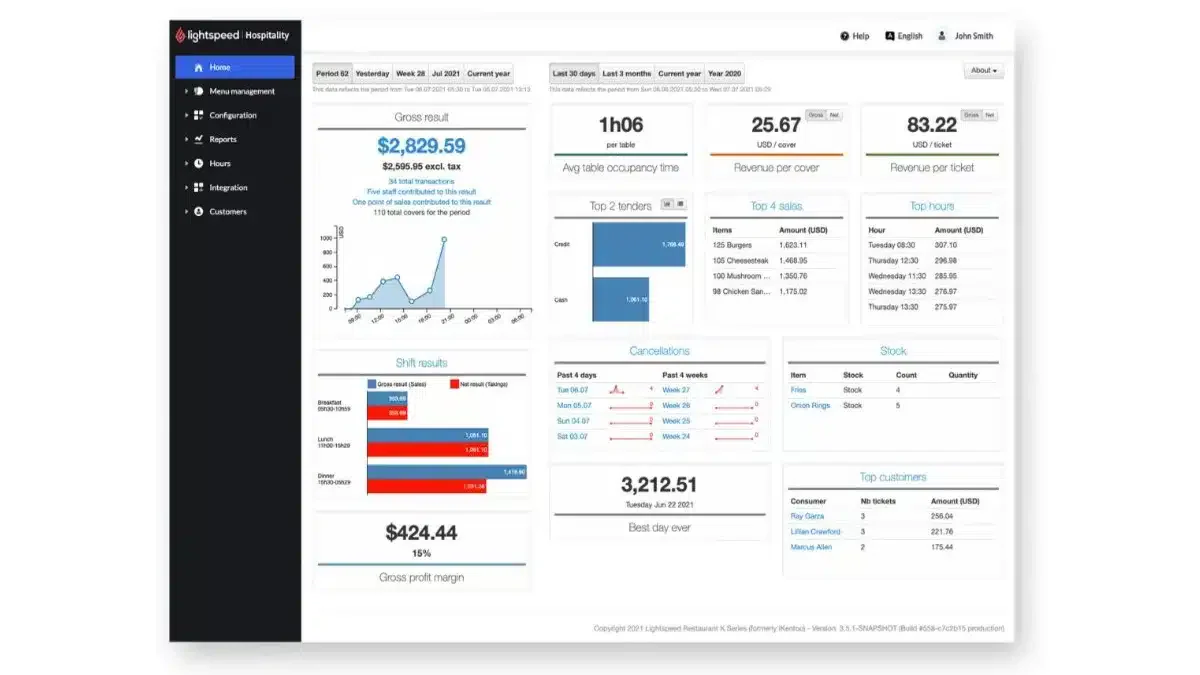
Lightspeed Restaurant POS is a comprehensive, cloud-based point-of-sale system tailored for the restaurant industry. It’s designed for various types of dining establishments, from small cafes to large, multi-location restaurants.
Best Features:
- Customizable menus and floor plans: Tailor the POS to fit the restaurant’s layout and menu offerings.
- Integrated payments: Process payments without switching between tools for a seamless customer experience.
- Inventory management: Track inventory down to the ingredient level.
- Advanced insights: Gain valuable data on menu optimization, customer behavior, and staff performance.
- Multilocation support: Manage all locations or revenue centers from one platform.
- Kitchen display system: Connect front-of-house and back-of-house teams for improved communication and efficiency.
| Pros | Cons |
|
|
Mid‑to‑large full‑service and quick‑service restaurants, especially those with multiple outlets, complex menus, and a need for advanced reporting and multi‑channel integration.
Pricing: Starts at RM420 per month.
7. Zeoniq
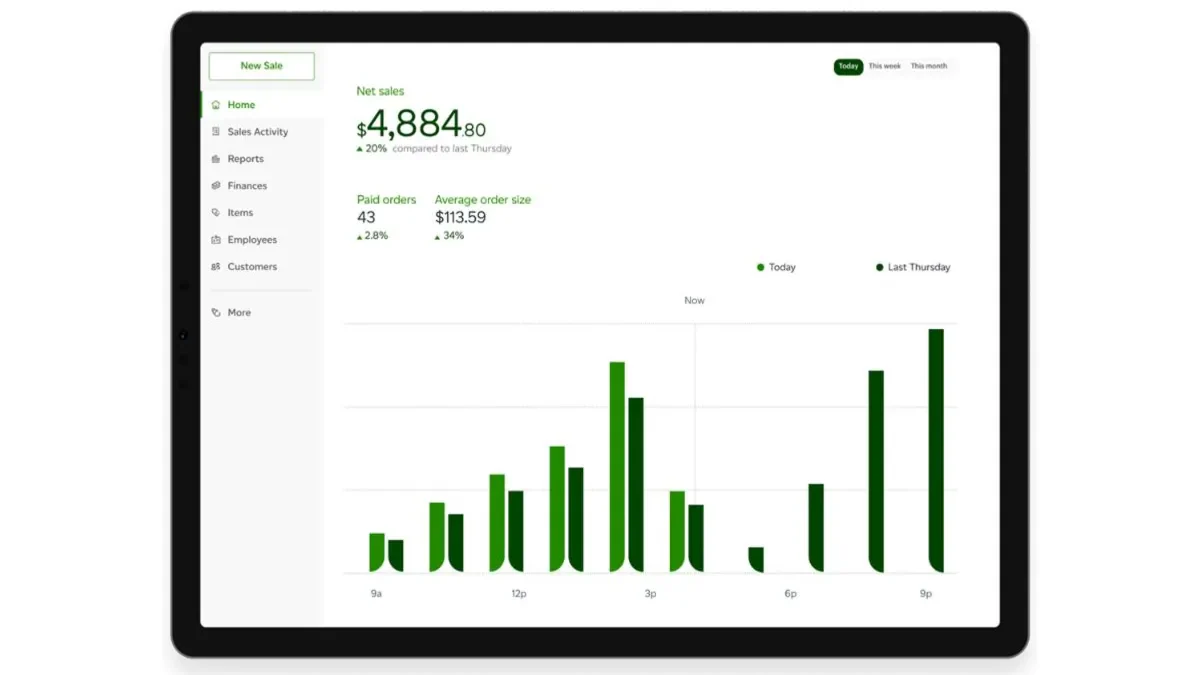
Zeoniq is a cloud based POS platform for restaurants and retail businesses that want clearer visibility across sales and outlet activity. For Malaysian F&B teams, it can be relevant for businesses looking for a more connected way to manage restaurant transactions, service flow, and branch performance from one ecosystem.
Its setup goes beyond basic billing by combining POS, self ordering, kitchen display, and delivery platform integration. That makes it more suitable for operators that want smoother coordination across dine in, online ordering, and multi outlet activity.
Best features:
- KDS integration: Supports smoother order flow between front of house and kitchen.
- Self ordering support: Includes QR and self order workflows for faster service.
- Delivery integration: Captures online orders into the POS workflow.
- Multi outlet visibility: Helps monitor sales and branch performance centrally.
- Local MY support: Zeoniq has a Malaysia entity and local contact details.
| Pros | Cons |
|
|
Growing restaurant groups, multi outlet operators, and F&B businesses in Malaysia that want tighter coordination across POS, kitchen, self ordering, and online order channels.
Pricing: Custom quotation.
8. BrandK
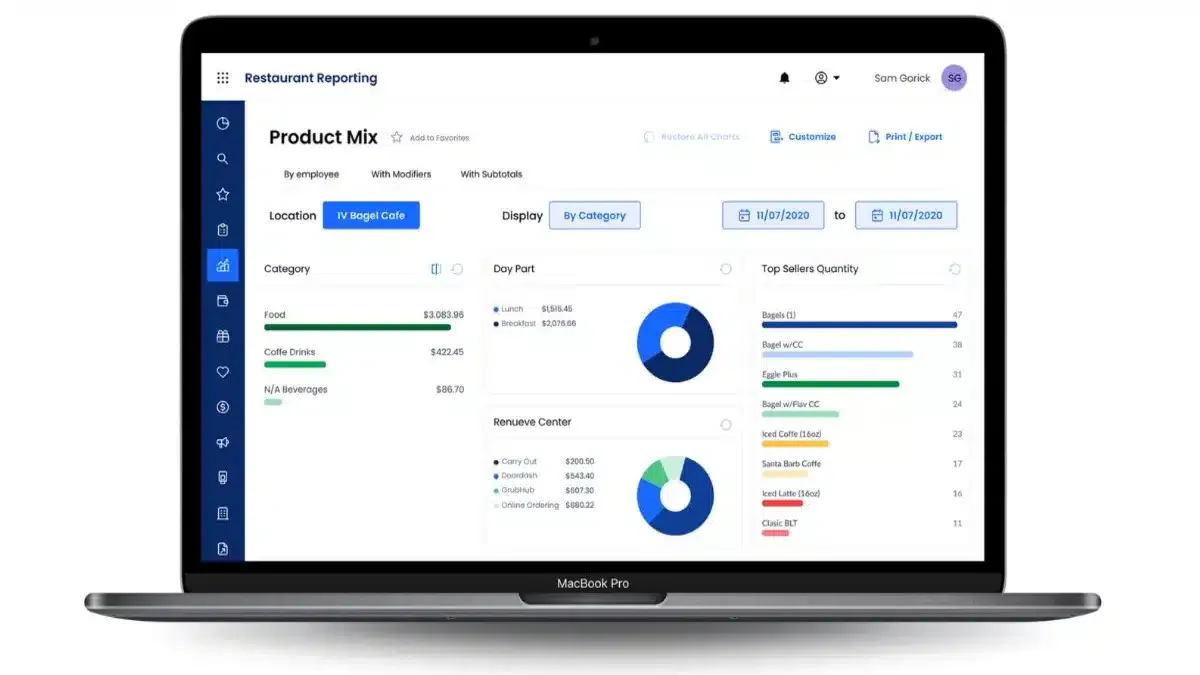
BrandK is a tablet based POS for restaurants in Malaysia that need better control over orders, tables, and daily operations. It can suit outlets looking for a more practical way to manage sales, service flow, and compliance in one system without adding complexity.
It is more relevant for operators that deal with queue heavy service, table turnover, and local compliance requirements such as e invoicing.
Best features:
- Table ordering: Supports QR and table side ordering.
- Queue management: Includes WhatsApp and SMS alerts.
- LHDN ready: Supports e Invoice submission.
- Multi outlet view: Monitors branches in one dashboard.
- Local support: Malaysia based support available.
| Pros | Cons |
|
|
Casual restaurants and growing F&B outlets in Malaysia that need smoother table flow and better control over daily operations.
Pricing: Starts from around RM200 per month depending on setup.
9. Oracle
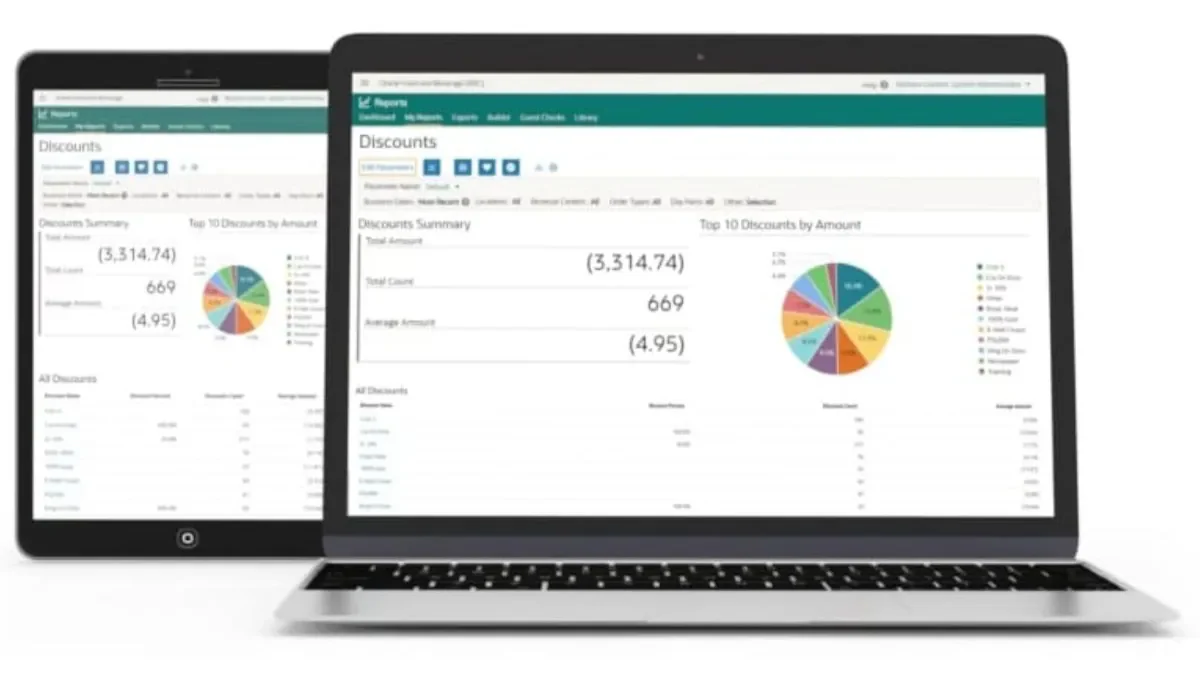
Oracle Simphony POS is a cloud POS system built for complete restaurant management. It offers an all-in-one solution that helps restaurateurs optimize their online and in-house operations in real time from any device.
This POS system for restaurant Malaysia is known for its ability to handle a high volume of transactions and its extensive integration ecosystem.
Best features:
- Cloud-based platform: Offers flexibility and accessibility from any device.
- Conversational ordering: Allows orders to be taken as they are spoken, enhancing customer service.
- Multi-language and multi-currency support: Adapts to various languages, currencies, and local regulations across 160 countries.
- Secure transactions: Runs solely on Oracle’s secure enterprise-grade technology stack.
- Integration ecosystem: Supports over 85 integration partners for extended POS capabilities.
| Pros | Cons |
|
|
Full‑service and multi‑location restaurants, large casual dining chains, and hospitality operations with complex service needs.
Pricing: Custom quotation based on business requirements.
10. QubePos
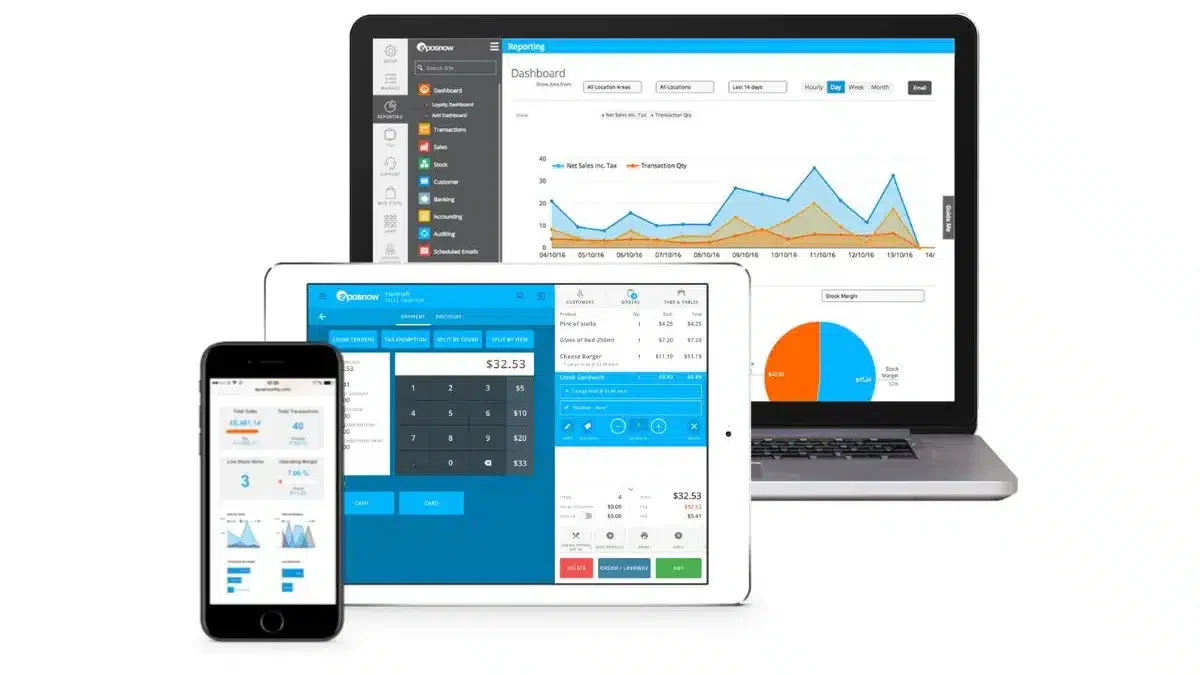
QubePos is a cloud based POS platform for businesses in Malaysia that manage sales, inventory, and outlet operations in one system. It suits operators looking for a more structured way to handle transactions and daily operations across outlets without added complexity.
Best features:
- Multichannel sales: Combines in store and online transactions in one system.
- KDS integration: Sends orders directly to the kitchen to reduce errors.
- Inventory tracking: Monitors stock and can connect with financial reporting tools for better control.
- Payment processing: Supports multiple payment methods used in Malaysia.
- Sales reporting: Provides insights into sales trends and outlet performance.
| Pros | Cons |
|
|
Restaurants, cafés, and growing businesses in Malaysia that need better control over transactions, inventory, and outlet performance.
Pricing: Custom quotation based on business size and setup.
11. iCHEF
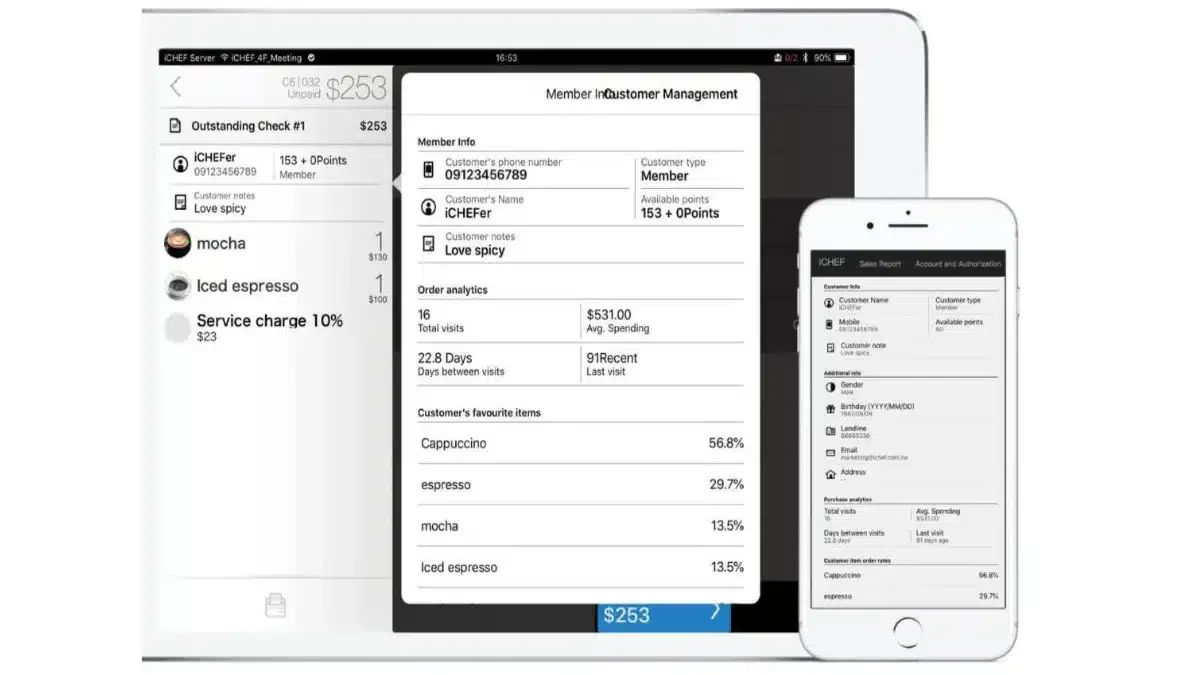
iCHEF POS is a cloud-based restaurant POS system that, with its features that cover the full service cycle – from seating to payment, has been setting a new standard for the industry.
It’s designed to manage all the operations needed by a restaurant, from monitoring sales and guest count to queuing, sending orders to the kitchen, seating, serving, and printing out receipts.
Best features:
- Cloud computing system: Manages operations efficiently and provides real-time data.
- Table management: Increases table turnover rate and tracks every table’s status.
- Order from anywhere: Takes orders by the table with an iPad, adding modifiers and sending them to the kitchen in one go.
- Orders go straight to the kitchen printer: Minimizes errors with clear kitchen printer configurations and instant notifications for order changes.
- Promotions and discounts: Tracks promotions with detailed reports and controls discounts to ensure profitability.
| Pros | Cons |
|
|
Restaurants that need fast, flexible front-of-house and back-office operations, especially cafés, casual dining, and multi-outlet F&B businesses.
Pricing: Starts at RM229 per month.
12. Qashier F&B
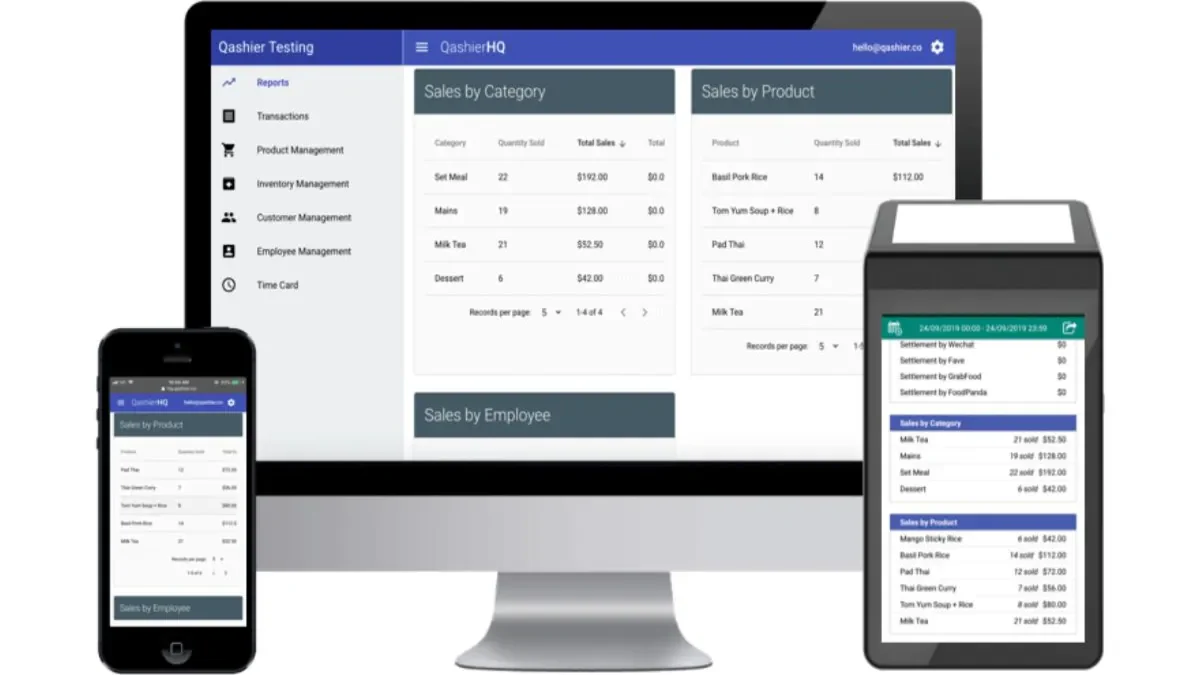
Qashier POS System is a POS built specifically for restaurants and food service counters of restaurants and food service businesses.
It’s a restaurant system that offers a range of features to manage orders, billing, and customer records in one dashboard, and improve overall business management.
Best features:
- Streamlined billing operations: Keeps track of customer orders, table occupancy, and kitchen operations.
- Split billing: Allows for split billing upon customer request, simplifying the payment process.
- Inventory management: Integrated ingredient management system alerts when stock items reach their reorder level.
- Customer relations: Builds a CRM database for better customer engagement and loyalty programs.
- Multi-platform integration: Receives orders from various delivery platforms directly into the kitchen.
| Pros | Cons |
|
|
Well-suited for small to medium-sized businesses such as cafés, kiosks, salons, and boutique retail stores thanks to its fast setup, intuitive interface, and cloud-based back-office.
Pricing: Bundle begins at RM13,127.
13. ARMS F&B
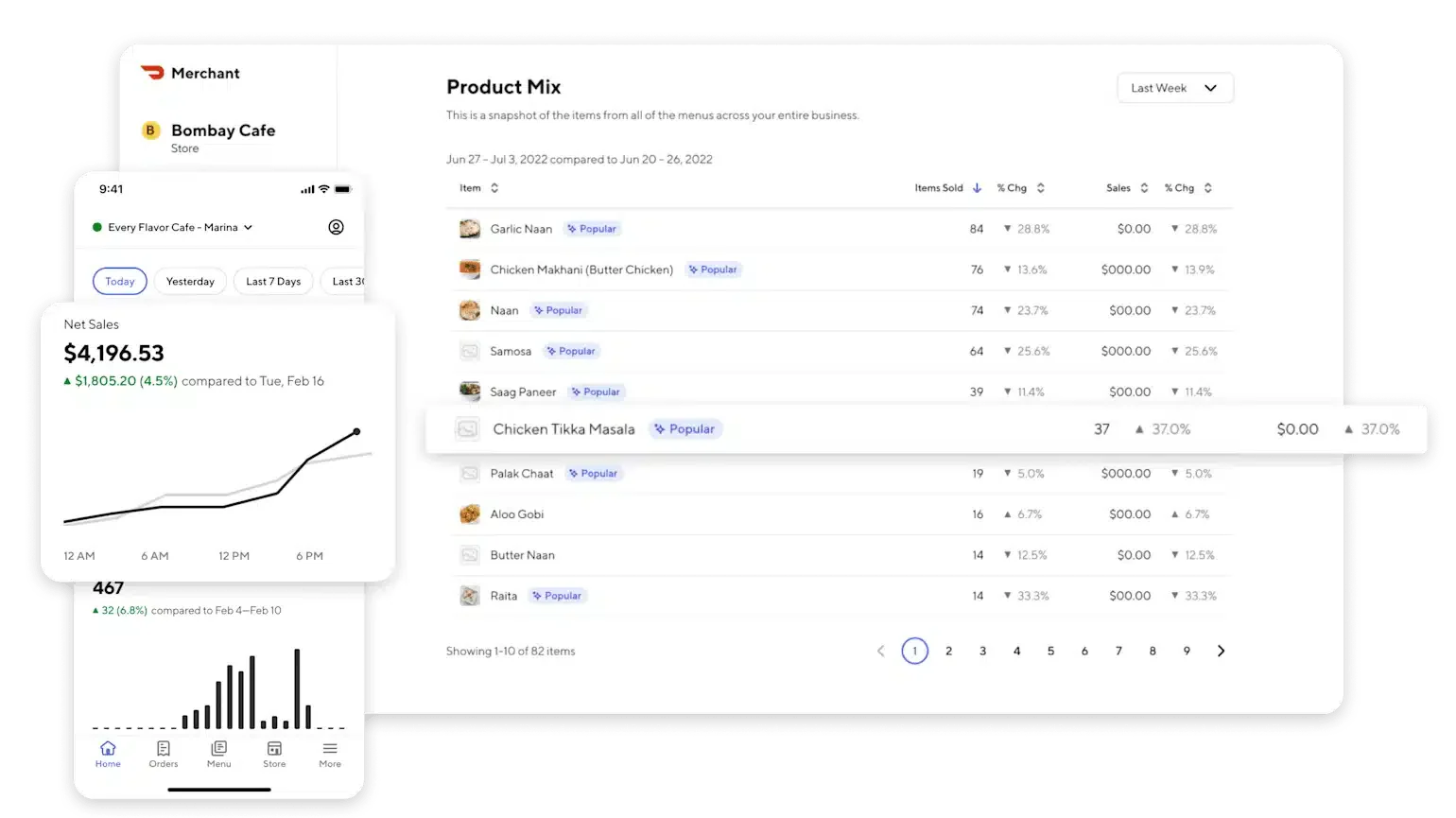
ARMS F&B is a restaurant management system built for Malaysian operators that want to keep kitchen flow and sales records in one place, and daily outlet operations. It can fit businesses looking for a more reliable system to manage F&B operations across dine in, delivery, and multi outlet activity without overcomplicating workflows.
Best features:
- Order & table management: Handles dine in, takeaway, and delivery orders in one system.
- Staff management: Tracks scheduling and staff performance.
- Loyalty tools: Supports promotions and customer engagement.
- Reporting: Provides real time insights on sales and operations.
- Integration: Connects with payment systems and other business tools.
| Pros | Cons |
|
|
Restaurants, cloud kitchens, and growing F&B operators in Malaysia that need better control over operations, staff, and outlet performance.
Pricing: Custom quotation based on business requirements.
14. FoodZaps
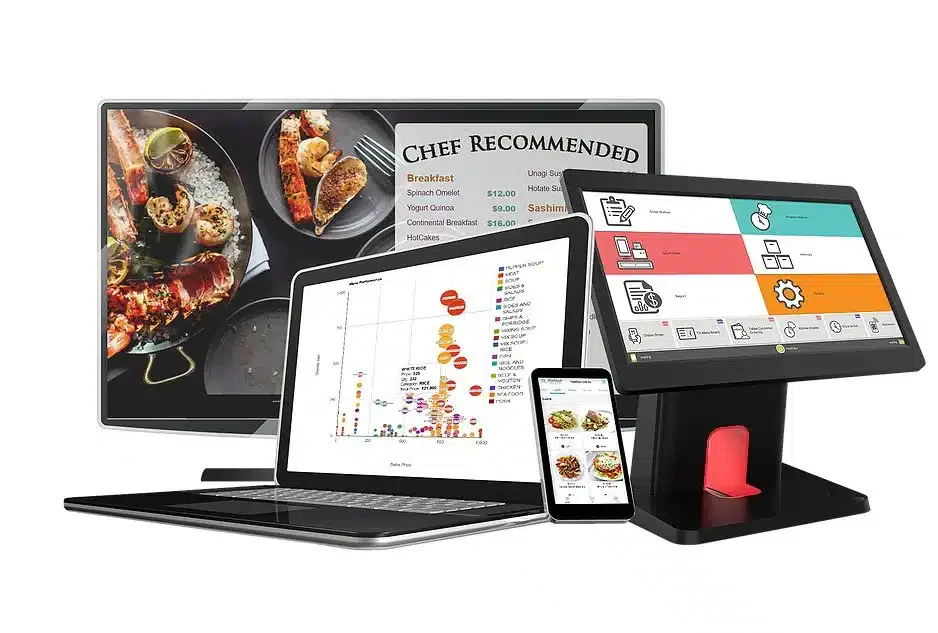 FoodZaps is a cloud‑based POS solution built for F&B businesses in Malaysia and the region. It enables cafés, bars, kiosks, and restaurants to manage orders, inventory, menus, and reporting, from any device, with support for offline mode when internet connectivity is weak
Features:
- Order & table management: Supports dine‑in, take‑away, self‑ordering and waiter ordering via mobile/tablet.
- Inventory & recipe tracking: Manages stock down to product or ingredient level; low‑stock alerts built‑in.
- Cloud reporting & analytics: Real‑time dashboards let managers monitor sales, top dishes, staff performance, and outlet status from anywhere.
- Offline mode/fail‑safe: The system continues functioning even during internet disruptions, then syncs data when back online.
- Multi‑device & hardware versatility: Works with tablets, mobile devices, kitchen display units, and supports custom configurations across outlets.
| Pros | Cons |
|
|
Small to medium F&B outlets, cafés, kiosks, food trucks, and restaurants looking for a cost‑effective, flexible POS that supports offline fallback and gives good value with core F&B features in place.
Pricing: From RM190 per month.
15. Xilnex
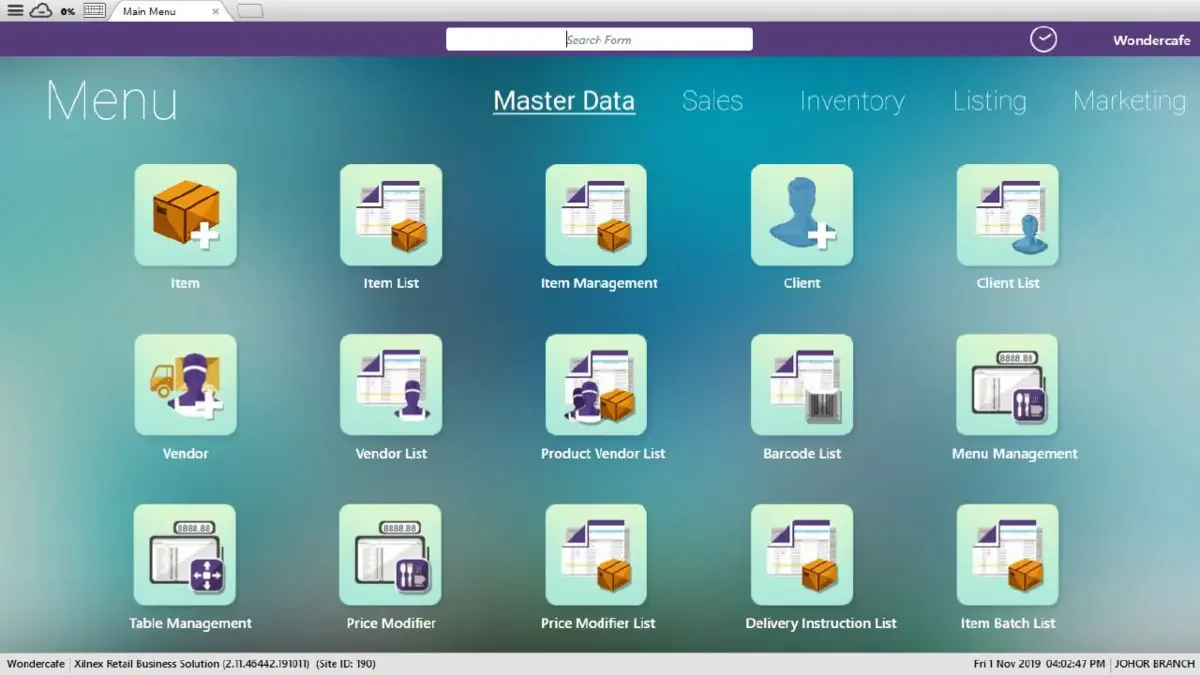
Xilnex POS System is a cloud‑based platform designed for restaurant pos system in Malaysia and Southeast Asia. It offers a unified system to manage sales, inventory, payments, mobile dashboards, and customer loyalty, with scalability for multi‑outlet operations.
Features:
- Inventory & Supply Chain Control: Tracks stock, transfers, wastage adjustments, and integrates with back‑office supply chain modules.
- Order & Sales Management: Supports various sales types (dine‑in, take‑away, delivery), QR ordering and integration with e‑commerce/delivery platforms.
- Customer Loyalty & CRM: Built‑in loyalty modules, membership tiers, cross‑channel rewards and marketing automation (SMS, vouchers).
- Real‑Time Reporting & Dashboards: Mobile dashboards, web reports, analytics on sales, inventory, staff and operations.
- Payment & Multi‑Channel Integration: Supports cashless and cross‑border payments, e‑wallets, QR scanning (DuitNow QR) and connects with online sales channels.
| Pros | Cons |
|
|
Small single‑outlet businesses may find advanced features unnecessary, adding extra cost and complexity.
Pricing: Starts at RM159 per month.
Overall Comparison of F&B POS Systems for Restaurants in Malaysia
To help you evaluate your options more clearly, we’ve put together a comparison of the best f&b pos system Malaysia. This table highlights key aspects like connection quality, bank coverage, ease of integration, and data encryption.
| Provider | LHDN Compliance | Delivery Platform Integration | Offline Mode | QR Ordering Support |
|---|---|---|---|---|
| HashMicro | ||||
| Lightspeed | ||||
| Oracle Simphony |
Why Malaysian F&B Businesses Must Use Restaurant POS System?
In Malaysia, where the F&B sector is a significant contributor to the economy, implementing a restaurant POS Systems is becoming increasingly vital. So, why do Malaysian F&B companies need to implement a F&B POS system Malaysia software?
- Compliance: The Malaysian government’s mandate for e-invoicing requires businesses to have a digital system in place to comply with tax regulations.
- Efficiency: POS systems automate many of the manual processes, reducing human error and saving time, which is particularly valuable during peak hours.
- Data analytics: They provide actionable insights into customer behavior and sales patterns, enabling businesses to make informed decisions.
- Delivery Platform Integration: Managing third-party delivery apps manually means juggling multiple tablets and re-entering orders into the kitchen workflow by hand. This increases the risk of missed orders, slower dispatch times, and disjointed end-of-day sales reconciliation.
How to Choose the Right POS System Restaurant in Malaysia
Choosing the right restaurant POS Systems for Malaysian F&B companies involves carefully considering several factors to ensure that the software aligns with the specific needs and regulations of the region. Here are some key points to consider:
- Understanding local regulations: Malaysian F&B businesses need a POS system that meets e-invoicing regulations, records transactions precisely, and calculates taxes according to Malaysian law.
- Software credibility and reliability: Evaluate a software’s reliability by examining customer feedback, particularly from Malaysian F&B businesses, and assess the provider’s client base and market reputation.
- Features and customization: Choose a POS system with features tailored to your business needs, like membership and loyalty programs, and ensure it’s customizable and integrates with existing systems.
- Technical support and training: Ensure your POS system has dedicated support team with local presence, including staff training, to reduce downtime and maintain smooth operations.
- Scalability: Look for the best f&b pos system Malaysia that is scalable and can accommodate additional features or increased transaction volumes without significant disruptions or additional costs.
- Cost considerations: Most importantly, consider the total cost of ownership, including initial costs, recurring fees, and extra feature charges, to balance functionality with affordability.
Which POS Is Right for Your F&B Type?
| F&B Type | Recommended POS | Why It Fits |
|---|---|---|
| Café that needs simple daily control over orders, payments, and stock | StoreHub or Slurp! | StoreHub works well for cafés that want a user friendly system with inventory, loyalty, and multi channel sales tools. Slurp! is also a practical fit for cafés that need to move tables faster and take orders without a queue, and local payments without making operations feel too complex. |
| Full service restaurant that needs table management and smoother kitchen coordination | Zeoniq or iCHEF | Zeoniq is more suitable for restaurants that where front-of-house and kitchen need to stay in sync, self ordering, and delivery. iCHEF is a stronger fit for outlets that want flexible front of house control, table management, and faster order handling during service hours. |
| Multi outlet chain that needs centralized reporting, stock visibility, and tighter operational control | HashMicro or Eats365 | HashMicro is more suitable for F&B groups that need broader ERP integration across inventory, procurement, finance, and outlet operations. Eats365 is a practical option for chains that want cloud based control over orders, stock, staff, and reporting across branches. |
| Cloud kitchen or delivery heavy brand that depends on order aggregation and platform integration | Klikit or ARMS F&B | Klikit is a stronger fit for brands that need delivery aggregation, local payments, and centralized order visibility. ARMS F&B also works for operators that want better day to day control across dine in, delivery, staff, and outlet reporting without overcomplicating workflows. |
| Food truck, kiosk, or smaller outlet that needs flexibility and stable operation during peak hours | FoodZaps or QubePos | FoodZaps is a practical fit for smaller outlets that need offline support, device flexibility, and core F&B features without a heavier setup. QubePos is useful for operators that want more structured control over transactions, stock, and outlet performance in one system. |
Conclusion
A restaurant POS Systems can shape how smoothly a restaurant runs, from taking orders to closing payments and tracking stock. When everything connects properly, teams move faster, mistakes drop, and managers see clearer numbers for daily decisions.
Before choosing, match the system to your actual service style, whether it’s dine-in, quick service, delivery-heavy, or multi-outlet. Then, compare stability during peak hours, reporting depth, integrations, and the quality of local support so the setup still works when volume grows.
If you want a second opinion while narrowing the shortlist, a free consultation can help map your workflow and define the features you truly need. That way, you can compare options with practical benchmarks, not just marketing claims.


FAQ about POS System Restaurant
How can a POS system help manage restaurant table orders efficiently?
A POS system helps staff track and manage tables more accurately by allowing staff to assign and track orders easily. Orders can be taken directly at the table using portable devices and sent instantly to the kitchen, reducing errors and speeding up service.
Can a POS system integrate with food delivery services?
Yes, many modern POS systems offer direct connection to GrabFood, Foodpanda, and other delivery apps. This integration allows restaurants to manage in-house and delivery orders from a single system, ensuring that the process is efficient and reducing the chances of errors. This feature is particularly useful for restaurants looking to expand their delivery services.
How does a POS system support inventory management in a restaurant?
POS systems include inventory tools that track stock down to ingredient level. These systems can track stock levels in real-time, send re-order reminders, and generate detailed reports on inventory usage. This functionality helps restaurant managers maintain optimal stock levels, reduce waste, and ensure that they never run out of essential ingredients.
Is it possible to manage customer loyalty programs with a POS system?
Yes, many POS systems come with built-in features for managing customer loyalty programs. This feature is crucial for enhancing customer retention and encouraging repeat business.
What are the benefits of using self-service kiosks in a restaurant?
Self-service kiosks can significantly enhance the efficiency of a restaurant by reducing wait times and increasing order accuracy. These kiosks allow customers to place their orders directly, which helps in managing high traffic volumes and improves overall customer satisfaction.
How does a POS system work with accounting software?
A POS system and accounting software integrate to connect sales data directly to your accounts in restaurants. The POS system tracks sales, transactions, and inventory, while accounting software ensures accurate financial reporting, cost control, and tax compliance.