















Facing scheduling errors, stock shortages, or production slowdowns? These challenges are common in manufacturing, especially when relying on separated processes. As the industry evolves, more producers are turning to production planning software to .
This is supported by the fact that the manufacturing production planning software market was valued at USD 2.1 billion in 2022 and is projected to grow at an 8.5% CAGR until 2030. As this fact suggests, using a digital solution has rapidly become a norm.
However, with so many options available, finding the right fit can be overwhelming. To help, we’ve rounded up the 12 best production planning software for manufacturing in Malaysia, in 2026. Read on to find out more!
Key Takeaways
Production Planning Software helps manufacturers optimize schedules, manage resources, and prevent stock shortages for smooth operations.
Features like automated scheduling, demand forecasting, and real-time inventory tracking improve efficiency and reduce downtime.
Choosing the right software requires evaluating user-friendliness, integration, flexibility, and industry-specific needs.
HashMicro Manufacturing Software offers a robust production planning system with advanced scheduling, quality control, and unlimited users.
The most effective production planning systems don’t just schedule jobs — they surface the constraints early enough for planners to act before a delay becomes a disruption.
Best Manufacturing Production Planning Software in Malaysia
After evaluating multiple options, these production planning software solutions stand out for their ability to streamline operations, enhance visibility, and improve resource utilization. Each system offers unique strengths that cater to different manufacturing needs.


Best Because
Cloud-based ERP solution offering automated scheduling, demand forecasting, and real-time production tracking. Ideal for large-scale manufacturers needing integrated, multi-location control.

Best Because
Flexible and intuitive platform with real-time process updates, BoM organization, and master scheduling. Best for small to mid-sized manufacturers wanting scalable production management.

Best Because
Reliable system for discrete and make-to-stock manufacturers. Features predictive analytics, work order tracking, and material monitoring for efficient, organized production.

Best Because
Reliable system for discrete and make-to-stock manufacturers. Features predictive analytics, work order tracking, and material monitoring for efficient, organized production.

Best Because
Reliable system for discrete and make-to-stock manufacturers. Features predictive analytics, work order tracking, and material monitoring for efficient, organized production.
What is Production Planning?
Production planning organizes manufacturing activities to ensure efficient operations. It involves defining steps, allocating resources, setting timelines, and determining methods to control costs and meet deadlines. This process is a strategic roadmap based on business needs, factoring in supply chain management, raw materials, and storage.
The goal of production planning is to maximize efficiency, reduce waste, and optimize workforce use. Through production planning and control, businesses apply make-to-order or make-to-stock methods to meet customer demand while keeping costs under control.
Hashy AI Fact

Need to know!
AI transforms production scheduling into a smart control hub, auto-scheduling tasks, predicting demand, machine availability, and material needs in real time for seamless and on-time production.
Request a free demo today!
12 Best Manufacturing Production Planning Software in Malaysia
Here are 12 top production planning software options in Malaysia, built to improve scheduling, resource allocation, and inventory management for manufacturers.
- HashMicro: Automates scheduling, inventory, and resource allocation.
- NetSuite: ERP-based manufacturing software for scheduling.
- Odoo: Flexible production management with real-time updates.
- Sage 100: Production scheduling and material tracking.
- ClickUp: Task, resource, and production timeline management tool.
- Connecteam: Shift scheduling and task assignment for production.
- Fishbowl: Inventory and work order with QuickBooks integration.
- Katana: Real-time inventory and visual production planning software.
- Wrike: Collaborative production scheduling with Gantt charts.
- Epicor: Real-time production control and lean manufacturing support.
- Infor LN: Advanced scheduling for heavy industries.
- MasterControl: Automated quality control for regulated industries.
1. HashMicro
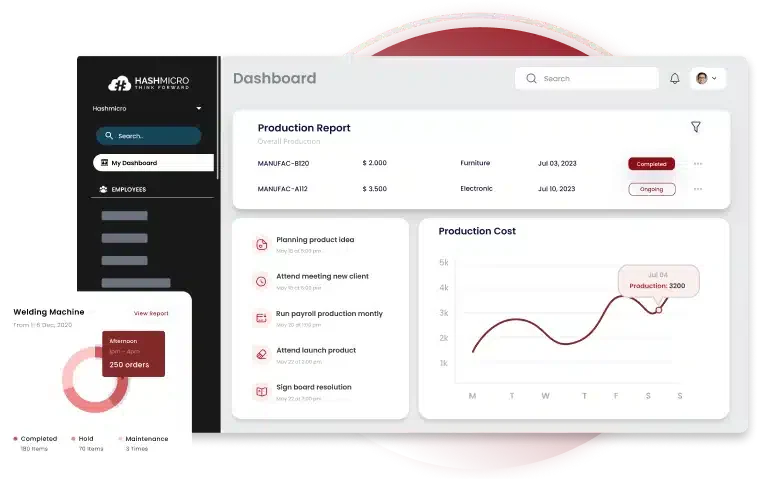
HashMicro Production Planning Software helps manufacturers organize production schedules, manage inventory, and allocate resources efficiently. It automates key processes to ensure a smooth and cost-effective production cycle.
Businesses can request a free product tour and consultation to explore how the software fits their specific needs. This risk-free approach allows them to evaluate its features before making a decision.
Leading companies like Forbes, Danone, and Dilmah trust HashMicro for its scalable and innovative solutions. These partnerships highlight its ability to support manufacturers in improving productivity and meeting industry demands.
Features:
- Manufacturing Production Scheduling: Assigns machines, workers, and materials to each task. Sequences production steps based on deadlines and available capacity.
- Manufacturing Requisition Planning: Calculates raw material needs from production orders. Triggers purchase requests or stock transfers to keep materials ready.
- Demand Forecasting: Analyzes past sales and order trends. Adjusts production schedules based on expected demand shifts.
- Bill of Materials (BoM) Management: Lists required materials, quantities, and assembly steps. Restricts access to proprietary formulas for added security.
- Made-to-Order Completion Forecast: Estimates production timelines based on resource availability. Updates delivery dates dynamically as production progresses.
- Manufacturing Quality Control: Inspects materials and products at key checkpoints. Flags defects and prompts corrective actions before products move forward.
- Finished Goods Production Simulation: Models production flow using real-time data. Identifies bottlenecks and suggests process adjustments before issues arise.
| Pros | Cons |
|
|
2. NetSuite
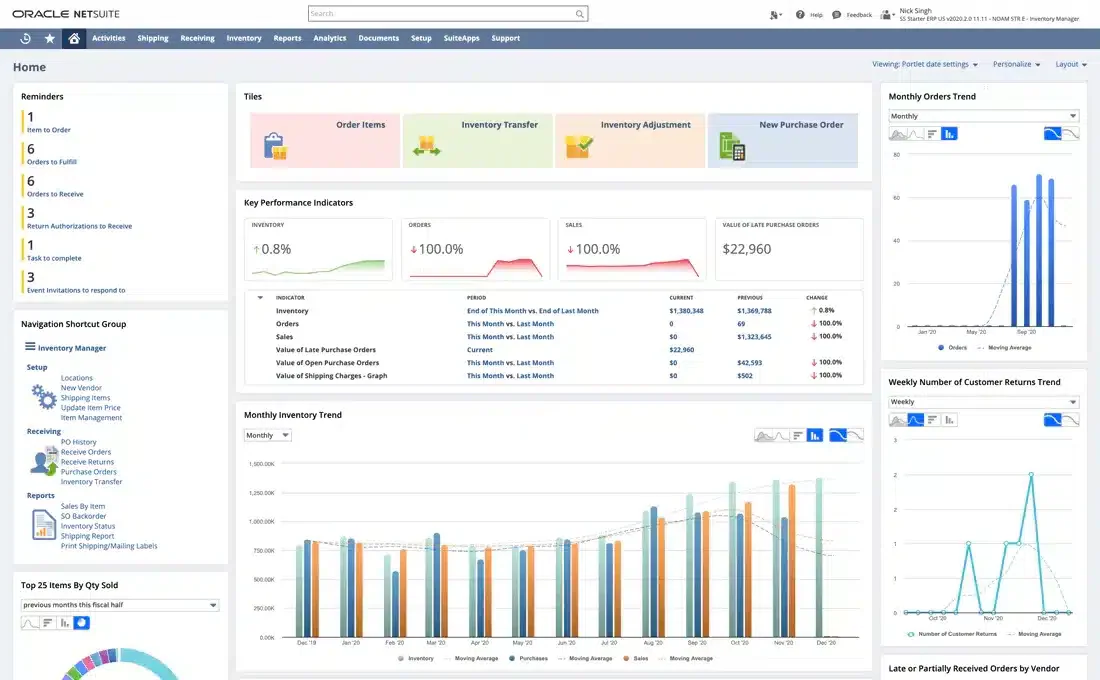
NetSuite provides ERP manufacturing software that helps manufacturers organize schedules and allocate resources efficiently. It automates planning, synchronizes tasks across departments, and keeps production on track.
Best for: This production planning software is ideal for manufacturers operating in industries such as consumer goods, electronics, automotive, and industrial products.
Features:
- Demand forecasting
- Production scheduling
- Multi-location inventory control
- Work order management
- Reporting and analytics
| Pros | Cons |
|
|
3. Odoo
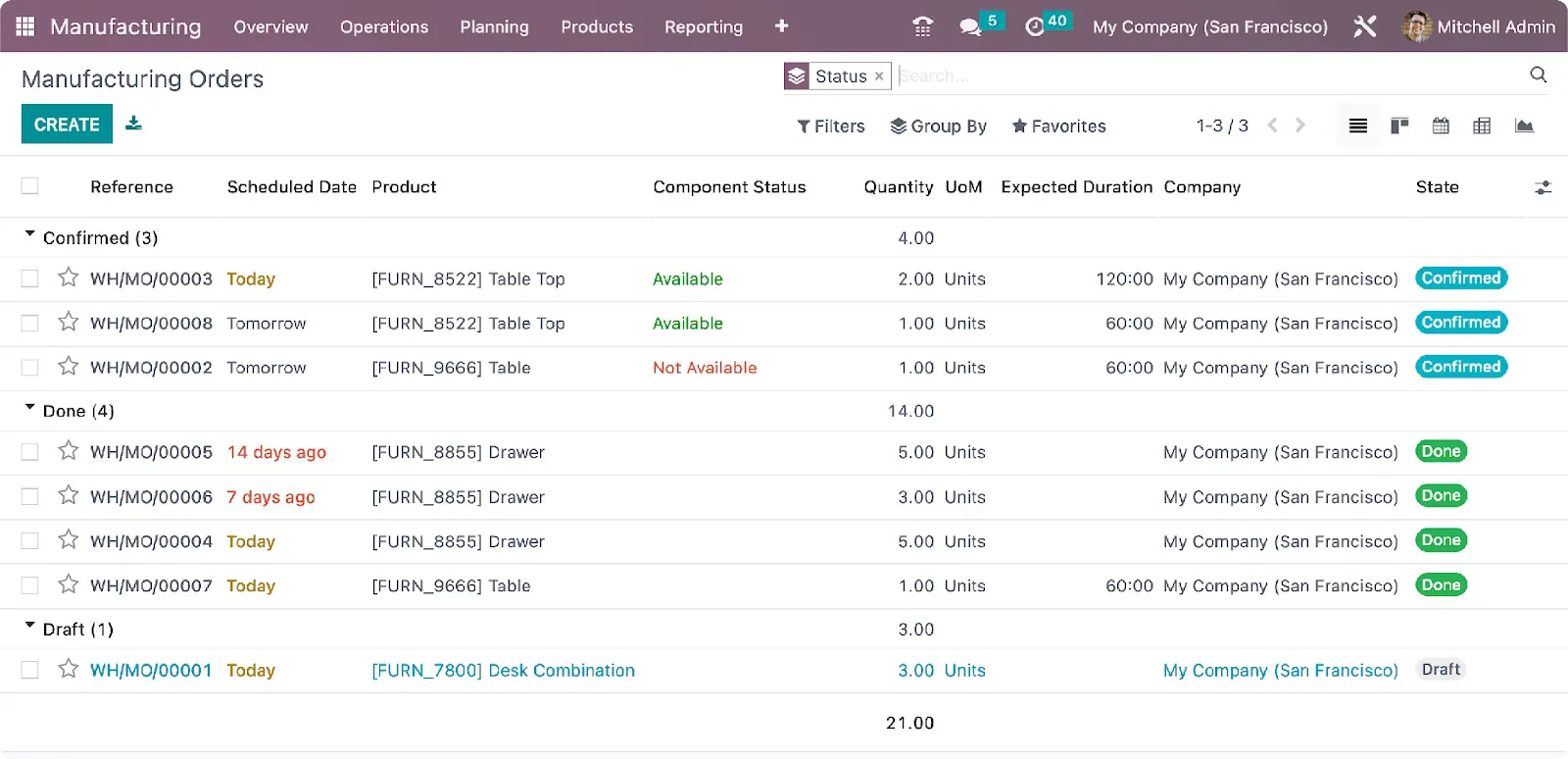
Odoo provides manufacturing process optimization tools designed for manufacturers to organize and control their production processes. It assigns tasks, schedules machines, and calculates material needs while updating production status in real time.
Best for: This production planning software is ideal for small to medium-sized manufacturers working on consumer goods, electronics, automotive, and industrial products.
Features:
- Master schedule for production
- Real-time simulation of processes
- Inventory tracking and control
- Bill of Materials (BoM) organization
- Reports on production performance
| Pros | Cons |
|
|
4. Sage 100
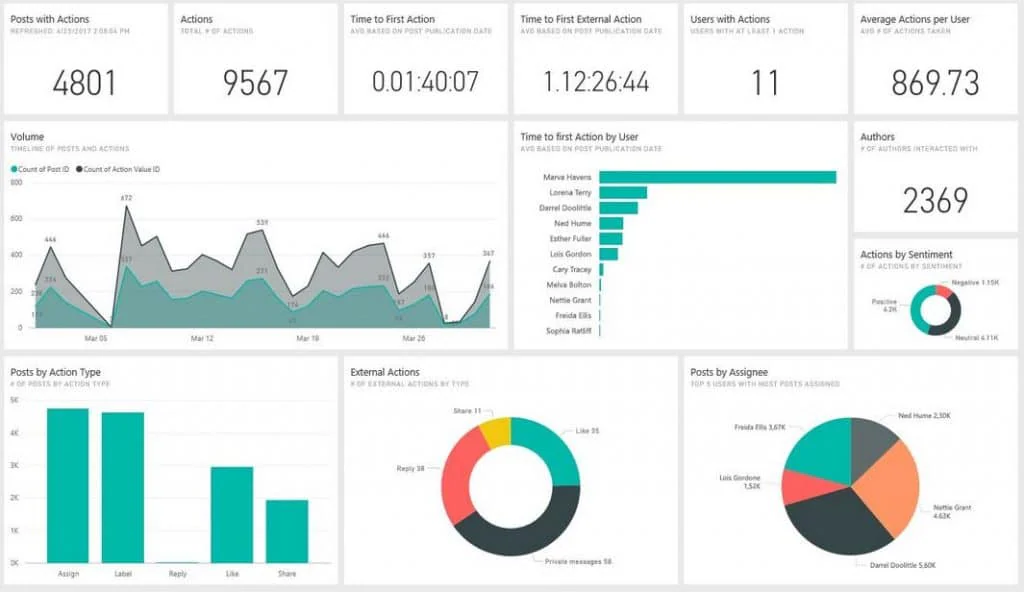
Sage 100 is production planning software built for manufacturers to improve efficiency by organizing production and managing resources. It schedules tasks automatically, maximizes material usage, and keeps product deliveries on track.
Best for: Sage 100’s production planning software is tailored for discrete, make-to-stock manufacturers and fabricators, particularly those in industries like machinery, equipment, and custom metal fabrication.
Features:
- Inventory tracking and management
- Bill of Materials (BoM) organization
- Work order tracking
- Monitoring of material usage
- Predictive data analysis
| Pros | Cons |
|
|
5. ClickUp
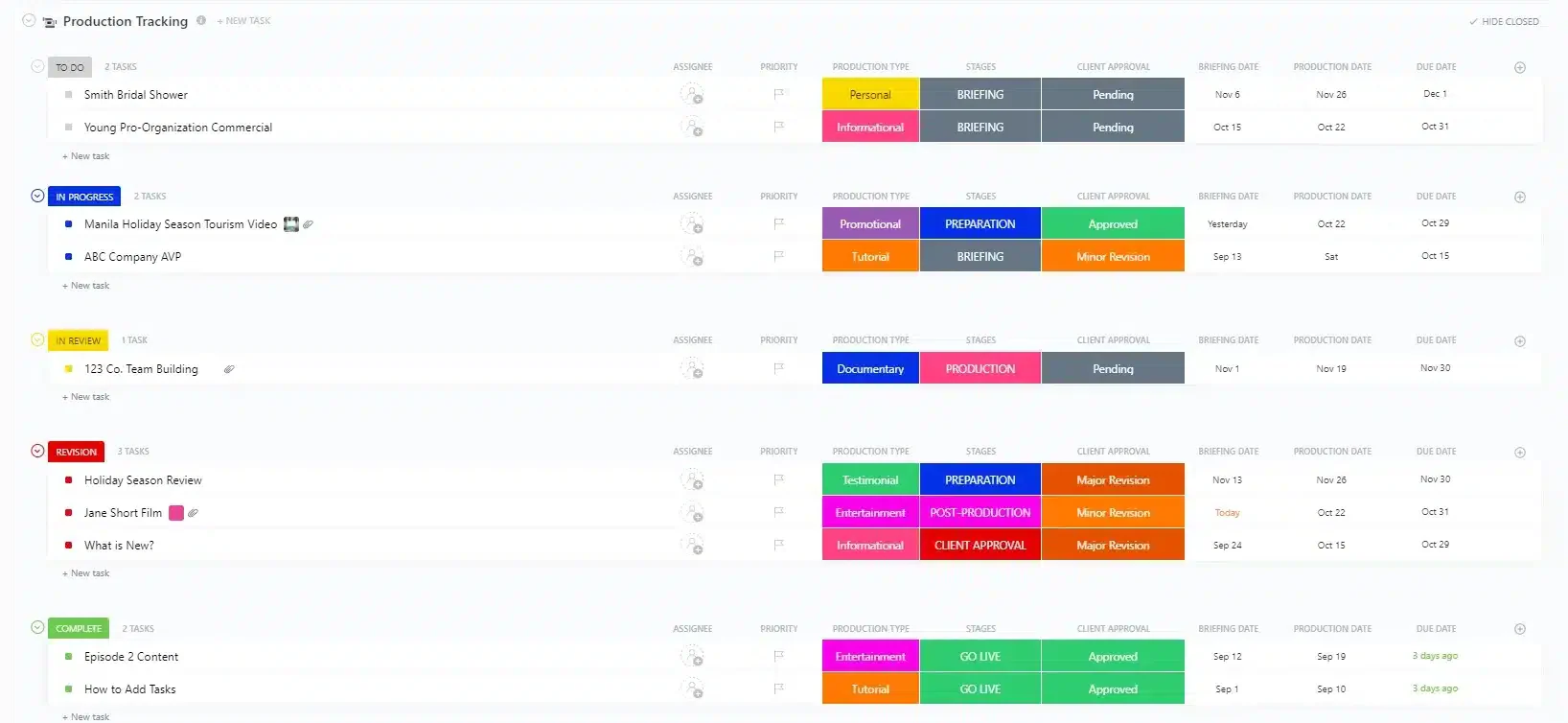
ClickUp’s production planning software is best for small to mid-sized manufacturers looking to organize tasks, track resources, and manage production timelines in one place.
ClickUp’s production planning software offers customizable workflows, Gantt charts for scheduling, and integrations with tools like Slack and Google Drive. Users can assign tasks to machines or workers, set deadlines, and monitor progress in real time.
Best for: ClickUp’s production planning software is ideal for small to medium-sized manufacturing businesses.
Features:
- Production timeline management
- Inventory tracking
- Quality inspection monitoring
- Task assignment and tracking
- Data reporting and analysis
| Pros | Cons |
|
|
6. Connecteam
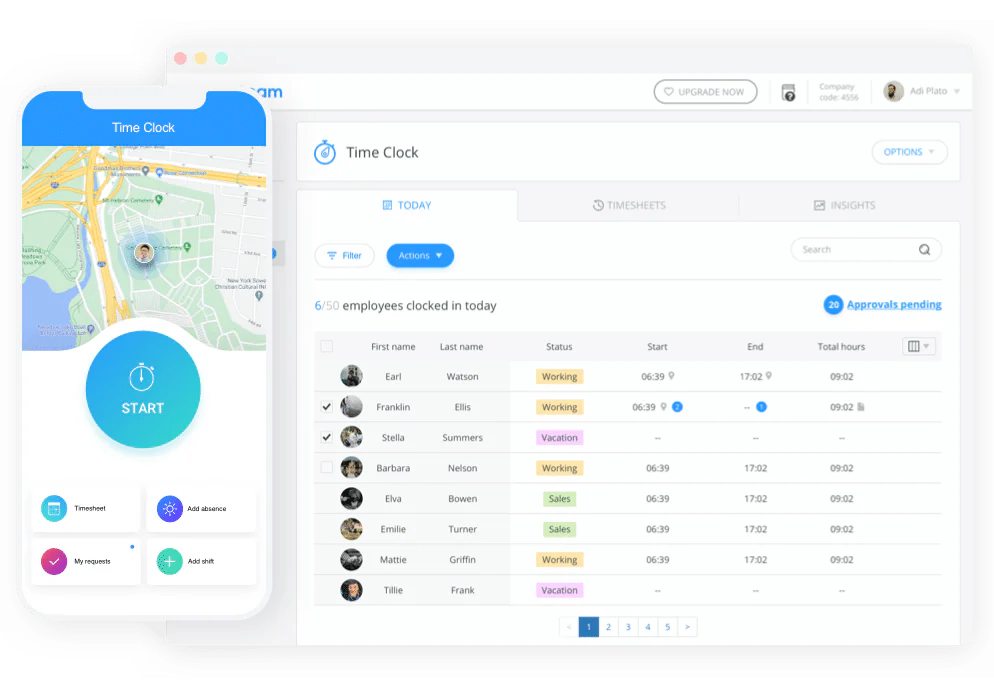
Connecteam is a production planning and scheduling software that includes time tracking, shift scheduling, and task assignments, helping managers match workers with the right jobs based on availability and skills.
The software production planning software also offers real-time chat and GPS tracking, so supervisors can monitor job progress and ensure tasks are completed at the correct locations.
Best for: Connecteam production planning software is suitable for manufacturers specializing in food and beverage, electronics, automotive, and industrial products.
Features:
- Work hour tracking
- Employee shift scheduling
- Task assignment and monitoring
- Attendance reporting
| Pros | Cons |
|
|
7. Fishbowl
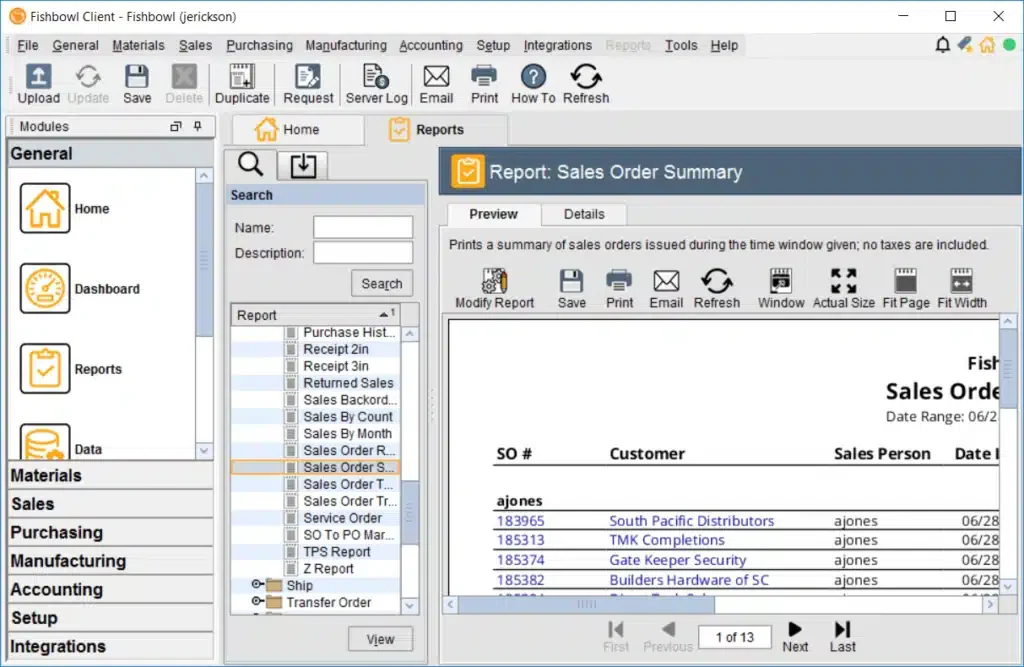
Fishbowl Manufacturing is built for small to mid-sized manufacturers looking to streamline production. It offers work order management, BoM tracking, barcode scanning, and real-time inventory updates.
This production planning software integrates with QuickBooks to sync inventory and accounting, automates order processing, and manages production schedules efficiently. Hence, it can also function as manufacturing accounting software.
Best for: Fishbowl manufacturing production planning software is suitable for small to mid-sized manufacturing companies, retail, life sciences, oil, gas, chemicals, and consumer packaged goods.
Features:
- Real-time inventory monitoring
- Production floor management
- Barcode-based tracking
- Warehouse organization tools
- Data reporting and insights
| Pros | Cons |
|
|
8. Katana
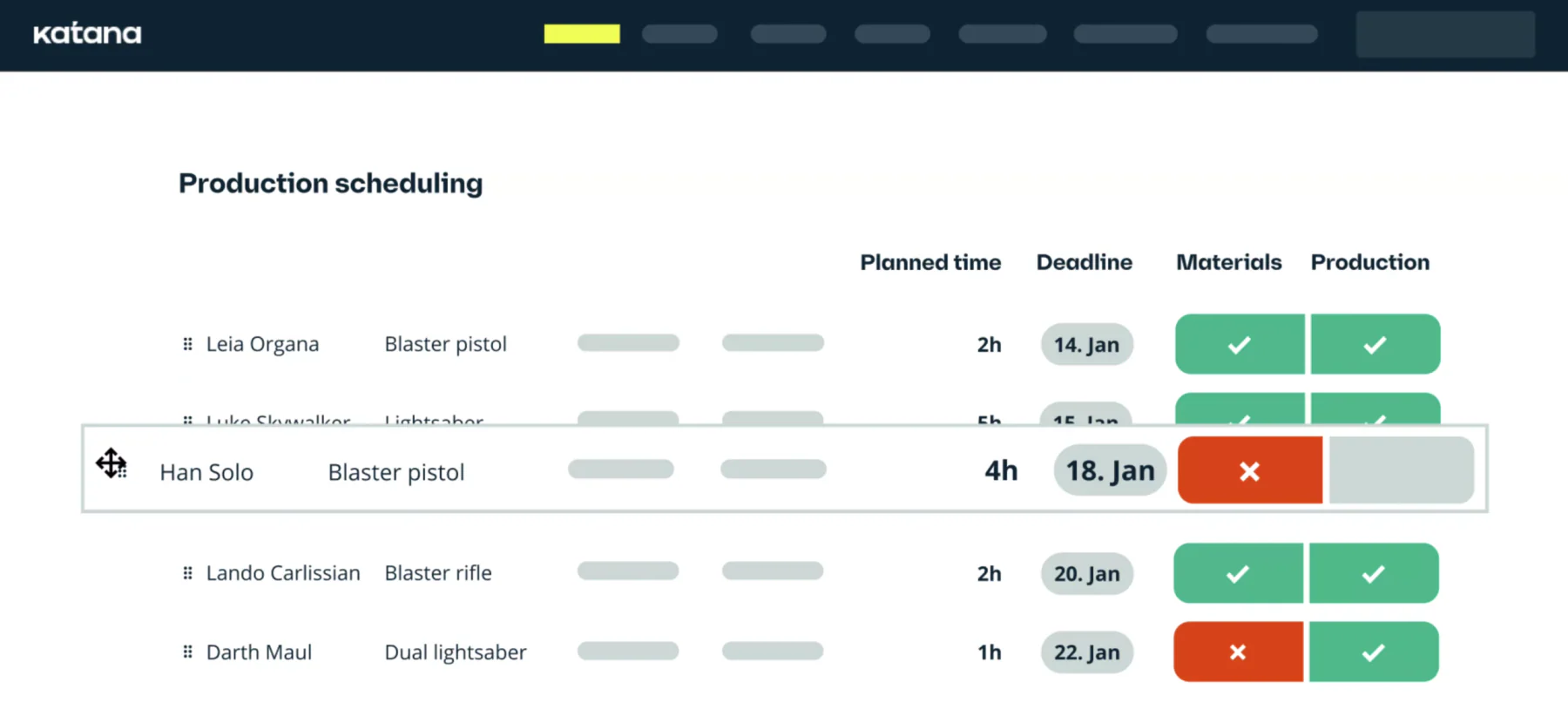
Katana’s manufacturing production planning software provides real-time inventory tracking, visual production planning, and integrates with Shopify and QuickBooks Online. Users can manage stock, production schedules, and sales orders in one system.
It also includes a Shop Floor App for tracking tasks and batch tracking for traceability.
Best for: Katana manufacturing production planning software is designed for small to mid-sized manufacturers in industries like electronics, apparel, food and beverage, and furniture.
Features:
- Real-time inventory tracking
- Supplier order management
- Production scheduling tools
- Shop floor management app
- Bill of Materials (BoM) tracking
| Pros | Cons |
|
|
9. Wrike
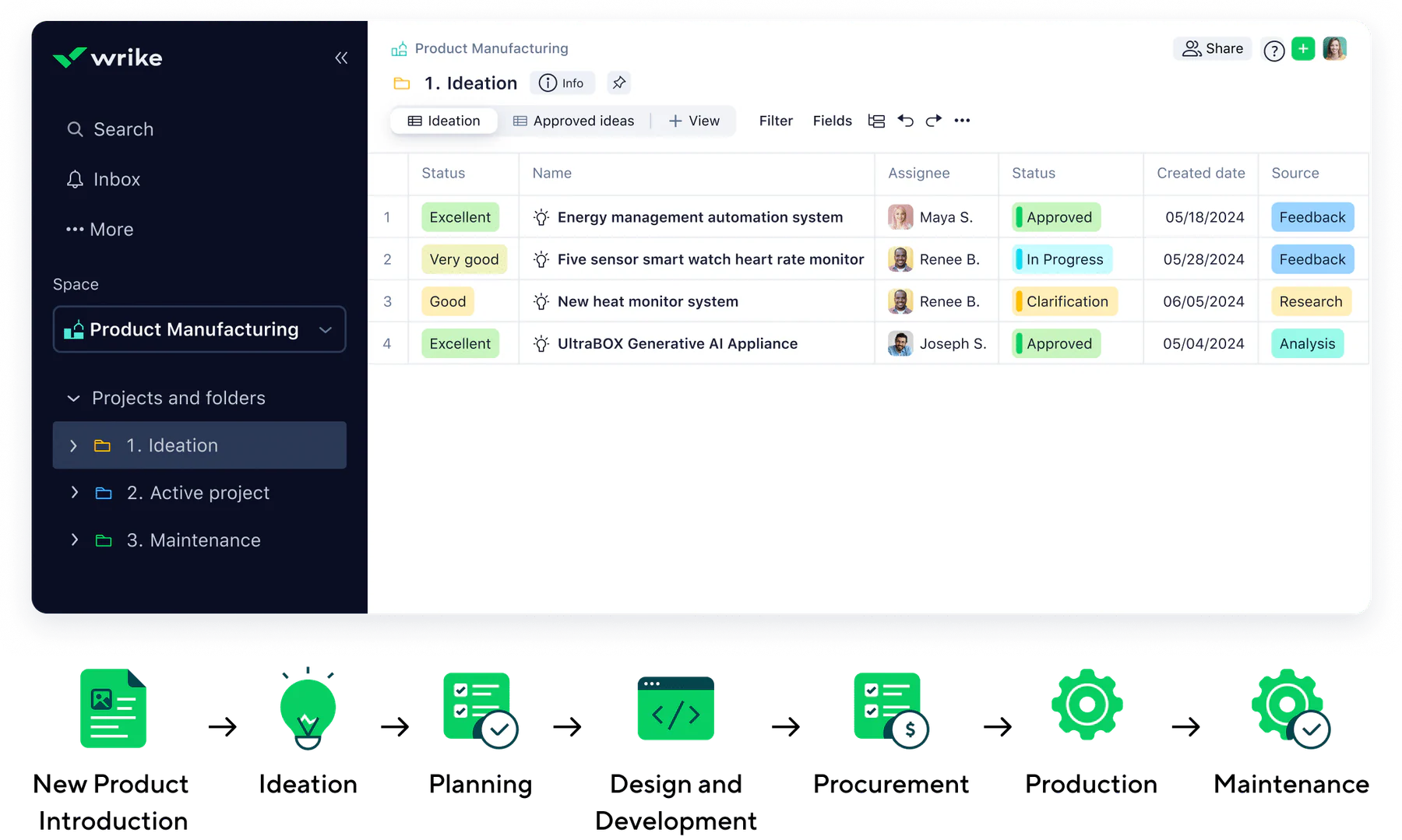
Wrike is built for manufacturers needing better production scheduling and team coordination. It offers real-time collaboration, task management, and progress tracking to keep production on schedule.
Key features include customizable workflows, Gantt charts, and resource allocation. This production planning software also integrates with manufacturing and accounting tools for a unified system.
Best for: This manufacturing production planning software suits industries such as electronics, automotive, and consumer goods, where complex project management and cross-departmental collaboration are important.
Features:
- Visual tools like Kanban boards, Gantt charts, and project timelines
- Supply chain tracking and coordination
- Resource allocation and management
- Ready-made templates for manufacturing processes
| Pros | Cons |
|
|
10. Epicor
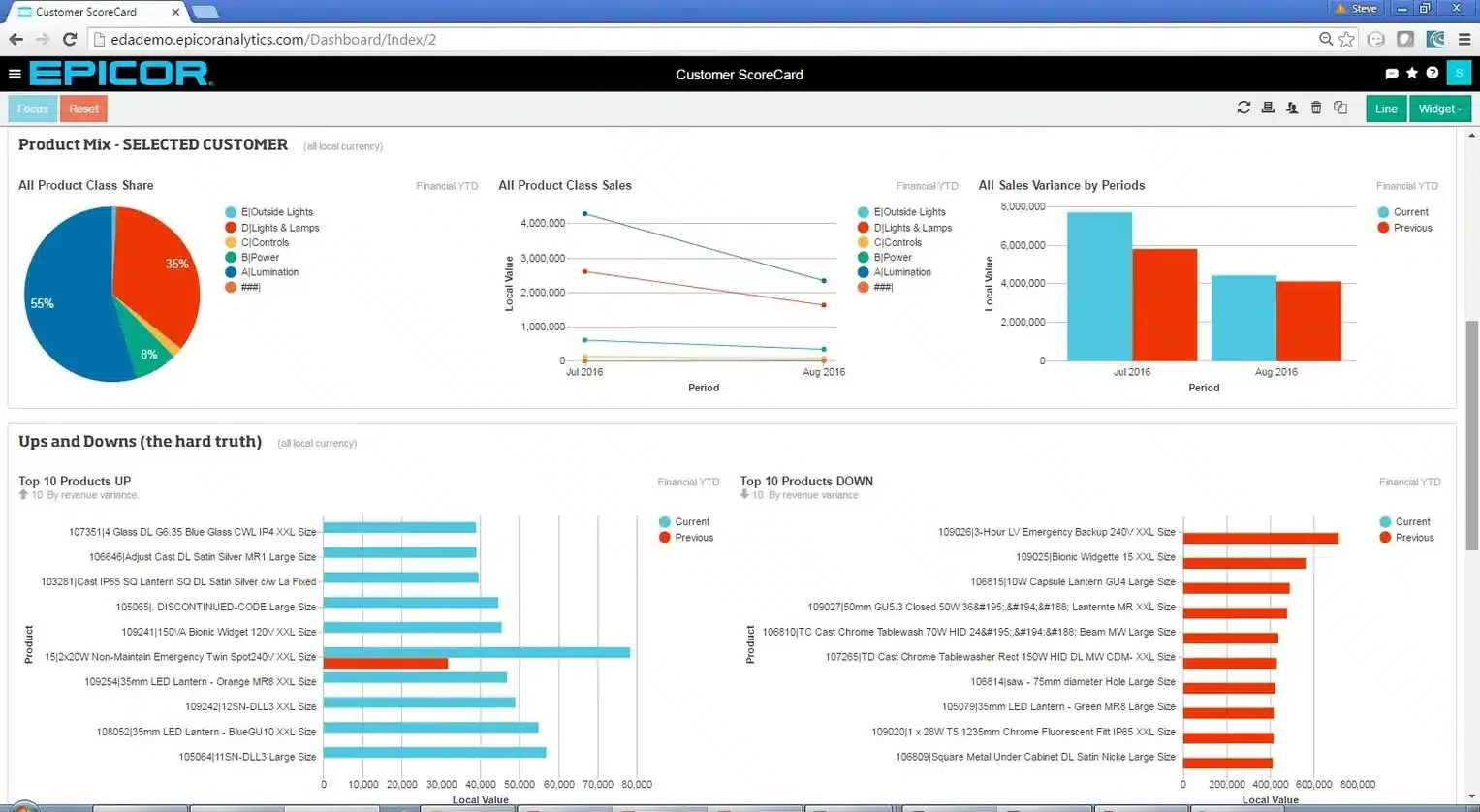
Epicor Kinetic is built for manufacturers needing real-time production control. This manufacturing production planning software uses live data to adjust schedules, allocate resources, and optimize workflows. Key features include job management and lean manufacturing tools to help businesses adapt quickly to demand changes.
Best for: Epicor Kinetic manufacturing production planning software is particularly suited for mid-sized to large manufacturers, such as aerospace, automotive, electronics, and industrial machinery.
Features:
- Advanced planning and scheduling (APS)
- Quality assurance
- Job management
- Lean manufacturing
- Batching technology
| Pros | Cons |
|
|
11. Infor LN
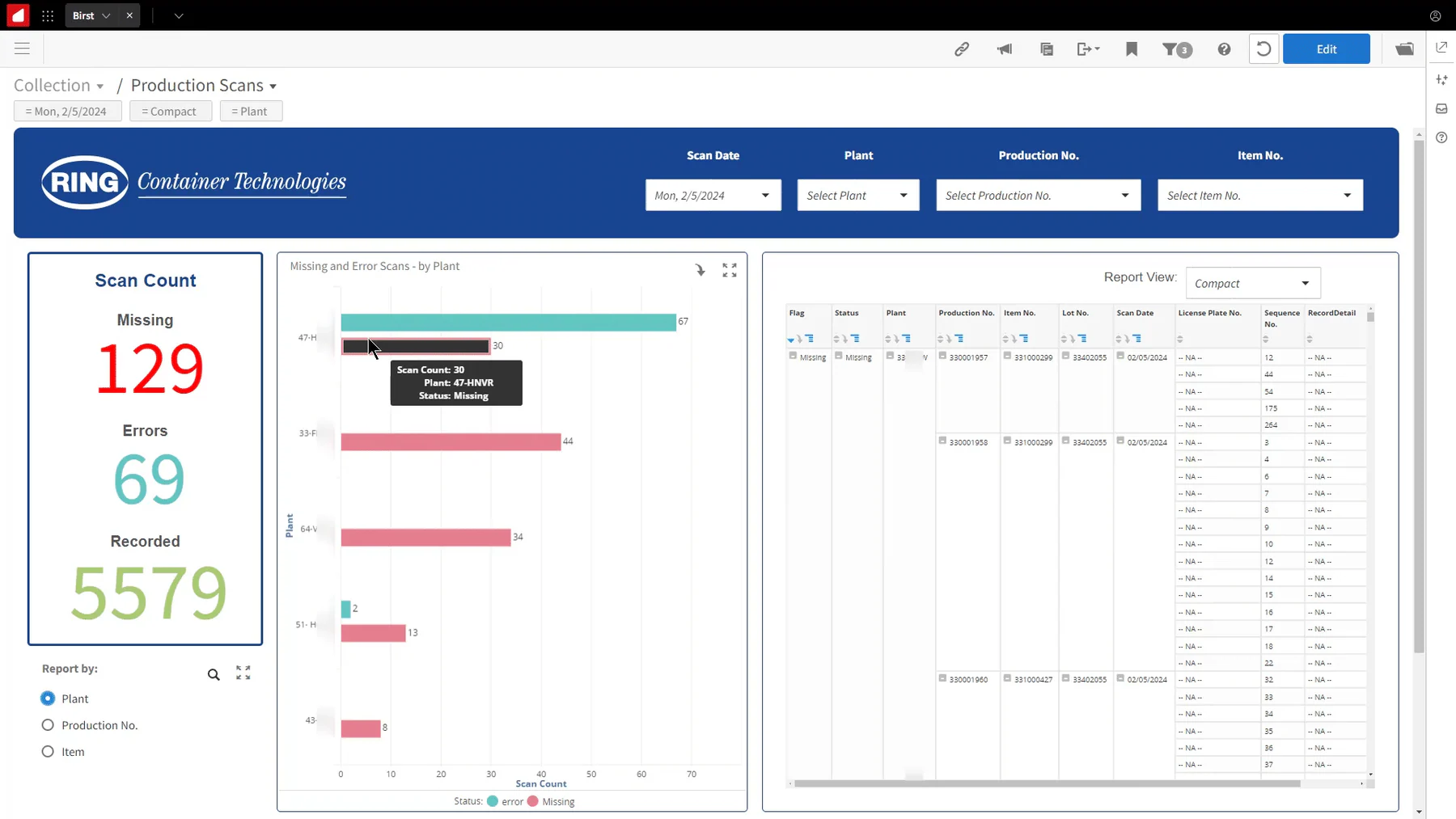
Infor LN is built for manufacturers needing advanced production scheduling and resource management. It uses planning algorithms to optimize workflows, minimize downtime, and improve efficiency.
While user-friendly and highly integrative, setup can be complex, and customization requires technical expertise.
Best for: Infor LN manufacturing production planning software is ideal for manufacturers in high-tech, aerospace, heavy manufacturing, automotive, and industrial equipment sectors that require advanced production.
Features:
- Manufacturing Execution System (MES)
- Product lifecycle tracking and management
- Project coordination tools
- Bill of Materials (BoM) handling
- Capacity planning for resource allocation
| Pros | Cons |
|
|
12. MasterControl PPIC Software
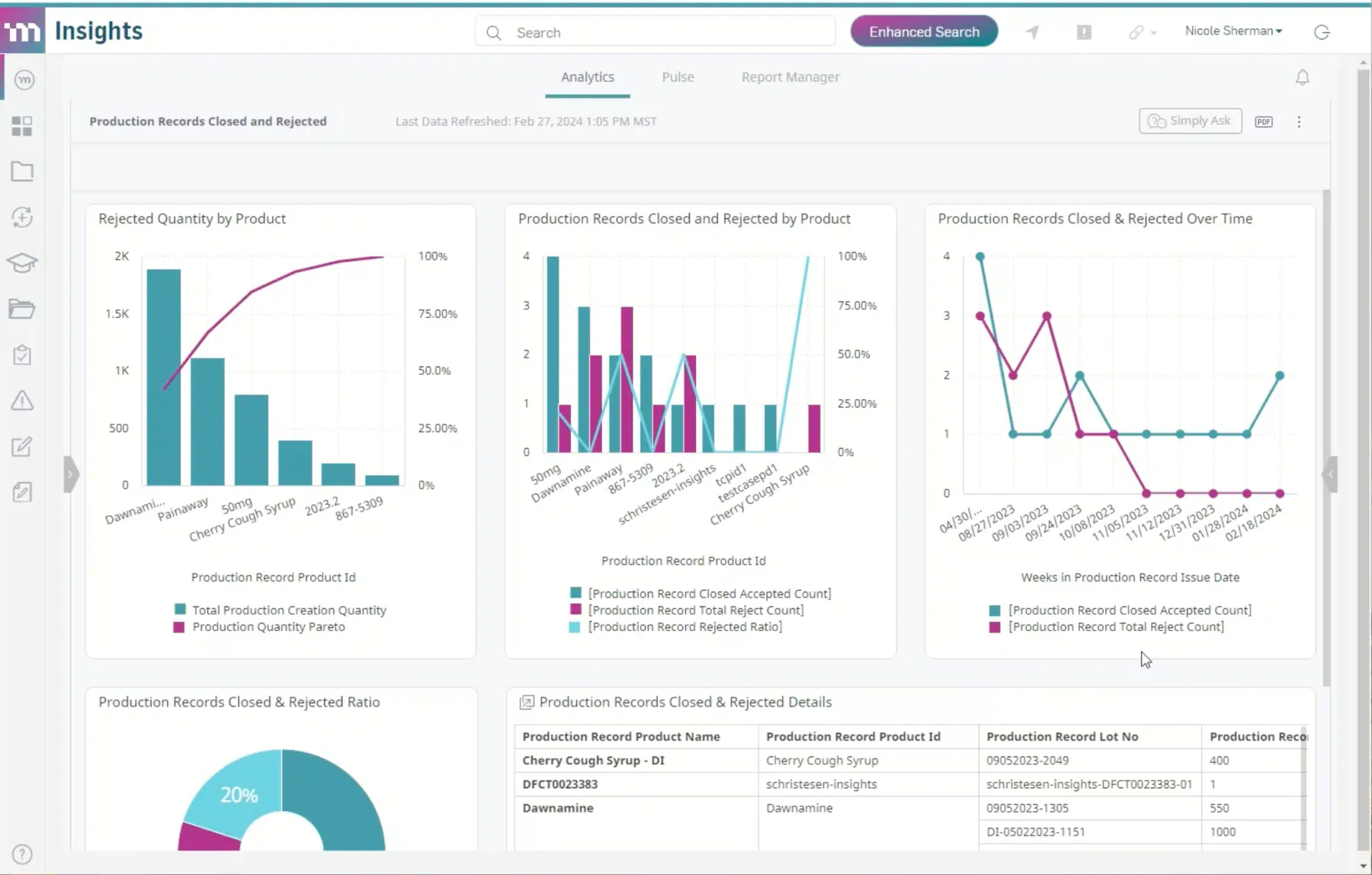
MasterControl’s production planning software helps manufacturers automate scheduling, allocate resources, and manage workflows efficiently. It integrates with existing systems to coordinate tasks, track inventory, and ensure on-time product delivery.
Best for: MasterControl production planning software is suitable for manufacturers in highly regulated industries such as pharmaceuticals, medical devices, and biotechnology.
Features:
- Bill of Materials (BoM) tracking
- Production timeline scheduling
- Production record management
- Quality control oversight
- Data reporting and analysis
| Pros | Cons |
|
|
Overall Comparison of the Best PPIC Production Planning Software in Malaysia (2026)
| Provider | Connection Quality | Bank Coverage | Ease of Integration | Data Enrichment |
|---|---|---|---|---|
| Hashmicro | ||||
| ClickUp | ||||
| Connecteam | ||||
| Fishbowl | ||||
| Katana | ||||
| Wrike | ||||
| Epicor | ||||
| Info LN |
What is Manufacturing Production Planning Software?
Production planning software helps manufacturers coordinate production schedules, manage resources, and meet demand efficiently. It automates order scheduling, assigns labor and machinery, and tracks inventory to prevent shortages or excess stock.
For high-volume manufacturers, this software ensures raw materials, workforce, and machines align with production targets. It generates real-time schedules, preventing bottlenecks and reducing idle time. Companies can adjust plans instantly if delays or demand changes occur.
By structuring workflows clearly, manufacturers gain better control over production, which leads to key benefits such as:
- Lower costs: Production planning software prevents material waste and optimizes machine usage by adjusting schedules based on actual needs.
- Faster production: Production planning software reduces downtime by ensuring machines and labor are available exactly when needed.
- Manufacturers rely on precise scheduling: Production planning software uses AI-driven algorithms to determine machine capacity, raw material availability, and labor shifts to maintain efficiency.
- Factories track inventory in real time: Production planning software automated stock level updates prevent excess inventory and ensure raw materials remain available for production.
- Businesses scale operations smoothly: The system adjusts production timelines instantly when demand increases, preventing machine overload and workforce strain.
- Producers meet deadlines consistently: Production schedules align with order timelines to minimize defects and ensure on-time deliveries.
- Industries comply with strict regulations: Digital records log production data, track material sources, and meet standards such as GMP and ISO.
Why is Production Planning Software Important?
Production planning software is crucial in ensuring manufacturers can efficiently coordinate their operations. It helps manage resources, track materials, schedule production processes, and ensure optimal utilization of machinery and labor. Without a reliable system in place, manufacturers could experience delays, overstocking, or production downtime. By automating key tasks and integrating all departments, production planning software eliminates the inefficiencies of manual processes, enabling businesses to maintain smooth operations and meet customer demands more effectively.
What are the Benefits of Production Planning Software?
The benefits of production planning software are significant and wide-reaching. Here are some of the most important advantages:
- Cost Reduction: By optimizing resource allocation and minimizing waste, production planning software can drastically reduce operational costs.
- Increased Efficiency: Production planning software automates manual tasks, ensuring that machines, materials, and labor are utilized optimally.
- Enhanced Scheduling: The production planning software improves production scheduling, ensuring timely deliveries and minimizing downtime.
- Real-time Visibility: Managers gain real-time insights into production progress, enabling quick adjustments in case of delays or unforeseen issues.
- Improved Quality Control: Production planning tools help monitor every stage of production to ensure products meet the highest standards.
Top Features in Production Planning Software?
When choosing the right production planning software, consider the following key features:
- Automated Scheduling: Production planning software automates the scheduling process, ensuring that production timelines align with demand and resource availability.
- Demand Forecasting: Production planning software leverages historical data to predict demand trends and adjust production schedules accordingly.
- Inventory Management: Production planning software keeps track of raw materials and finished products, ensuring there is no overstock or stockouts.
- Bill of Materials (BoM) Management: Production planning software helps track the materials required for production and ensures that they are available when needed.
- Real-Time Reporting: Production planning software provides real-time insights into production performance, allowing managers to quickly identify bottlenecks or inefficiencies.
These features ensure that manufacturers can streamline their production operations, reduce delays, and deliver high-quality products on time.
How to Choose the Ideal Production Scheduling Software

Choosing the ideal production scheduling software is crucial for streamlining operations and ensuring that manufacturing processes run smoothly. The right software can significantly reduce errors, optimize workflows, and ultimately drive business success. Here’s what to consider before making your decision:
- User-friendliness: Look for intuitive navigation, customizable dashboards, and easy data entry. Involving end-users helps assess usability.
- Essential features: Ensure the software includes advanced scheduling tools and strong inventory management for better stock control.
- Flexibility and customization: Choose a system that adapts to your specific production workflows and industry needs.
- Seamless integration: Verify compatibility with inventory, procurement, and finance systems to create a connected workflow.
- Support and training: Check if the vendor provides 24/7 support and training resources to help users maximize the software.
- Real-world feedback: Read reviews and seek recommendations from industry peers to understand actual user experiences.
Making an informed choice now will improve efficiency, increase productivity, and support long-term business growth. HashMicro’s Manufacturing Software is designed to optimize production planning with seamless integration and powerful scheduling tools.
Try it today and elevate your manufacturing operations to the next level!
Conclusion
Picking the right production planning software can make all the difference in keeping manufacturing running smoothly. The right tool helps manage scheduling, track inventory, and boost overall efficiency.
HashMicro Manufacturing Software tackles these challenges with powerful features like advanced scheduling, demand forecasting, and quality control, all in a user-friendly platform. Moreover, this software can also integrate with many systems and offers unlimited users.
Try HashMicro’s free demo and see it in action! Get a firsthand look at how it simplifies production and optimizes every step of the process.

Frequently Asked Questions on Production Planning and Scheduling Software
What is Advanced Planning and Scheduling (APS) software?
APS software helps manufacturers plan production efficiently by identifying delays, optimizing machine usage, and balancing workloads. It allows businesses to adjust production schedules based on demand and resource availability.
How does production scheduling software integrate with other systems?
Production scheduling software connects with ERP, MES, and CRM systems to sync inventory, track work progress, and automate data flow. This integration helps manufacturers manage supply chains, production timelines, and customer orders more effectively.
Why is user-friendliness important in production planning software?
A simple interface allows workers to input data, track schedules, and make adjustments without confusion. Clear navigation and customizable dashboards help teams work faster and reduce mistakes.
What are the key features to look for in production scheduling software?
Look for automated scheduling, capacity planning, material tracking, and “what-if” analysis to handle demand changes. These features help manufacturers allocate resources, reduce waste, and keep production on track.