















Malaysia’s e-commerce is booming, but many teams still juggle WhatsApp, marketplaces, email, and spreadsheets, so follow-ups slip and repeat buyers drop off. Based on government data showing that Malaysia’s e-commerce revenue reached RM918.2 billion in the first nine months of 2024, stricter customer management is no longer an option.
Customer expectations are rising, too; people want brands to recognize them and respond with context rather than generic messages. Salesforce research also shows that customers increasingly expect personalized experiences, making organized customer data a real competitive edge.
This guide covers Malaysia’s top e-commerce customer management software options, best use cases, integrations, and fit so that you can choose faster. If you want a scalable way to unify customer profiles and automate follow-ups, a quick demo of HashMicro’s customer management solution can show the workflow in practice.
Key Takeaways
E-commerce customer software centralizes digital interactions across channels, helping businesses efficiently manage and enhance customer experiences.
By selecting the right e-commerce customer software, your business can streamline support, boost customer satisfaction, and drive long-term growth.
Integrated analytics and personalization drive seamless omnichannel growth and higher ROI.
An automated CRM system streamlines sales cycles and ensures data-driven growth, helping leadership stay competitive in Malaysia’s evolving digital economy.
What is E-commerce Customer Software?
E-commerce customer software is designed to help businesses digitally manage the interaction or relationship between sellers and customers. Often part of a broader ERP software, e-commerce customer service is also known as an e-commerce customer management system.
CRM, or Customer Relationship Management system, allows companies to monitor, analyze, and improve customer experience online because it integrates various channels such as email, live chat, social media, and telephone into one platform.
Such integration allows support teams to manage inquiries more efficiently. The e-commerce customer service system also offers real-time centralized management of all interactions, order updates, and returns. It also provides personalized product recommendations and monitors service quality and customer satisfaction.
Hashy AI Fact

Need to know!
AI-powered sales forecasting compares projected revenue with actual sales for better planning, while automated commission calculations ensure accuracy, transparency, and motivate teams with fair rewards.
https://www.hashmicro.com/my/free-product-demo/
Why Must Malaysian Companies Use E-commerce Customer Software?
Before we review each of Malaysia’s best e-commerce customer software, we will briefly explain why Malaysian companies must implement it into their business processes.
Implementing e-commerce CRM software in Malaysia goes beyond embracing new technology — it’s a strategic move that can significantly impact a company’s profitability and market position. Below are key reasons why CRM systems are essential for Malaysian businesses, backed by insightful data from FounderJar:
- Increase in profits: CRM systems enhance sales by up to 29% and improve productivity by 34% by streamlining sales workflows, organizing data, and improving forecasting—ultimately driving higher earnings.
- Shorter sales cycle: Using CRM tools like e-commerce customer software, supported by sales management software, can reduce the sales cycle by 8–14%, helping businesses lower sales expenses and achieve faster returns on investment.
- Revenue targets: 97% of businesses that use a CRM system met or exceeded their revenue sales target in the past year, and only 3% fell short. Moreover, companies that use a CRM are 86% more likely to exceed their sales goals than those that don’t.
On the flip side, e-commerce businesses that overlook customer software tools may experience several setbacks:
- Lost conversion chances: Without automation and insight-driven tools, e-commerce platforms may struggle to track leads effectively, resulting in abandoned carts and missed sales.
- Poor customer loyalty: Lack of personalization and timely support can lead to dissatisfied customers and lower repeat purchase rates.
- Inefficient operations: Without an integrated customer software system, managing service requests and order tracking raises costs and reduces efficiency.
E-commerce customer software improves interactions and drives efficiency and growth. Without it, Malaysian businesses may miss key opportunities. Competitors using these tools gain an edge through better customer experience and streamlined operations.
Top Our Picks E-commerce Customer Software
 Zoho
Zoho

 HashMicro
 Monday
 Salesforce
 Hubspot
Quick Comparison of Best E-commerce Customer Software in Malaysia
| Software | Best For | Strength | Key Features | Limitations | Pricing |
|---|---|---|---|---|---|
| HashMicro | All-in-one customer & sales management | Highly customizable with strong integration | Sales forecasting, RFM segmentation, e-signature, mobile CRM | Complex for smaller teams | Custom pricing |
| SAP CRM | Enterprise-level operations | Deep integration with SAP ecosystem | Workflow automation, omnichannel support | High cost & complex setup | Custom enterprise pricing |
| Zoho CRM | SMBs & startups | Affordable & scalable | AI insights, email marketing, lead tracking | Limited features on free plan | Free + paid tiers |
| Pipedrive | Sales-focused teams | Simple and visual pipeline | Deal tracking, automation tools | No free plan | Paid plans only |
| Second CRM | Local Malaysian businesses | Flexible & localized support | Sales automation, marketing tools | Limited global scalability | Custom pricing |
| Monday CRM | Cross-functional teams | Highly customizable workflows | Automation, dashboards, pipeline tracking | No free plan | Paid tiers |
| Insightly | CRM + project management | Post-sale workflow tracking | Task management, analytics | Limited free version | Free + paid |
| Sugar CRM | Custom CRM workflows | Flexible & scalable | Marketing automation, forecasting | Higher cost | Paid plans |
| Salesforce | Mid to large enterprises | Highly scalable ecosystem | Customer 360, automation, integrations | Expensive & complex | Premium pricing |
| HubSpot CRM | Inbound marketing teams | Easy to use & quick setup | Lead tracking, email automation | Limited free features | Free + paid |
| Sage CRM | Sales + service teams | Strong customer tracking | Lead management, surveys | UI less intuitive | Custom pricing |
| Microsoft Dynamics 365 | Enterprise Microsoft users | Deep integration with Microsoft ecosystem | AI insights, sales automation | Complex implementation | Premium pricing |
12 Best E-commerce Customer Software Recommendations for Businesses in Malaysia
We’ve gathered a selection of Malaysia’s 12 best e-commerce customer software options to help businesses choose the most effective solution. Each platform provides distinct features, advantages, and limitations, enabling you to evaluate and identify the one that best suits your online store’s customer service needs.
Here are our top recommendations for improving customer support, streamlining communication, and boosting overall efficiency in your e-commerce operations.
1. HashMicro E-commerce Customer Software
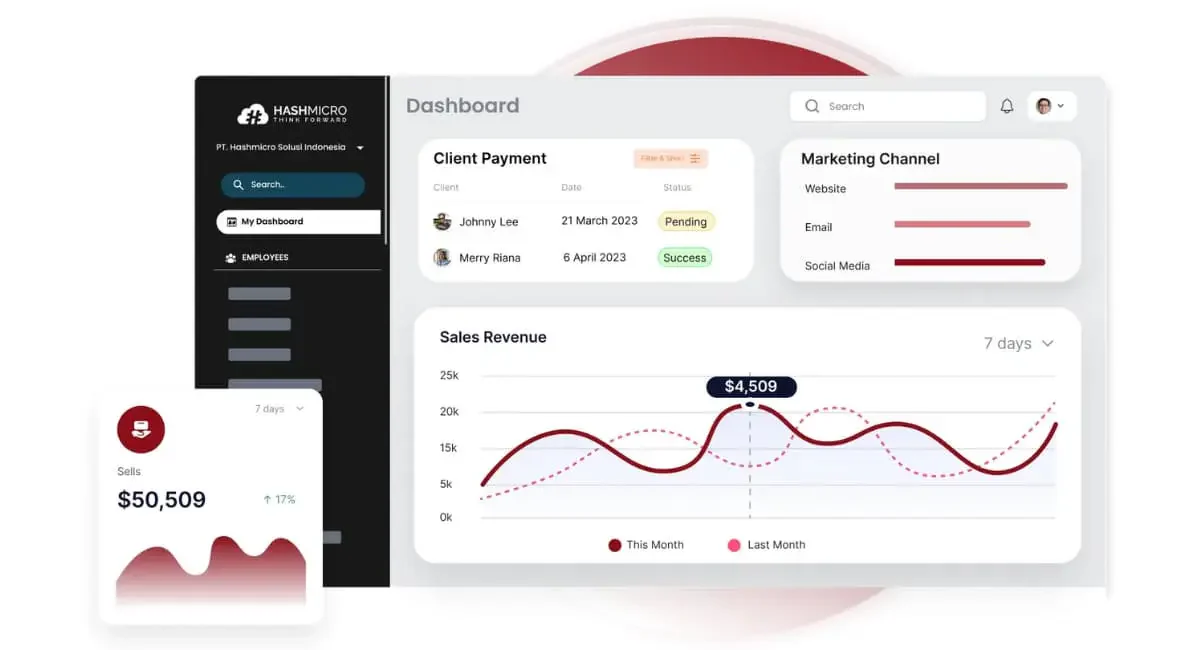
HashMicro’s E-commerce Customer Software is an advanced solution trusted by over 2.000 leading global companies. With a suite of 40+ specialized systems, HashMicro continues to be a reliable and adaptable choice across multiple industries.
Renowned brands like Forbes, Oishi, and Danone are among the clients that rely on HashMicro, reflecting the software’s strong reputation for performance and trustworthiness.
This e-commerce customer software stands out for its high level of flexibility, enabling businesses to adapt the platform according to their specific online workflows. Its smooth integration with the CRM system, external tools, and existing infrastructure ensures continuity while enhancing customer engagement and service.
Below are seven essential features that support e-commerce customer management:
- Sales estimation vs. real performance: This feature helps e-commerce businesses forecast expected revenue and compare it with actual sales results for more accurate planning and resource allocation.
- Sales commission automation: Automates commission calculations based on sales data, ensuring transparency and motivating e-commerce teams with accurate rewards.
- Customer segmentation with RFM metrics: By analyzing customer behavior through recency, frequency, and monetary value, businesses can tailor offers and improve marketing. They can also integrate the system with a membership management software to streamline loyalty and rewards tracking.
- Digital quote approval with e-signatures (Privy): This online feature speeds up sales workflows by enabling customers to view, approve, and sign quotations digitally without delay.
- Product recommendation engine: The software uses customer purchase history to suggest relevant products, increasing cross-sell and upsell opportunities in your online store.
- Mobile accessibility for sales teams: HashMicro’s system supports Android and iOS apps, allowing sales reps to manage tasks, customer data, and interactions for faster service.
- Tailored invoice and quote printing: Businesses can create custom quote formats suited to different customer profiles, making proposals more appealing and conversion-friendly.

| Pros | Cons |
|
|
Best for: Malaysia-based e-commerce teams that want one centralized system to manage customer data, automate follow-ups, and sync sales activities with operational workflows for faster, more consistent conversions.
To help you plan better, HashMicro’s best e-commerce customer software lets you calculate your estimated budget and download the complete pricing scheme through the banner below.
2. SAP
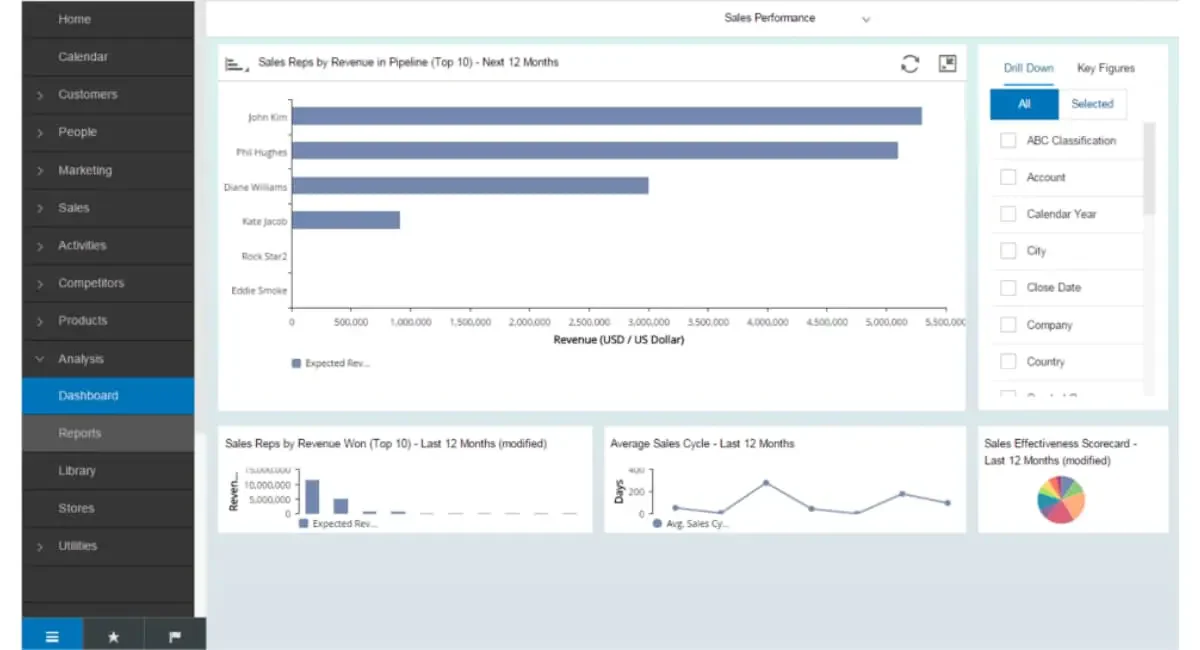
SAP CRM, included in the SAP Business Suite, offers businesses a complete view of their customers. It works smoothly with other SAP modules, such as SAP ERP and SAP HCM, ensuring unified department operations.
SAP CRM software is recognized for managing complex transactions and offering robust workflow features, making it ideal for large tech-driven companies and businesses with advanced customer interaction needs.
| Pros | Cons |
|
|
Best for: Enterprise e-commerce already running on SAP that needs omnichannel customer engagement and advanced personalization across multiple touchpoints at scale.
3. Zoho E-commerce
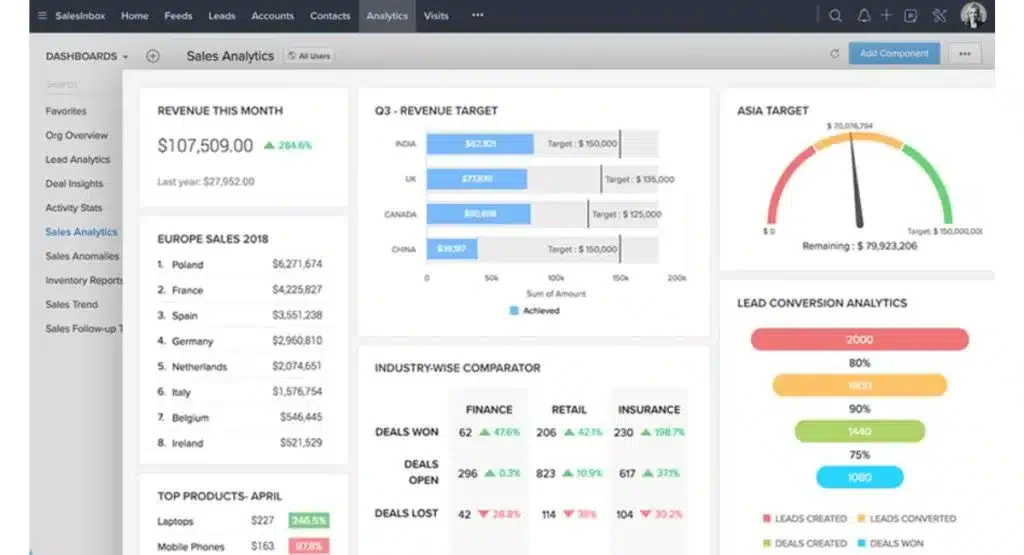
Zoho software offers an all-in-one platform for managing sales, marketing, customer support, and inventory. It is recognized for its intuitive design and adaptability and includes key tools like deal tracking, lead scoring, sales predictions, email campaigns, and social media integration.
It’s especially ideal for small businesses, thanks to a free plan for solo users or small teams and scalable pricing tiers for growing companies.
| Pros | Cons |
|
|
Best for: SMBs and growing online stores that want an affordable CRM to manage leads, deals, and basic automation without heavy implementation.
4. Pipedrive CRM
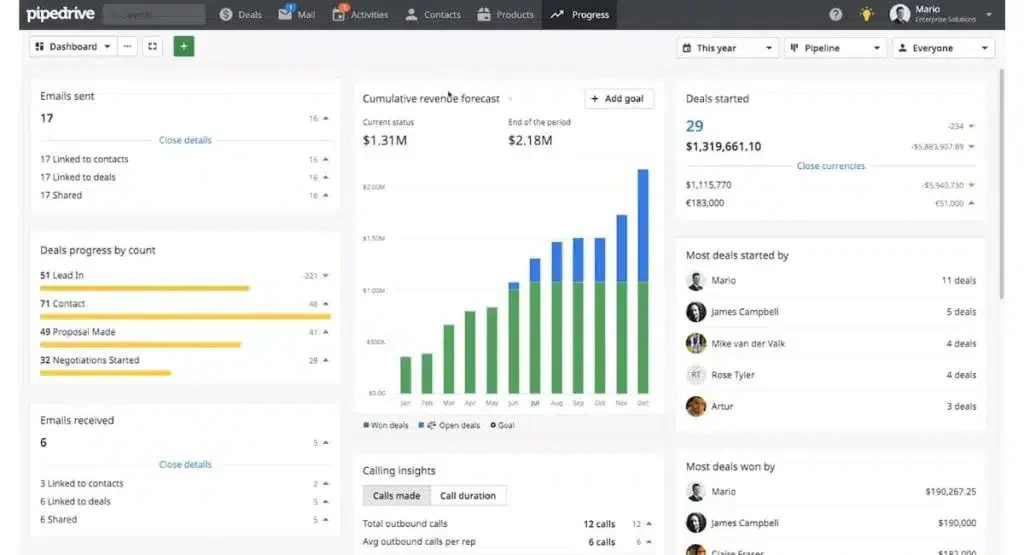
Pipedrive Sales CRM Software stands out for its easy-to-use design and flexible sales pipeline options. It offers tools like deal and lead tracking, email syncing, automated workflows, and an intelligent sales assistant powered by machine learning.
Built for simplicity, this platform fits businesses of any size aiming to simplify and enhance their sales processes.
| Pros | Cons |
|
|
Best for: Sales teams that rely on a simple, visual pipeline to qualify leads quickly, keep deals moving, and maintain follow-up discipline.
5. Second CRM
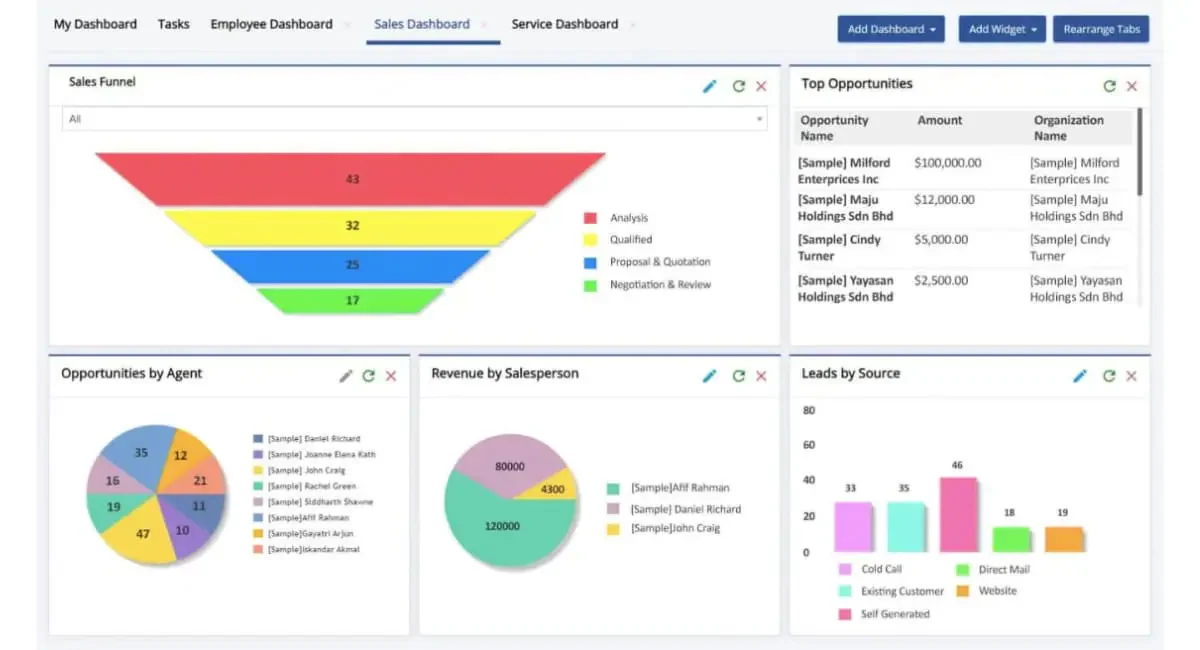
Second CRM aims to streamline operations for Malaysian businesses through features like sales automation, support services, and customer management. It also supports marketing automation, making it an all-in-one solution for enhancing customer engagement and boosting revenue.
The software stands out for its flexibility across industries and seamless integration with multiple business tools.
| Pros | Cons |
|
|
Best for: Teams that want a straightforward CRM with practical modules (and flexible configuration) to organize customer records and day-to-day sales processes.
6. Monday CRM
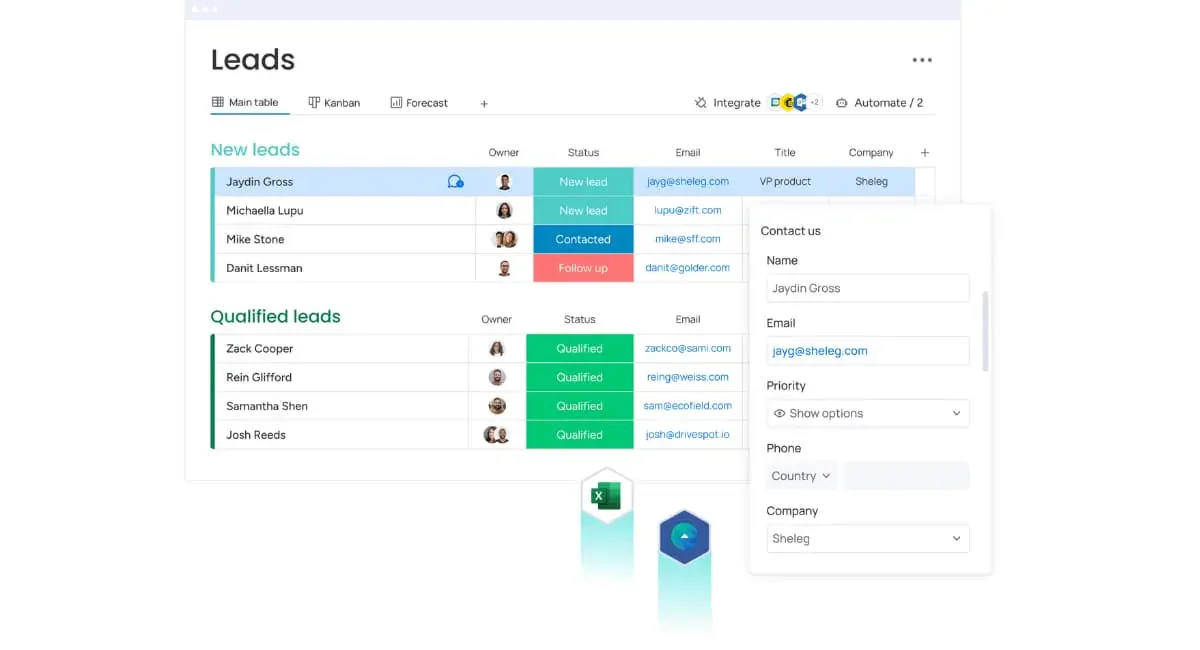
Monday Sales CRM offers a flexible and intuitive platform tailored for specialized industries like real estate, media, software, and finance. It helps streamline workflows by automating routine tasks, consolidating customer interactions, and managing data from a single dashboard.
| Pros | Cons |
|
|
Best for: Cross-functional e-commerce teams that want a highly customizable CRM workspace to run lead tracking, sales ops, and workflows in one place.
7. Insightly E-commerce
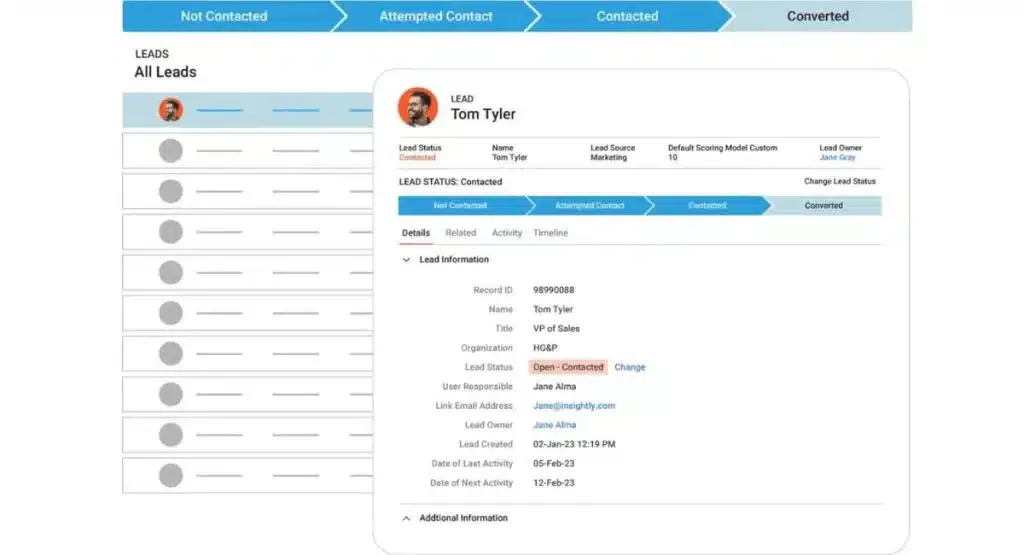
Insightly supports businesses in streamlining customer engagement and sales operations. It includes features for workflow automation, task and project tracking, email handling, and performance analytics. The platform is adaptable and can be integrated into diverse business environments, making it a flexible option for improving CRM functions.
| Pros | Cons |
|
|
Best for: SMBs that want CRM + project handoff after closing deals, so post-sale onboarding and delivery stay organized.
8. Sugar CRM
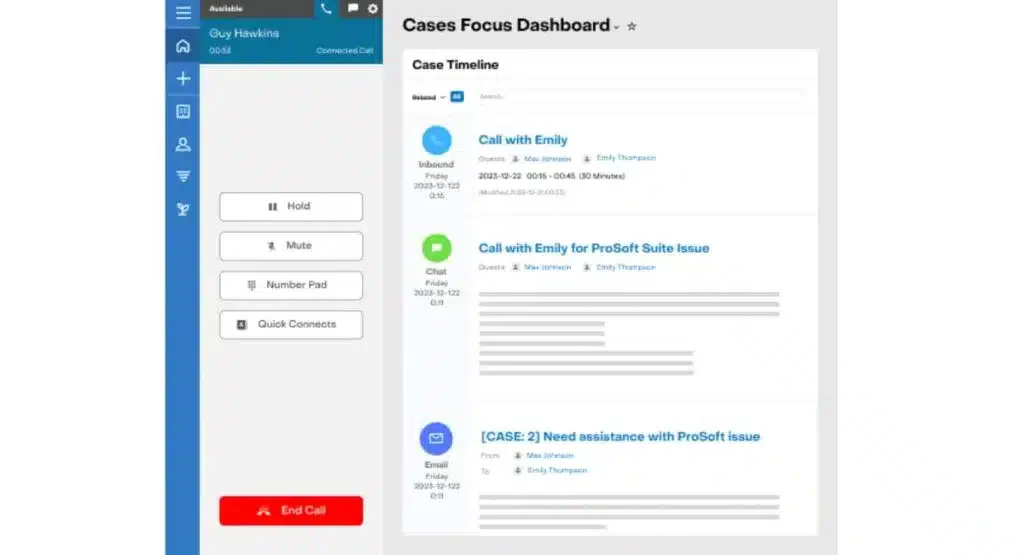
Sugar CRM Malaysia is a SaaS platform that combines tools for automating marketing, managing sales, handling customer support, and analyzing forecasts. It is highly customizable and user-friendly, positioning itself strongly in the CRM landscape.
It caters to businesses of various scales with multiple pricing options tailored to diverse operational requirements.
| Pros | Cons |
|
|
Best for: Businesses that need a flexible CRM to connect marketing, sales, and service processes with stronger data consistency across teams.
9. Salesforce
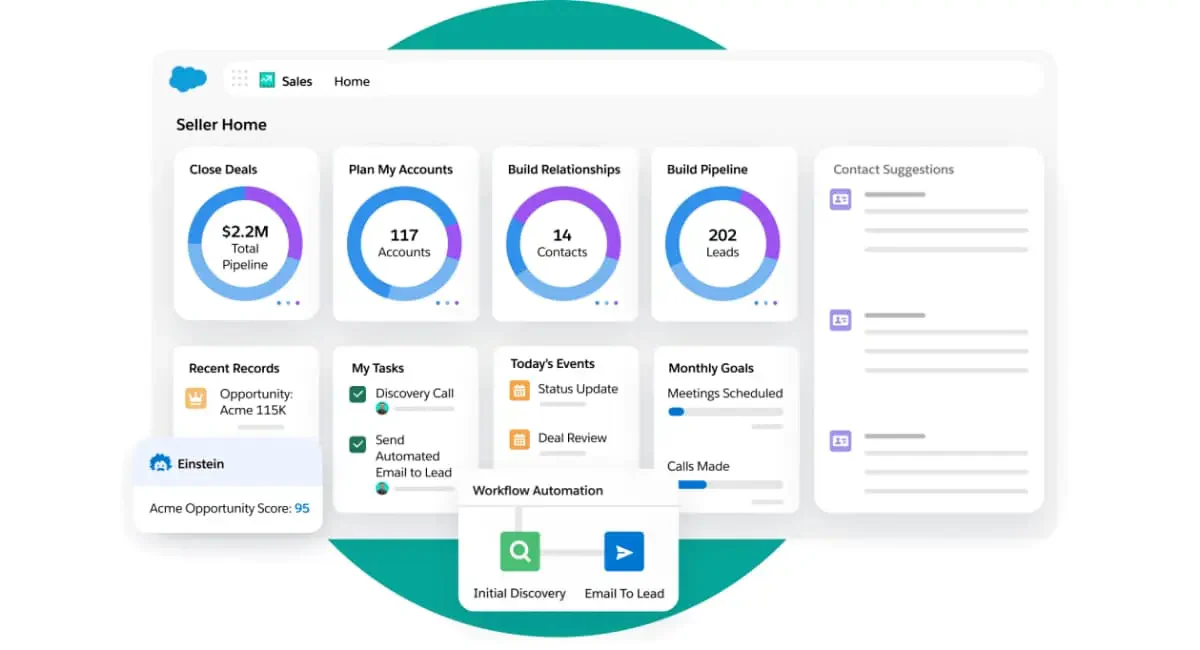
Salesforce CRM is a comprehensive platform that helps businesses oversee leads, clients, and contacts, boosting the ability to secure more deals. It has many highly customizable features, making it ideal for various industry needs.
This software integrates smoothly with other tools, offering companies a flexible and scalable CRM solution.
| Pros | Cons |
|
|
Best for: Mid-market to enterprise e-commerce that needs a unified customer view across sales, marketing, commerce, and service for more consistent customer experiences.
10. HubSpot CRM
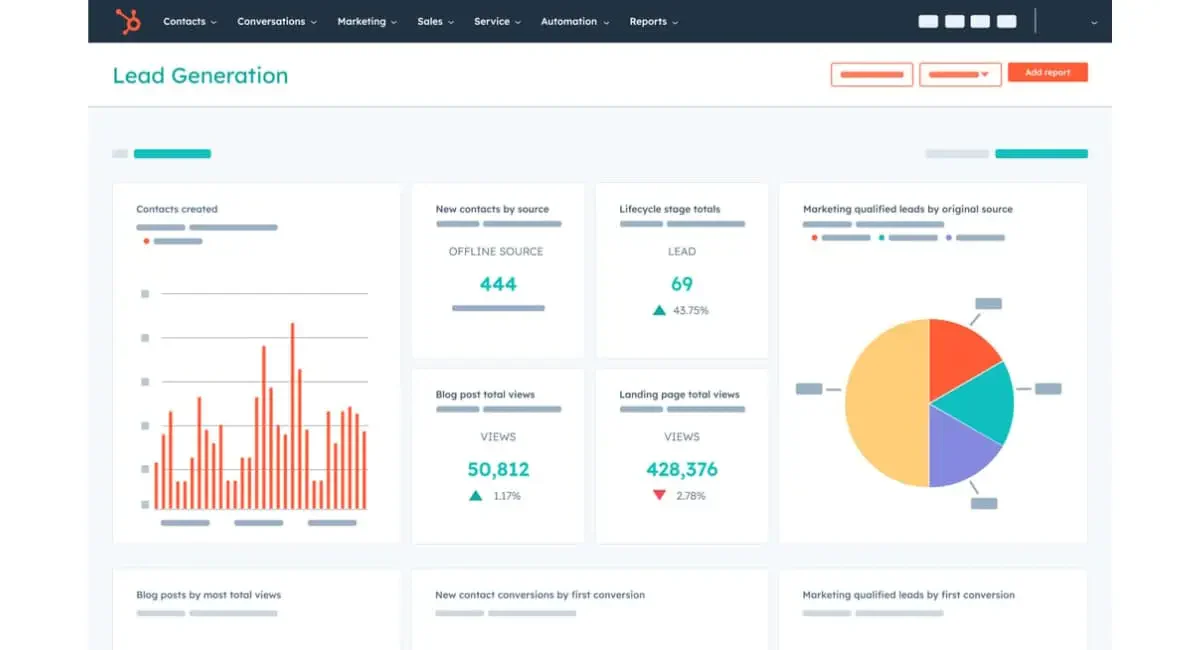
HubSpot simplifies sales activities with features like lead tracking, contact organization, pipeline management, and performance monitoring. Its user-friendly design and wide integration options make it a top pick for B2B and B2C businesses across many sectors.
HubSpot CRM provides a free version with core tools ideal for small businesses and upgradeable plans to support business growth.
| Pros | Cons |
|
|
Best for: E-commerce teams that want a quick-to-adopt CRM with strong marketing + sales alignment, especially for inbound leads and lifecycle nurturing.
11. Sage CRM
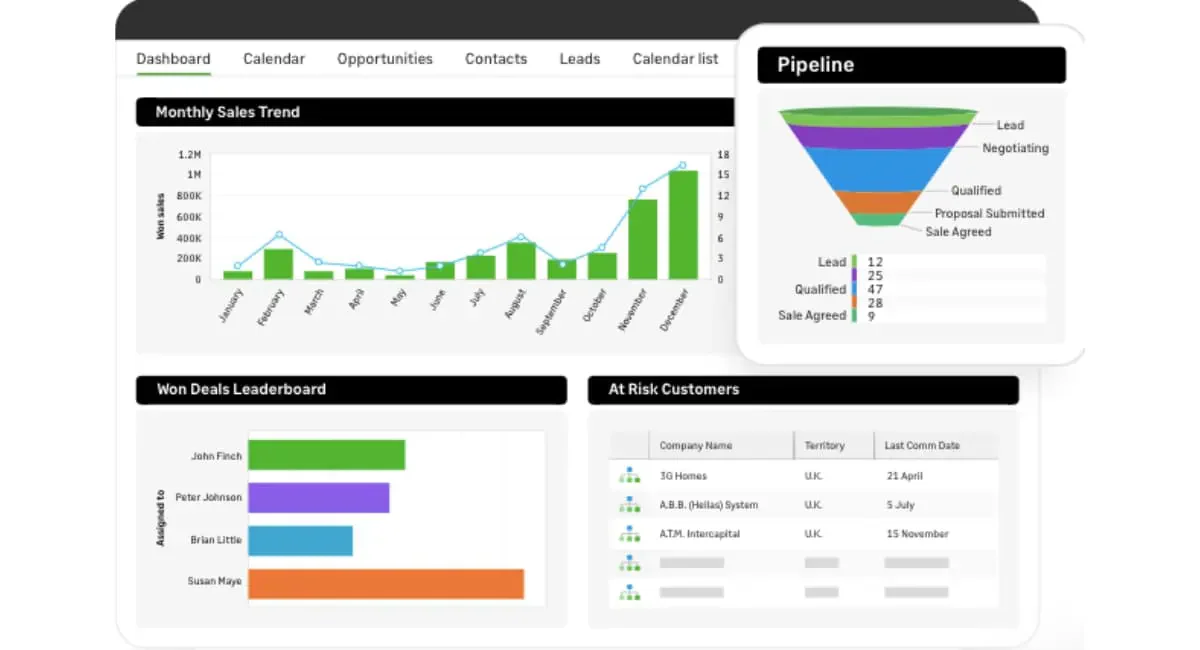
Sage CRM Software helps businesses streamline customer service, focus on key leads, and track customer activity across departments. It includes features for lead management, self-service support portals, product listings with quote tools, team collaboration, and customer survey building.
Read Also: Lead Management Software – Discover top software solutions this year to streamline your lead management process and enhance sales efficiency.
| Pros | Cons |
|
|
Best for: Businesses that want CRM for sales + marketing campaigns + service case handling, primarily if they also rely on Sage’s ecosystem.
12. Microsoft Dynamics 365 CRM
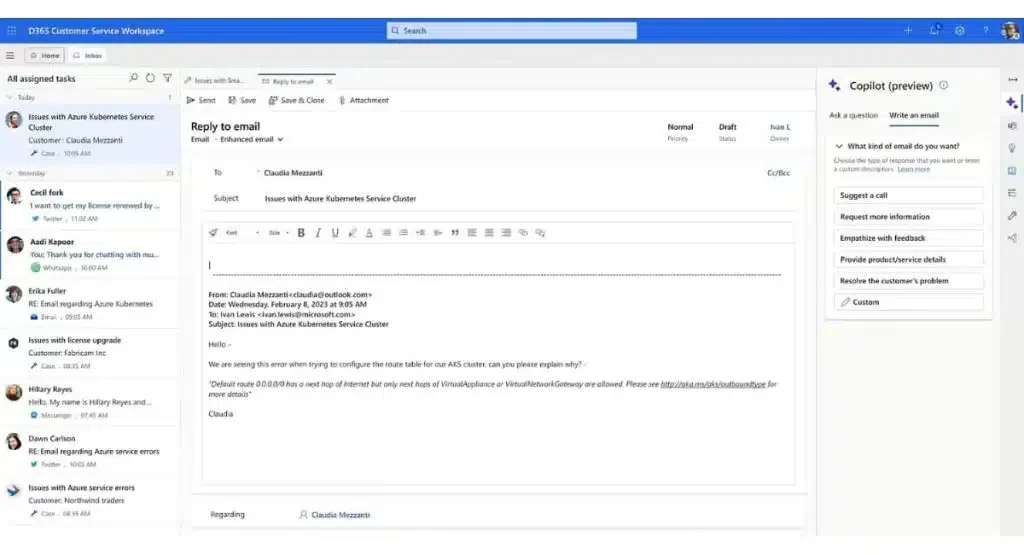
Microsoft Dynamics 365 delivers sales, marketing, and customer service tools as both cloud-based and on-premise options. It works smoothly with Microsoft apps, boosting efficiency and customer interaction. This platform stands out for its AI-driven sales tools, advanced marketing features, and strong integration with the broader Microsoft ecosystem.
| Pros | Cons |
|
|
Best for: Larger organizations that want a Microsoft-native CRM for structured sales processes, forecasting, and enterprise-grade reporting.
Overall Comparison of the Best E-commerce Customer Software in Malaysia 2026
| Provider | Localisation | Payment Integration | Ease of Integration | Omnichannel Support |
|---|---|---|---|---|
| Hashmicro | ||||
| Salesforce | ||||
| HubSpot | ||||
| Zoho | ||||
| Monday |
What Features Should Be Looked For in E-commerce Customer Software?
Before choosing any e-commerce customer software, it’s important to understand the key features that ensure smooth operations and excellent customer experiences. Here are the essential best e-commerce customer software features to look for:
- Analytics and reporting: Uncover customer behavior trends and guide strategic decisions.
- Product recommendation engines: Highlight items aligned with user interests or past interactions.
- Location-based targeting: Displaying region-specific products, deals, or promotions.
- Real-time personalization: Adapts content, offers, and suggestions as users browse.
- Email personalization: Automate relevant campaigns like follow-ups, exclusive offers, or cart reminders.
- Customer segmentation: Grouping users by behavior, demographics, or purchase patterns to improve targeting.
- Omnichannel personalization: Deliver consistent, tailored experiences across websites, apps, emails, messages, and ads.
- A/B testing tools: Compare different personalized experiences and identify the most effective approach.
How to Choose The Right E-commerce Customer Software for Your Business

After exploring 12 e-commerce customer service software options in Malaysia, it’s normal to feel unsure about which best fits your business. Selecting the right solution is crucial, as it directly affects how effectively you manage customer interactions and influences your business growth.
Below are several essential factors in choosing the right e-commerce customer software:
- Customization and integration: Choose an e-commerce CRM system tailored to your operations and seamlessly integrate it with existing platforms like e-commerce stores.
- Scalability: Pick an e-commerce customer support software solution that can scale as your e-commerce business grows, with the flexibility to add users, channels, or features over time.
- Cost considerations: Evaluate the complete cost of ownership, including setup, user training, customization, and subscriptions, to ensure it delivers substantial value and fits your budget.
- Trial and demo: Before deciding, use free trials and live demos to test the software’s usability, compatibility, and overall fit for your e-commerce processes.
- Identify business needs: Evaluate your company size, support strategies, customer engagement methods, and service complexity to determine the essential features required.
- Vendor support and training: Reliable vendor assistance, including training materials, onboarding help, and responsive customer service, ensures long-term software success.
- Software credibility: Check for genuine user reviews from businesses in Malaysia or similar industries on trusted sites to understand the software’s real-world effectiveness. It impacts on improving customer satisfaction and sales performance.
Quick Comparison of Best E-commerce Customer Software in Malaysia
| Software | Best For | Overview | Key Features | Pros | Cons |
|---|---|---|---|---|---|
| HashMicro | Malaysia-based e-commerce teams needing full CRM integration | All-in-one platform with 40+ systems, trusted globally with strong customization and integration capabilities. | Sales forecasting, commission automation, RFM segmentation, e-signature (Privy), product recommendation, mobile CRM, custom invoicing | Accurate forecasting, centralized leads, strong integrations, customizable pipeline | Complex for SMEs, longer implementation |
| SAP CRM | Enterprise e-commerce with complex operations | Comprehensive CRM within SAP ecosystem offering unified customer visibility and automation. | Workflow automation, ERP & HCM integration, omnichannel engagement | Centralized data, efficient automation, scalable | Complex setup, high cost, customization needed |
| Zoho CRM | SMBs and startups | Affordable all-in-one CRM with sales, marketing, and support tools. | AI insights, email campaigns, lead tracking, social media integration | Free plan, scalable pricing, automation tools | Limited basic features, paid support |
| Pipedrive | Sales-focused teams | User-friendly CRM with visual pipeline and automation tools. | Deal tracking, email sync, AI assistant, workflow automation | Easy to use, flexible, efficient | No free plan, limited reporting |
| Second CRM | Malaysian SMEs | Localized CRM with sales, marketing, and customer engagement tools. | Sales automation, marketing tools, integrations | Customizable, local support, easy to use | Limited global scalability |
| Monday CRM | Cross-functional teams | Flexible CRM with customizable workflows and dashboards. | Automation, boards, pipeline tracking | Highly customizable, intuitive UI | No free plan, limited advanced tools |
| Insightly | SMBs with project workflows | CRM with project and workflow management capabilities. | Task tracking, automation, analytics | Clean UI, flexible features | Limited free plan |
| Sugar CRM | Businesses needing flexible CRM | Highly customizable CRM covering marketing, sales, and support. | Automation, forecasting, analytics | Flexible, feature-rich | Expensive, learning curve |
| Salesforce | Mid to large enterprises | Scalable CRM platform with extensive integrations. | Customer 360, automation, analytics | Highly scalable, powerful ecosystem | Expensive, complex |
| HubSpot | Inbound marketing teams | Easy-to-use CRM with marketing and sales alignment tools. | Lead tracking, email automation, integrations | Free plan, easy setup | Scaling cost, limited free features |
| Sage CRM | Sales & service teams | CRM focused on lead tracking and customer service. | Lead management, surveys, collaboration tools | Comprehensive tools | Less intuitive UI |
| Microsoft Dynamics 365 | Enterprise Microsoft users | Advanced CRM with AI insights and Microsoft integration. | AI sales tools, automation, reporting | Strong integration, scalable | Complex setup, high cost |
Conclusion
Selecting the right e-commerce customer software is crucial for Malaysian businesses seeking to improve customer experiences and boost sales performance. Choosing a system that matches your operational needs, scales with growth, and comes with reliable support is essential.
HashMicro’s E-commerce Customer Software stands out with its proven results, wide range of configurable features, and smooth integration with existing platforms. It fulfills all key requirements for a reliable e-commerce support solution, making it a strong option for businesses aiming to elevate customer engagement.
We invite you to explore HashMicro’s free demo today. See how this software can enhance your customer service processes and support your business growth.

Frequently Asked Questions
What is a software agent in e-commerce?
Software agents distinguish them from hardware agents (robots) or human agents. A software agent stays in the computer, can move in the networks, can observe its environment, and can take several actions to reach its goals.
What are the major types of e-commerce software?
The major types are SaaS (cloud-based) and self-hosted platforms—SaaS is managed by the provider (hosting, updates, security), while self-hosted gives you more control but you handle maintenance and security. In practice, HashMicro is typically positioned like a SaaS-style business platform for teams that want faster setup and easier scaling across operations.
How does e-commerce software work?
E-commerce software connects your back-end systems so you can promote your store, sell products, and fulfill orders in one connected flow.
How does personalization software for e-commerce improve ROI?
It improves ROI by using real-time data and AI to deliver personalized recommendations, campaigns, and messaging, which typically increases engagement, lifts average order value (AOV), and strengthens retention over time.
What are the current e-commerce trends shaping personalization?
Key trends highlighted include AI-driven recommendations + AI search, zero-party data strategies (to respect privacy while improving targeting), omnichannel personalization (email/SMS/apps/in-store, not just onsite), and loyalty-driven personalization (using loyalty data to tailor offers and messaging)