














Running a restaurant business in Malaysia in 2026 isn’t just about great food, it’s about surviving tight operations. Rising ingredient costs from food inflation and ongoing manpower shortages make manual stock tracking harder to sustain, especially during peak hours.
Based on NST Malaysia, there is uneven retail outlook in 2026. For many restaurateurs, margins don’t disappear in the dining room, they disappear through silent waste and stock gaps. Overstocking leads to spoilage, understocking slows service and frustrates customers, and mismatched counts trigger last-minute purchases at higher prices.
That’s why the right restaurant inventory software has become a practical necessity. By automating stock updates, improving usage control, and centralizing item and recipe tracking, it helps restaurants protect margins while keeping operations consistent.
Key Takeaways
The best restaurant inventory management software is the one that focuses on efficiency with robust features.
There are 5 reasons why an inventory system is important for restaurants in Malaysia, with steps to choose the best one in this article.
Optimize restaurant operations and minimize waste by implementing essential restaurant inventory management processes for better stock control.
Select the best restaurant inventory management software by prioritizing practical features that improve cost control, workflow efficiency, and operational consistency..
Manual inventory tracking can quietly drain restaurant profits through waste, stock shortages, and last-minute purchasing. With better stock visibility, your team can manage ingredients more accurately and keep daily operations running smoothly.
Top Restaurant Inventory Software
Having compared a wide range of Restaurant Inventory Software, I’ve shortlisted the best restaurant management solutions in 2026 that deliver the right mix of performance and usability. These tools streamline operations, manage orders seamlessly, and enhance the customer experience through POS integration, inventory tracking, and staff management.



Best Because
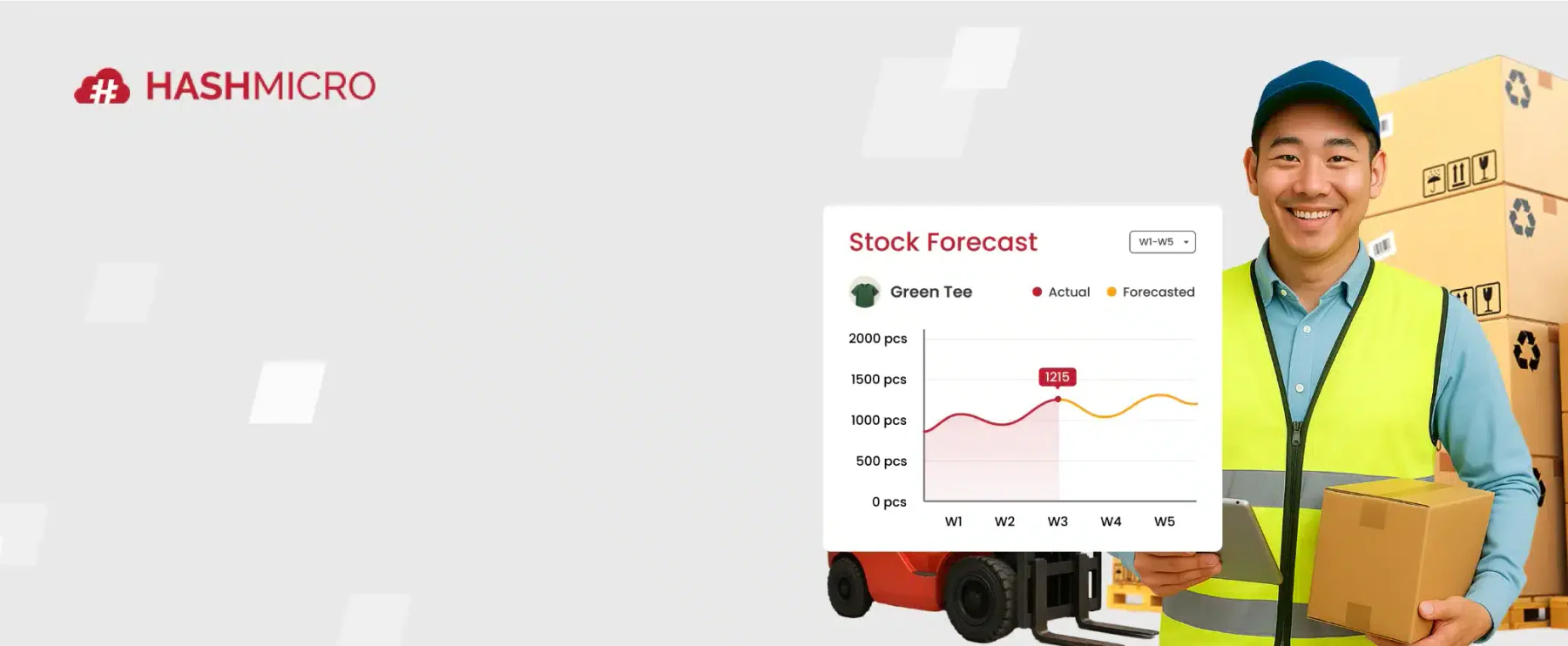
Provides cloud-based inventry solutions with strong demand forecasting.

Best Because
Excels in multi-channel selling and inventory management.
With many restaurant inventory management solutions available, comparing their strengths, pricing, and ideal use cases can help restaurant owners choose the most suitable system for their operational needs. The quick comparison below highlights key differences between the leading software options for restaurants in Malaysia.
| Software | Best For | Key Strength | Pricing |
|---|---|---|---|
HashMicro |
Restaurant groups and multi-branch operators | Real-time inventory visibility with centralized purchasing and waste control | Custom Pricing |
Upserve |
Restaurants needing POS-driven inventory tracking | Tracks actual vs theoretical inventory and food-cost variance | Custom Pricing |
Optimum Control |
F&B teams focused on recipe costing and supplier control | Strong food cost monitoring and inventory analytics | Starts from RM449/month |
Restaurant365 |
Multi-location restaurant groups | All-in-one back-office, purchasing, and inventory management | Starts from RM2,409/location/month |
MarketMan |
Restaurants managing many suppliers and invoices | Strong purchasing automation and COGS visibility | Starts from RM814/month |
Lightspeed |
POS-centric restaurants | Ingredient-level inventory tracking with POS integration | Starts from RM282/month |
SimpleOrder |
Restaurants wanting simple supplier and order management | Easy purchasing workflows and food-cost tracking | Custom Pricing |
NetStock |
Growing F&B businesses needing forecasting tools | Demand forecasting and replenishment planning | Custom Pricing |
Zoho Inventory |
F&B businesses already using Zoho ecosystem | Affordable inventory and order management with cloud access | Starts from RM119/month |
Foodics |
Restaurants wanting all-in-one POS and inventory tools | Combines inventory, POS, and customer management | Custom Pricing |
NetSuite |
Large restaurant chains and enterprises | Advanced ERP with multi-location inventory and procurement control | Custom Pricing |
Orderhive |
F&B brands selling across multiple channels | Centralized inventory, order, and shipment management | Starts from RM184/month |
Ordoro |
Hybrid restaurant-retail businesses | Inventory synchronization and order fulfillment tools | Starts from RM241/month |
CrunchTime |
Large restaurant groups needing enterprise controls | Advanced food-cost, labor, and supply chain management | Custom Pricing |
Cin7 |
Businesses with complex inventory and supply flows | Real-time inventory and warehouse management across locations | Starts from RM1,427/month |
Jalebi.io |
Multi-outlet restaurants needing simple inventory workflows | Recipe, waste, and supplier management with real-time tracking | Custom Pricing |
inFlow |
Small to mid-sized restaurants | Simple stock tracking with barcode and order management | Starts from RM527/month |
BevSpot |
Bars and beverage-focused restaurants | Beverage inventory and cost variance tracking tools | Starts from RM323/month |
Toast |
High-volume restaurants with online ordering | Unified POS, inventory, and loyalty management system | Custom Pricing |
xtraCHEF |
Restaurants focused on invoice and food-cost automation | Automated invoice capture and real-time cost tracking | Custom Pricing |
What is Restaurant Inventory Software?
Restaurant inventory software is a digital tool for managing and tracking food, beverages, and supplies in a restaurant. It monitors stock levels, records usage, and automates reordering to prevent shortages or overstocking.
The best restaurant stock control software ensures accurate inventory management, reduces waste, and controls costs. Real-time data helps culinary business owners to optimize purchasing decisions, maintain consistent food quality, and improve efficiency.
Hashy AI Fact

Need to know!
Hashy AI automatically detects low stock levels, suggests reordering based on sales trends, and triggers procurement reminders via the chatbox, keeping your restaurant's inventory stocked without requiring manual checks.
Request a free demo today!
Best 20 Restaurant Inventory Software Recommendations in 2026
These summaries will help you quickly identify which system aligns with your operational model. Use this overview to compare strengths before exploring the full breakdown.
- HashMicro Restaurant Inventory Software Malaysia: Automates stock control, recipe costing, and purchasing with real-time multi-outlet visibility.
- Upserve: Tracks ingredients and vendor orders with reporting to improve menu profitability.
- Optimum Control: Helps control food costs with recipe costing and supplier management tools.
- Restaurant365: Connects purchasing, inventory, and recipe costing to reduce food costs across locations.
- MarketMan: Offers vendor management, invoice capture, and recipe costing for multi-location restaurants.
- Lightspeed Restaurant: POS-driven stock tracking with menu and accounting integration for smoother operations.
- SimpleOrder: Streamlines purchasing and supplier communication with real-time food cost tracking.
- NetStock: Provides forecasting and replenishment to optimize restaurant stock levels.
- Zoho Restaurant Inventory Management Software: Easy stock and order tracking for small F&B businesses needing basic visibility.
- Foodics: F&B POS with built-in inventory, menu engineering, and purchasing features.
- NetSuite Inventory Software for Restaurants: Enterprise ERP with multi-location inventory and cost control for large chains.
- Orderhive: Automates stock, orders, and purchasing for F&B sellers across channels.
- Ordoro: Centralizes inventory and shipping for hybrid restaurant-retail operations.
- CrunchTime: Deep inventory and food cost control for large restaurant groups.
- Cin7 Restaurant Inventory Software: Links POS, inventory, and warehouse management for complex supply workflows.
- Jalebi.io: Supports recipe management, purchasing, and multi-outlet stock visibility.
- inFlow Inventory Software for Restaurant: Simple stock and purchase tracking for small restaurants.
- BevSpot: Specializes in bar and beverage inventory, ordering, and alcohol cost tracking.
- Toast: Restaurant POS with inventory, menu management, and real-time food cost analytics.
- xtraCHEF: Strong back-office automation and deep cost-control capabilities.
Selecting the right restaurant inventory management software is crucial for streamlining operations, reducing waste, and enhancing profitability. Below is a curated list of 20 notable solutions in 2026, each offering unique features to cater to diverse business needs.
1. HashMicro Restaurant Inventory Software Malaysia
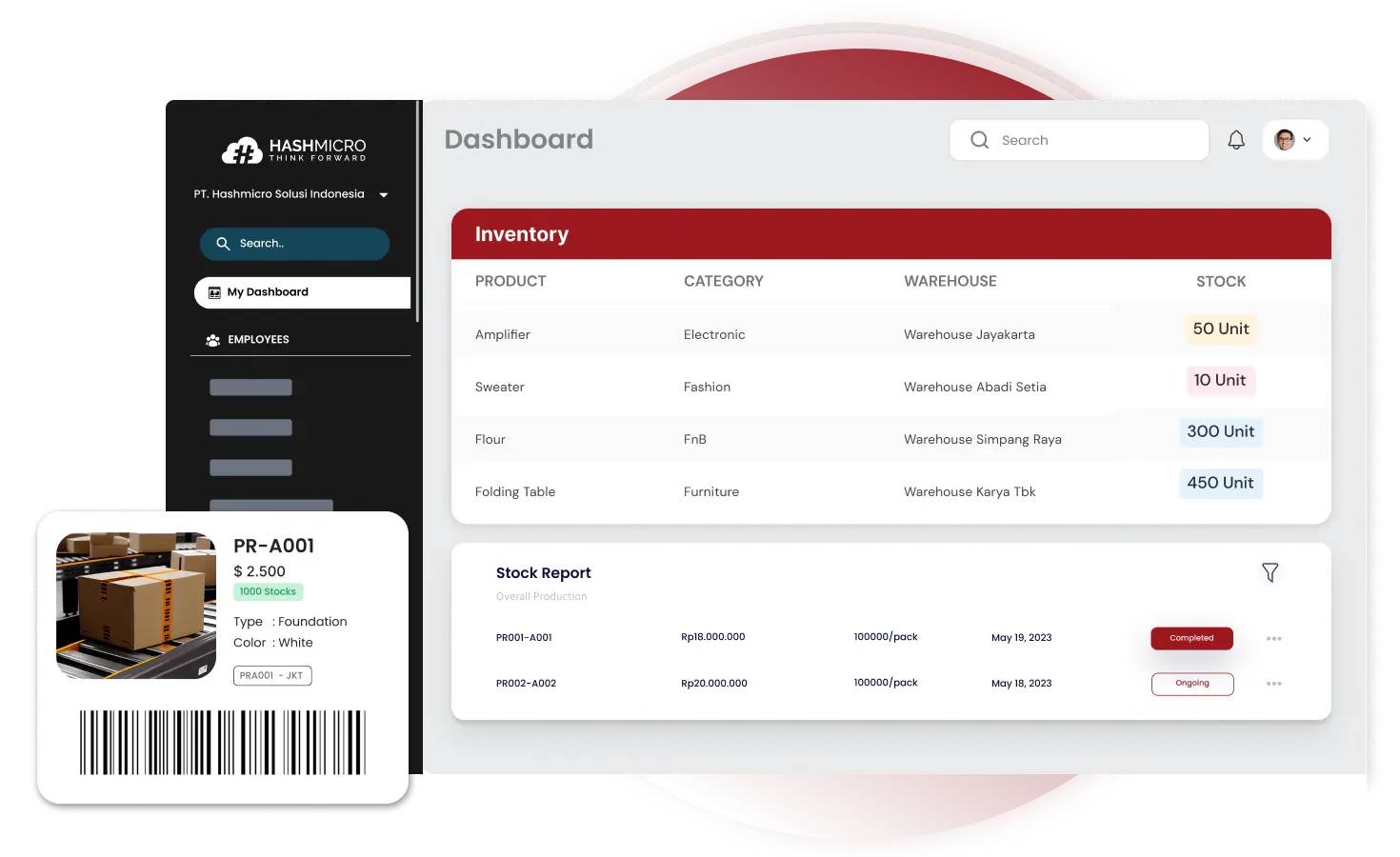
HashMicro distinguishes itself by transforming inventory management from simple stock counting into a strategic tool for cost control. The system automates critical back-of-house operations, such as expiry date tracking and automated stock replenishment, ensuring that kitchens operate with minimal waste and maximum efficiency.
A key advantage for Malaysian food businesses is the system’s ability to support Halal certification compliance through rigorous ingredient traceability. It also simplifies financial compliance by automatically calculating inventory costs, including the 6% SST (Sales and Service Tax), giving owners a clear, accurate view of their actual profit margins in real time.
Why I picked HashMicro: HashMicro stands out for its comprehensive suite tailored to the F&B industry, ensuring seamless multi-branch management.
Key features:
- Inventory forecasting: Restaurants can forecast the amount of inventory required during a specific period in the future, thus aiding better planning and procurement.
- Minimizing waste: The system uses a FIFO/FEFO scheme to ensure that items on the shelves the longest are sold first, thus reducing wastage and increasing profits.
- Barcode management: The ability to manage inventory and track stock movements quickly and accurately using barcode and RFID integration is a significant time saver.
- Lot and serial number tracking: Automatic generation of lot and serial numbers simplifies product tracking in each warehouse, thereby improving traceability.
- Stock requisition management: The software automates approval workflows to manage stock requests from all outlets or warehouses, simplifying the process.
- Stock aging analysis: Analyzing stock age helps evaluate and decide future stock levels for slow and fast-moving items, ensuring efficient inventory turnover.
| Pros | Cons |
| Integration with various modules according to business needs | There was a long line to try out HashMicro’s free demo. |
| In-house developer | Fast implementation |
| Flexibility in the purchasing model | Offers free demos and business consultation with a team of experts. |
Best for: Restaurant groups and multi-branch operators in Malaysia that need real-time ingredient visibility, tighter cost control, and centralized purchasing across outlets.
Pricing: Request demo for exact pricing

2. Upserve
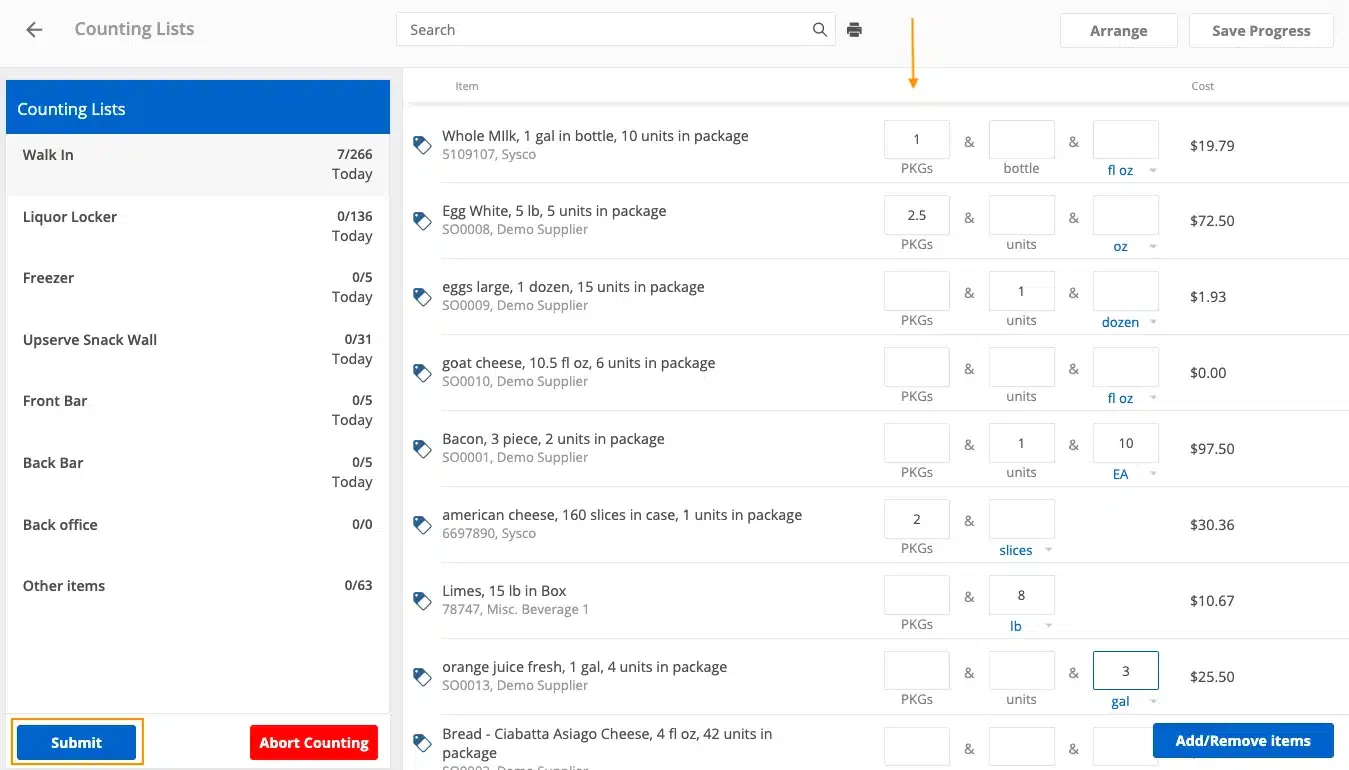 Why I picked Upserve: The platform enables restaurant owners to see actual vs theoretical inventory levels, monitor waste, reduce food cost, and streamline the “back-of-house” operations.
Upserve Inventory is a cloud-based inventory and purchasing solution designed specifically for restaurants and hospitality businesses. It integrates with Upserve’s POS system to provide real-time ingredient usage tracking, automatic inventory deduction based on sales, food costing, one-click purchase orders, and waste monitoring.
Key features:
- Automatic Ingredient Usage Tracking
- Food Cost and Recipe Costing
- One-Click Purchasing / Vendor Integration
- Real-Time Inventory vs Sales Analytics
- Integration with POS System
| Pros | Cons |
| It offers features tailored to food & beverage operations | To get full inventory functionality, you may need a higher-tier plan, which increases the monthly cost. |
| Real-time data & analytics help reduce food cost | Complexity / Learning Curve |
| Deep integration with the POS system | The pricing model includes terminal fees and may become expensive for multi-locations |
Best for: Restaurants that want POS-driven ingredient depletion and clear “actual vs theoretical” tracking to spot waste, variance, and food-cost leaks faster.
Pricing: Not sold as a standalone product, Upserve is now under Lightspeed Restaurant, so pricing is region-based/quote-based via Lightspeed.
3. Optimum Control
Why I picked Optimum Control: Helps restaurant owners gain full visibility into food usage, control waste, and maintain accurate inventory levels to maximize profitability and operational efficiency.
Optimum Control is a cloud-based restaurant inventory management system built for the foodservice and hospitality industry. It connects seamlessly with POS systems to automate ingredient tracking, food costing, vendor purchasing, and waste monitoring.
Key features:
- Real-time ingredient usage tracking
- Food cost and recipe costing tools
- Vendor integration
- Sales analytics
- Integration with POS system
| Pros | Cons |
| Strong cost-management tools. | Setup and recipe-entry can be time-consuming initially. |
| Robust integration with POS systems. | Some users report slower startup performance. |
| Comprehensive reporting and analytics. | Pricing and total cost may increase for multi-location businesses. |
Best for: F&B teams that prioritize recipe costing, supplier control, and day-to-day food cost monitoring to reduce shrinkage and prevent over-ordering.
Pricing: RM 449/month (Standard) or RM 613/month (Pro) (listed in USD; may vary by package).
4. Restaurant365
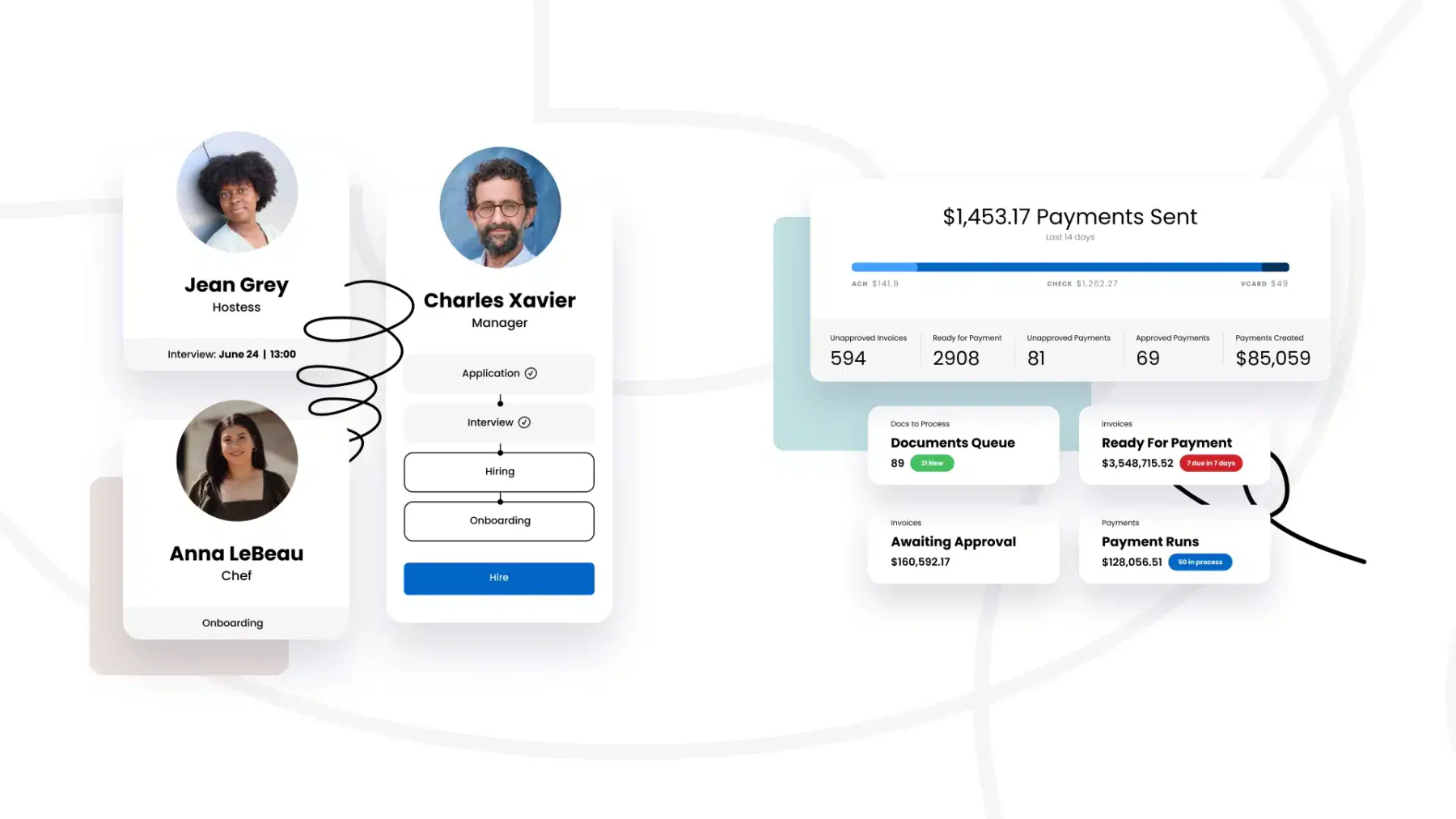 Why I picked Restaurant365: Restaurant365 integrates with POS systems, vendor/ordering systems, bank reconciliation, recipe costing, and inventory counts, and provides analytics tailored for food & beverage operations.
MarketMan is a cloud-based platform designed for restaurants, commissaries, and foodservice operations to manage inventory, purchasing, recipe costing, and cost of goods sold (COGS) tracking.
Key features:
- Inventory Management / Food Cost Control
- Recipe & Menu Costing
- Accounting + AP/AR + Bank Reconciliation
- Multi-Location & Chain Support
- Integration & Data Visibility
| Pros | Cons |
| Tailored specifically for restaurants | Steep learning curve/onboarding |
| Unified all-in-one system | Relatively high cost |
| Strong inventory and cost-control features | Some users report limitations in reporting customization or interface usability |
Best for: Multi-location restaurant groups that want inventory + purchasing + recipe costing connected with stronger back-office control and reporting.
Pricing: From RM 2,409/location/month (plan-based; pricing can vary by modules and billing terms).
5. MarketMan
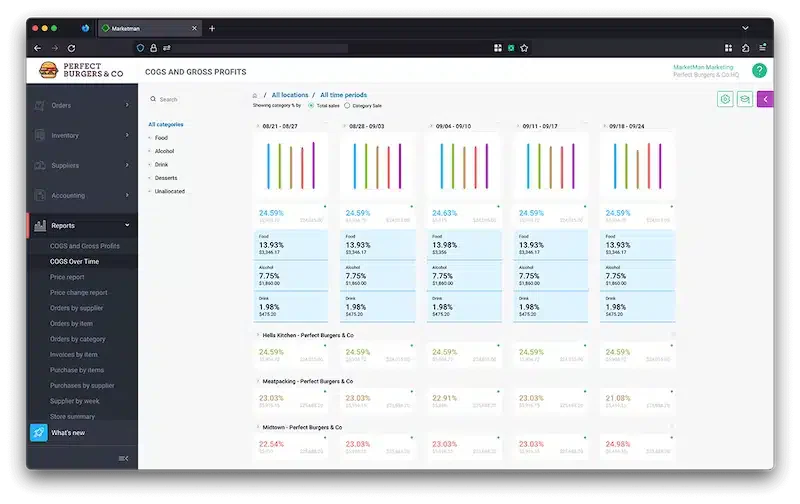 Why I picked MarketMan: MarketMan allows users to track waste and theft easily and to view inventory quantities and values in real time.
MarketMan is a cloud-based platform designed for restaurants, commissaries, and foodservice operations to manage inventory, purchasing, recipe costing, and cost of goods sold (COGS) tracking.
Key features:
- Real-Time Inventory Tracking
- Recipe Costing & Digital Cookbook
- Purchasing & Vendor Management Automation
- Menu Profitability & COGS Reporting
- POS & Accounting Integration
| Pros | Cons |
| Delivers strong visibility into inventory, waste, and food cost control | Some users report integration issues |
| Helps reduce administrative burden across purchasing, inventory counts, and reconciliation | Invoice scanning and mobile app features have been flagged for glitches |
| Multi-location capability | Pricing and cancellation may be challenging |
Best for: Restaurants managing many suppliers and invoices, needing smoother purchasing workflows plus strong COGS visibility and menu costing support.
Pricing: RM 814/month (Starter) or RM 1,018/month (Growth); Enterprise = quote-based (listed in USD).
6. Lightspeed Food
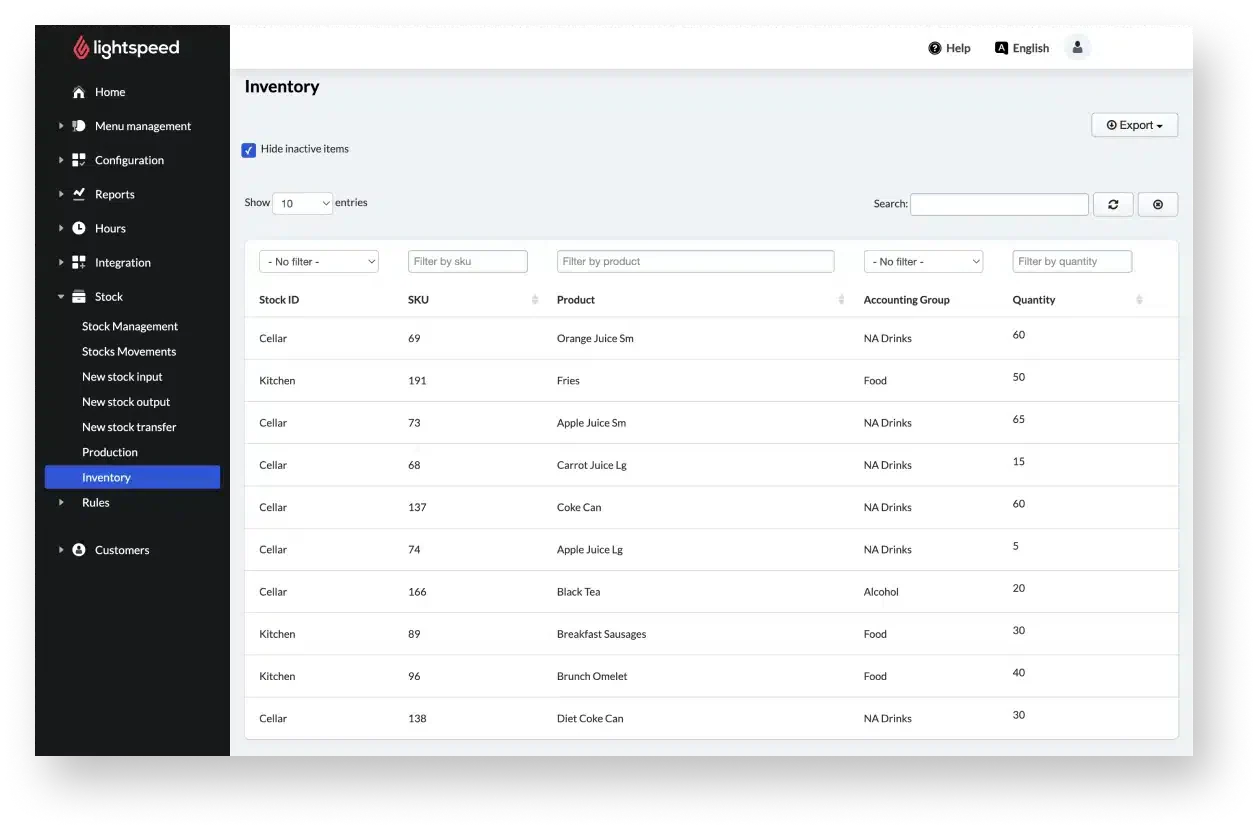 Why I picked Lightspeed: Lightspeed offers a comprehensive restaurant inventory management software with robust inventory features that enhance operational efficiency.
Established in 2005, Lightspeed provides a food inventory management system tailored for the culinary industry. Its inventory management tools help restaurants track ingredients, manage stock levels, and effectively reduce waste.
Key features:
- Ingredient-level inventory tracking
- Real-time stock updates
- Automated purchase orders
- Recipe cost calculation
- Comprehensive reporting
| Pros | Cons |
| Intuitive user interface | Limited customization options |
| Seamless integration with POS | Advanced analytics may need extra training |
| Strong customer support | Limited mobile app functionality |
| Regular feature updates |
Best for: POS-centric restaurants that want ingredient-level tracking tied to sales, with straightforward replenishment and reporting for daily operations.
Pricing: From USD $69/month (RM 282/month) on published pricing (region + add-ons can affect final cost).
7. SimpleOrder
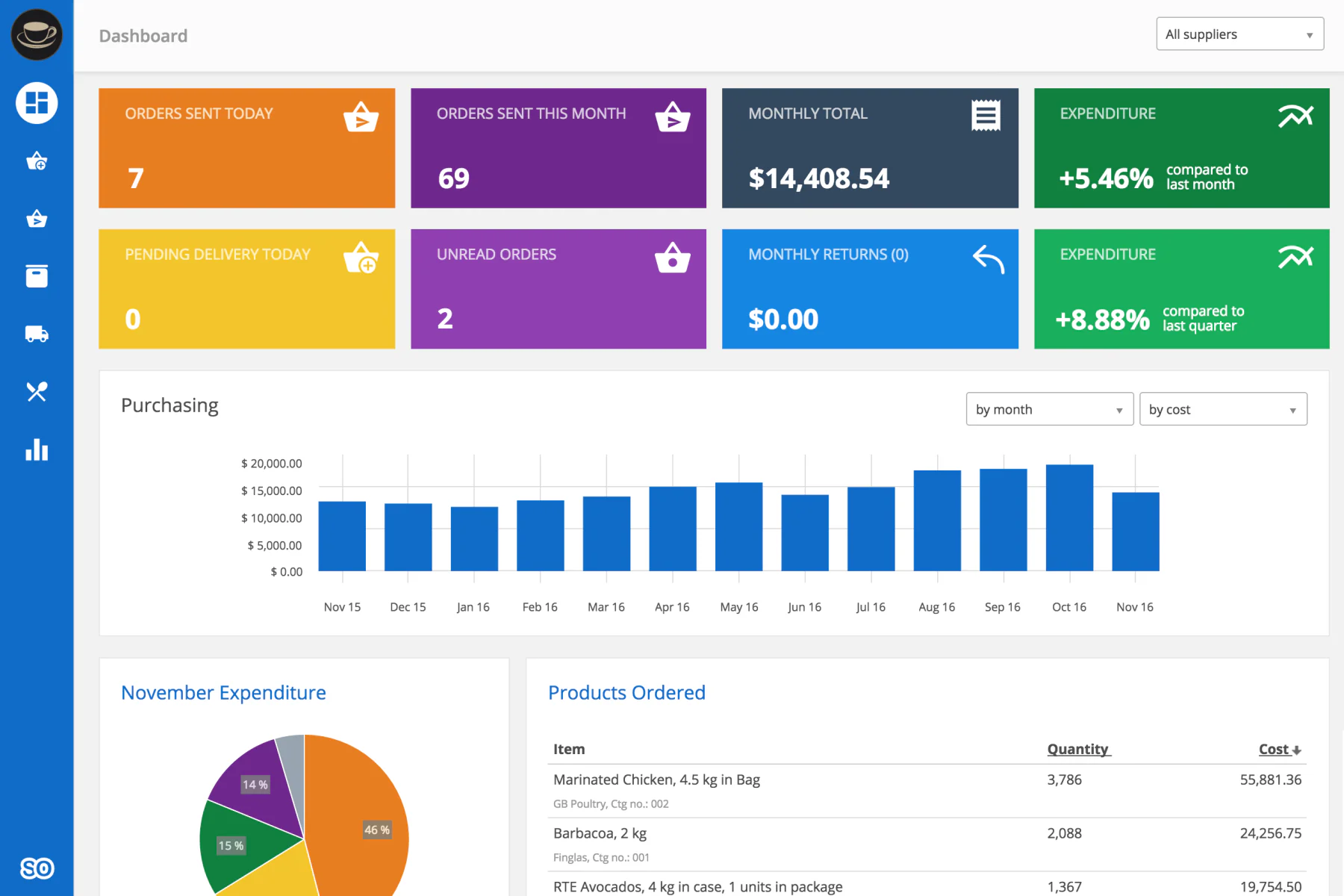
Why I picked SimpleOrder: Ideal for restaurants seeking an easy, all-in-one platform to simplify order management, track ingredients, and cut down on waste.
SimpleOrder is a restaurant inventory management system built to connect kitchens, suppliers, and managers in real time. It automates supplier ordering, monitors ingredient usage, and provides cost insights to help control food expenses and reduce waste.
Key features:
- Automated supplier order management
- Real-time ingredient tracking
- Recipe and cost analysis tools
- Inventory forecasting
- Multi-location access and reporting
| Pros | Cons |
| Streamlined ordering and supplier management. | Limited advanced analytics compared to larger systems. |
| User-friendly and fast setup. | Lacks deeper POS integrations. |
| Helps reduce food waste and over-ordering. | May not scale well for large enterprise chains. |
Best for: Kitchens that want faster supplier ordering, cleaner purchasing communication, and real-time food-cost tracking without heavy setup.
Pricing: Pricing upon request / quote-based (book demo for exact cost).
8. NetStock
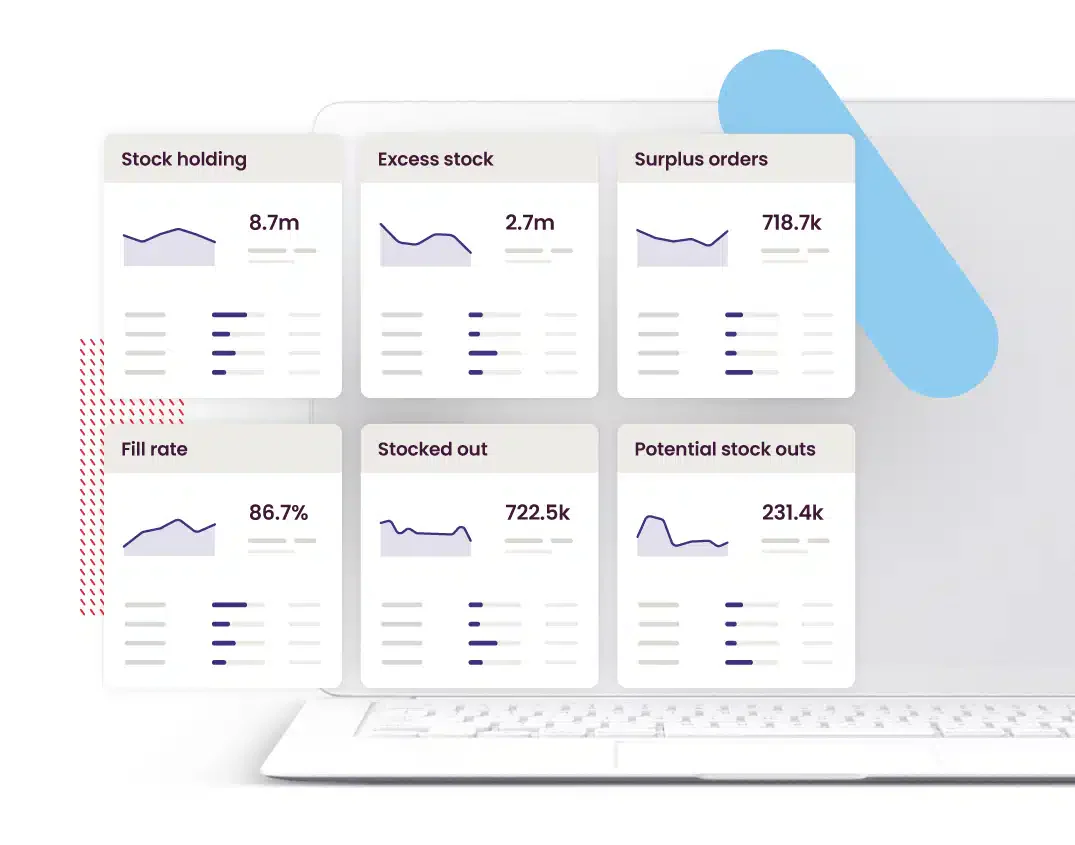 Why I picked NetStock: NetStock offers robust demand forecasting, aiding businesses in maintaining optimal stock levels.
Founded in 2010, NetStock provides cloud-based inventory management solutions focusing on smart inventory control and demand planning. Their software integrates seamlessly with various ERP systems, assisting businesses in reducing excess stock and avoiding product stockouts.
Key features:
- Demand forecasting system
- Order recommendations
- Supplier performance tracking
- Inventory classification
- Dashboard analytics
| Pros | Cons |
| User-friendly interface | Limited customization options |
| Quick integration with existing ERP systems | May require additional training for advanced features |
| Strong customer support | Limited offline capabilities |
| Real-time analytics |
Best for: Growing F&B businesses that need forecasting and replenishment planning to prevent stockouts during peak periods and avoid excess inventory.
Pricing: Quote-based (“Get pricing” via demo request).
9. Zoho Restaurant
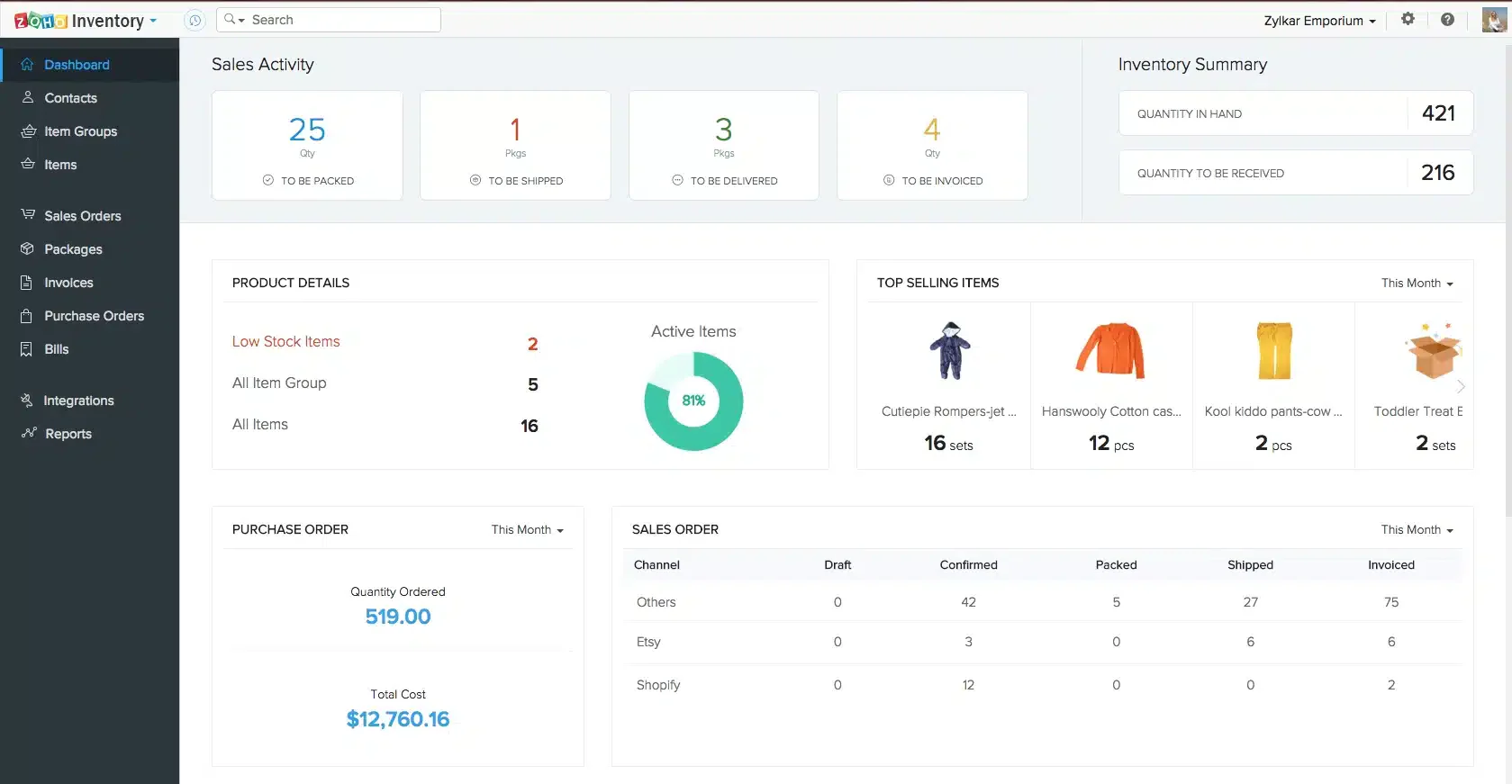 Why I picked Zoho: Zoho Inventory stands out for its adaptability, serving both restaurant and retail businesses with its comprehensive retail inventory management software capabilities.
Part of the Zoho suite, Zoho restaurant inventory management software is designed to help businesses manage orders and inventory seamlessly. Zoro restaurant inventory software integrates with multiple online sales channels, providing a unified platform for inventory control.
Key features:
- Multi-channel selling
- Warehouse management
- Order management
- Serial number and batch tracking
- Integration with shipping carriers
| Pros | Cons |
| Seamless integration with other Zoho products | Limited advanced features for large enterprises |
| Affordable pricing | Inventory automation rules can be complex |
| User-friendly interface | Customer support response times may vary |
| Strong mobile app support |
Best for: F&B businesses needing basic inventory and order visibility, especially if they already use Zoho apps and want a simple, scalable start.
Pricing: From USD $29/month (RM 119/month) per organization (billing terms apply).
10. Foodics
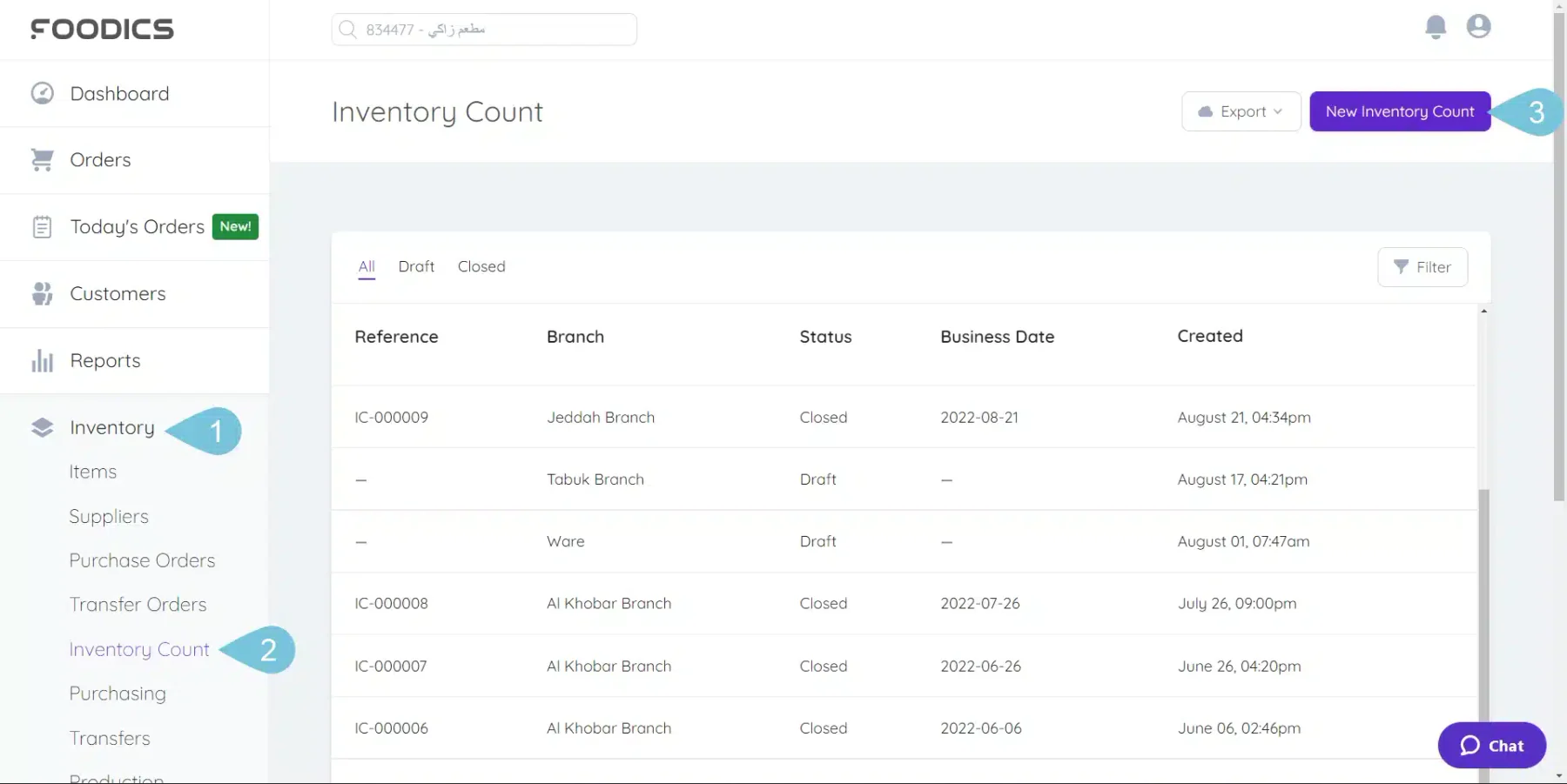 Why I picked Foodics: Foodics provides an all-in-one restaurant management solution, streamlining operations from inventory to customer engagement.
Established in 2014, Foodics restaurant inventory management software offers a cloud-based restaurant inventory management software that covers POS, inventory, and customer relationship management. It’s designed to help F&B businesses optimize operations and enhance customer experiences.
Key features:
- Real-time inventory tracking
- Recipe management
- Employee management
- Customer loyalty programs
- Comprehensive reporting
| Pros | Cons |
| Intuitive user interface | Occasional system updates may disrupt operations |
| Comprehensive feature set | Advanced analytics may need extra training |
| Strong customer support | Requires stable internet for optimal use |
| Regular feature updates |
Best for: Restaurants that want an all-in-one POS + inventory foundation, suitable for teams focused on faster service, menu control, and consistent outlet operations.
Pricing: Region-based; the pricing page shows plans starting from “423/month” depending on the selected country, best to request a Malaysia quote.
11. NetSuite
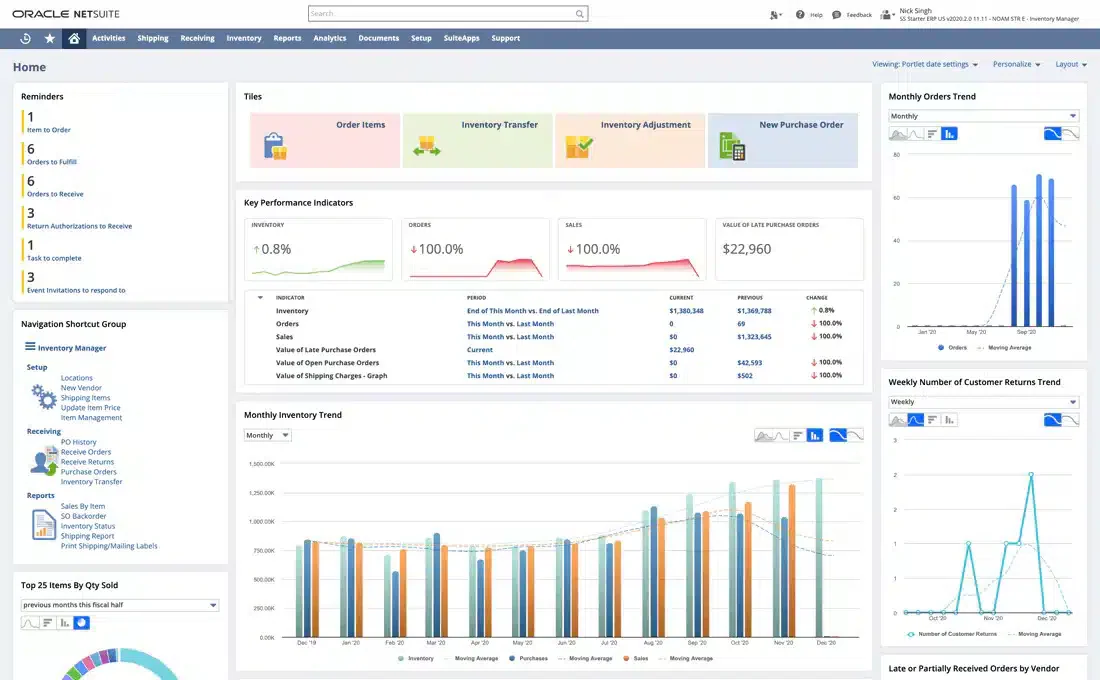 Why I picked NetSuite: NetSuite offers a comprehensive ERP solution with robust inventory management capabilities that are suitable for large enterprises.
Acquired by Oracle in 2016, NetSuite restaurant inventory software provides a cloud-based inventory management system for restaurant platforms that includes advanced inventory and order management features. It’s designed to support complex business operations across various industries.
Key features:
- Real-time inventory visibility
- Order management
- Demand planning
- Procurement management
- Warehouse management
| Pros | Cons |
| Comprehensive ERP solution | Complex setup process |
| Scalable for growing businesses | Requires dedicated IT resources |
| Strong integration capabilities | Customization can be time-consuming |
| Real-time data analytics |
Best for: Large chains and enterprise operators that need advanced multi-location inventory, procurement, and finance-grade controls in one ERP ecosystem.
Pricing: Quote-based (Oracle NetSuite pricing typically depends on modules/users/contracts).
12. Orderhive Inc
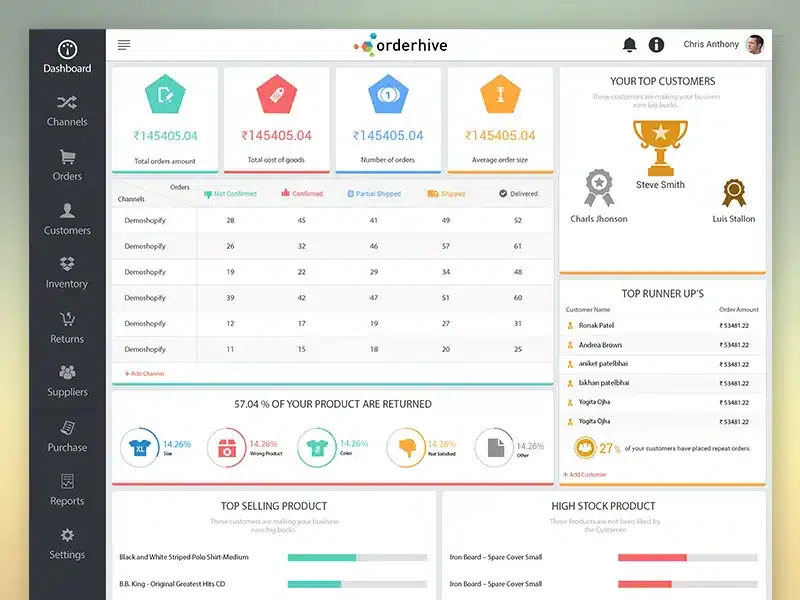 Why I picked Orderhive Inc: Orderhive provides a centralized platform for inventory management, ideal for businesses seeking streamlined operations.
Founded in 2015, Orderhive offers cloud-based inventory management software that integrates with various sales channels and marketplaces. It’s designed to help businesses efficiently automate and manage their inventory, orders, and shipments.
Key features:
- Centralized inventory management
- Multi-channel integration
- Order and shipping management
- Real-time analytics
- Automation of routine tasks
| Pros | Cons |
| User-friendly interface | Limited advanced features for large enterprises |
| Quick integration with multiple platforms | Limited mobile app functionality |
| Strong customer support | Customization may require additional support |
| Real-time analytics |
Best for: F&B brands selling across channels that need automated stock updates, orders, and purchasing in one place.
Pricing: From USD $44.99/month (RM 184/month) (plan-based).
13. Ordoro Inc
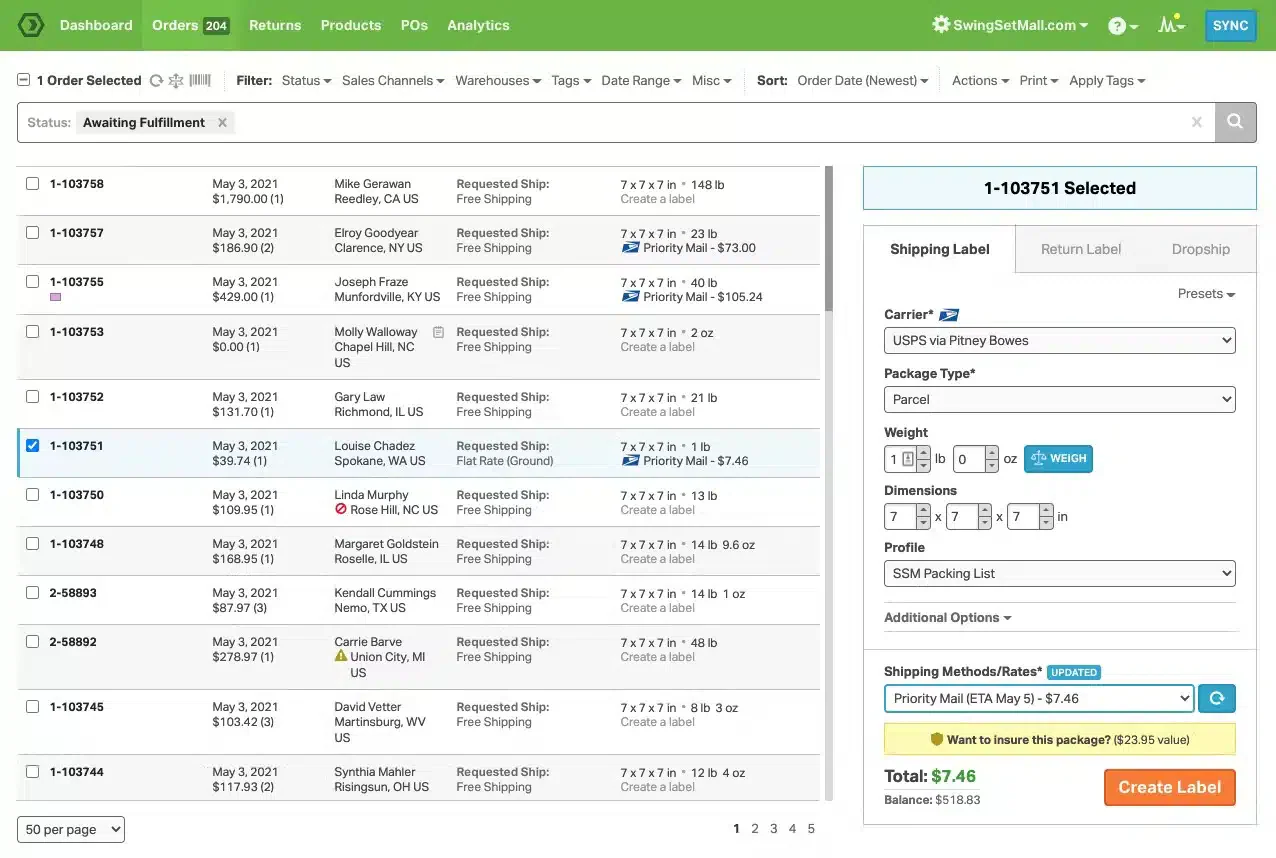 Why I picked Ordoro Inc: Ordoro excels in order fulfillment and inventory management, making it suitable for businesses with complex supply chains.
Founded in 2010, Ordoro offers a comprehensive solution for inventory management and order fulfillment. It integrates with various e-commerce platforms, providing businesses with tools to manage their supply chain efficiently.
Key features:
- Inventory synchronization across channels
- Automated order routing
- Supplier management
- Barcode scanning
- Comprehensive analytics
| Pros | Cons |
| Robust integration capabilities | The user interface may feel outdated |
| Efficient order management | May require additional training for advanced features |
| Strong customer support | Real-time analytics |
Best for: Hybrid restaurant-retail operations that handle fulfillment and shipping, needing centralized inventory + order workflows across multiple sales channels.
Pricing: Reported from USD $59/month (RM 241/month) depending on plan (often listed by marketplaces/review sites).
14. CrunchTime
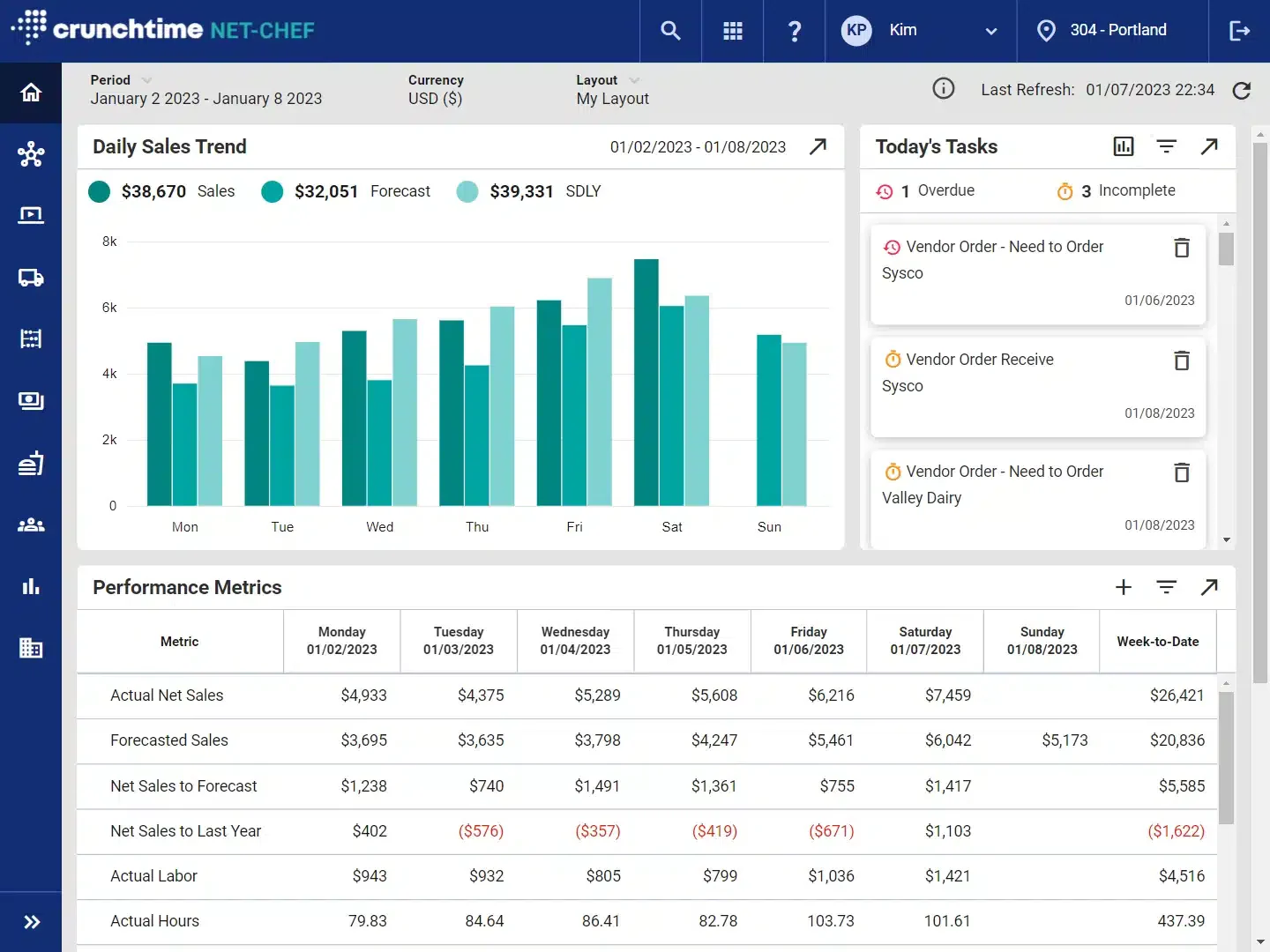 Why I picked CrunchTime: CrunchTime offers a robust back-office solution, focusing on inventory and labor management to optimize restaurant operations.
Established in 1995, CrunchTime provides enterprise-level food inventory control system for businesses in Malaysia. Their platform is designed to help restaurants reduce food and labor costs while maintaining quality and consistency.
Key features:
- Inventory management
- Recipe management
- Labor management
- Supply chain management
- Advanced analytics
| Pros | Cons |
| Comprehensive feature set | The user interface may feel outdated |
| Strong focus on cost control | Implementation can be time-consuming |
| Scalable for large operations | Detailed reporting capabilities |
Best for: Large restaurant groups that want deep food-cost governance, standardized inventory processes, and enterprise-level controls across many branches.
Pricing: Quote-based (contact sales/demo for pricing).
15. Cin7
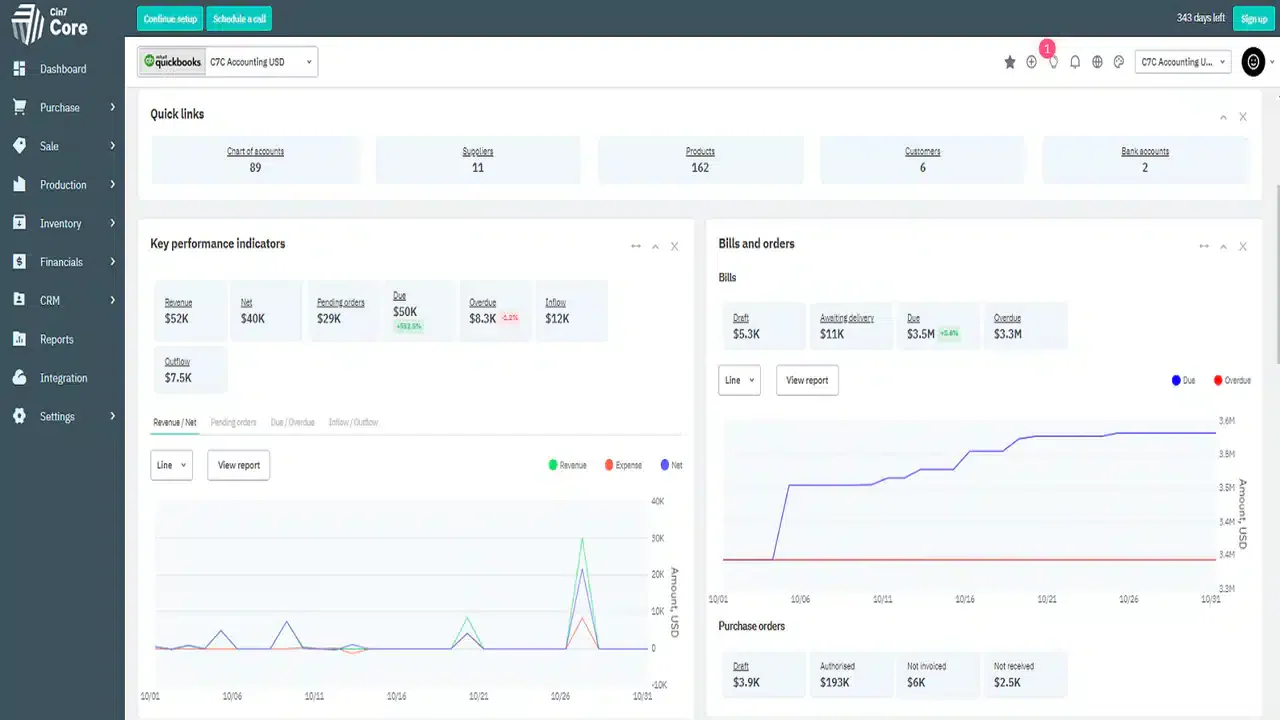 Why I picked Cin7: Cin7 provides a cloud-based inventory management solution with extensive integrations, suitable for businesses looking to streamline their supply chain.
Founded in 2012, Cin7 offers integrated restaurant inventory management software in Malaysia that connects products, sales channels, warehouses, and stores in real-time. It’s designed to help businesses optimize their inventory and order processes.
Key features:
- Real-time inventory tracking
- Order management
- Warehouse management
- B2B e-commerce platform
- Comprehensive reporting
| Pros | Cons |
| Extensive integration options | The user interface can be complex |
| Scalable for growing businesses | Some advanced features may require add-ons |
| Real-time data synchronization | Implementation can be time-consuming |
| Strong customer support |
Best for: Businesses with more complex supply flows, especially those balancing multiple outlets, storage locations, and reorder complexity.
Pricing: Reported from USD $349/month (RM 1,427/month) (plan/add-ons can affect total).
16. Jalebi.io
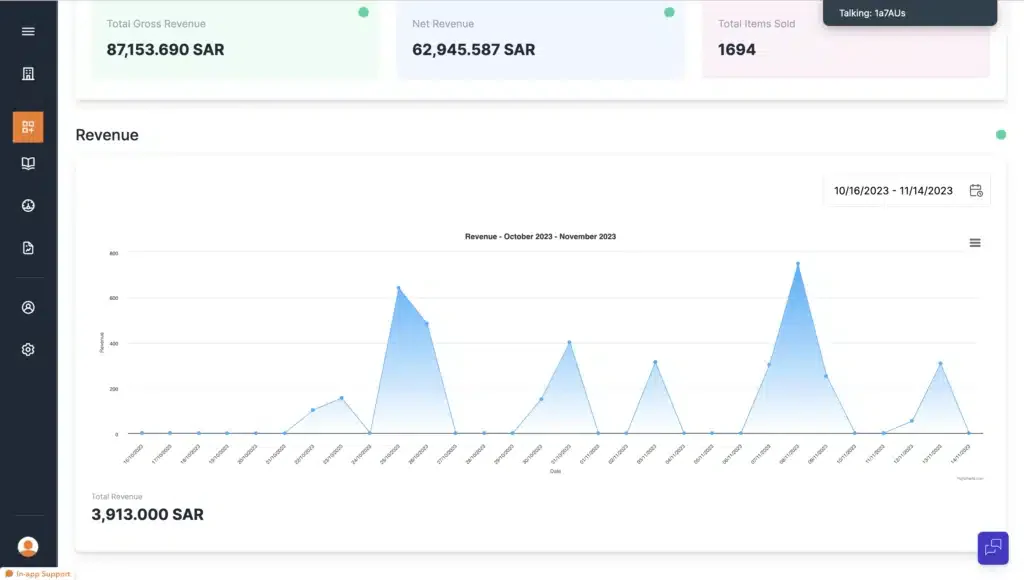 Why I picked Jalebi.io: Jalebi.io offers a user-friendly platform that simplifies restaurant inventory management.
Launched in 2020, Jalebi.io is a cloud-based platform designed specifically for the restaurant industry. Through intuitive tools and analytics, it aims to streamline inventory processes, reduce waste, and improve profitability.
Key features:
- Real-time inventory tracking
- Recipe management
- Waste tracking
- Supplier management
- Analytics dashboard
| Pros | Cons |
| Intuitive user interface | Newer platform with evolving features |
| Streamlined waste tracking | Integration options may be limited |
| Real-time analytics |
Best for: Multi-outlet restaurants that want practical recipe management, purchasing control, and stock visibility with a straightforward, operator-friendly workflow.
Pricing: Quote-based (demo-first; pricing not publicly fixed).
17. inFlow
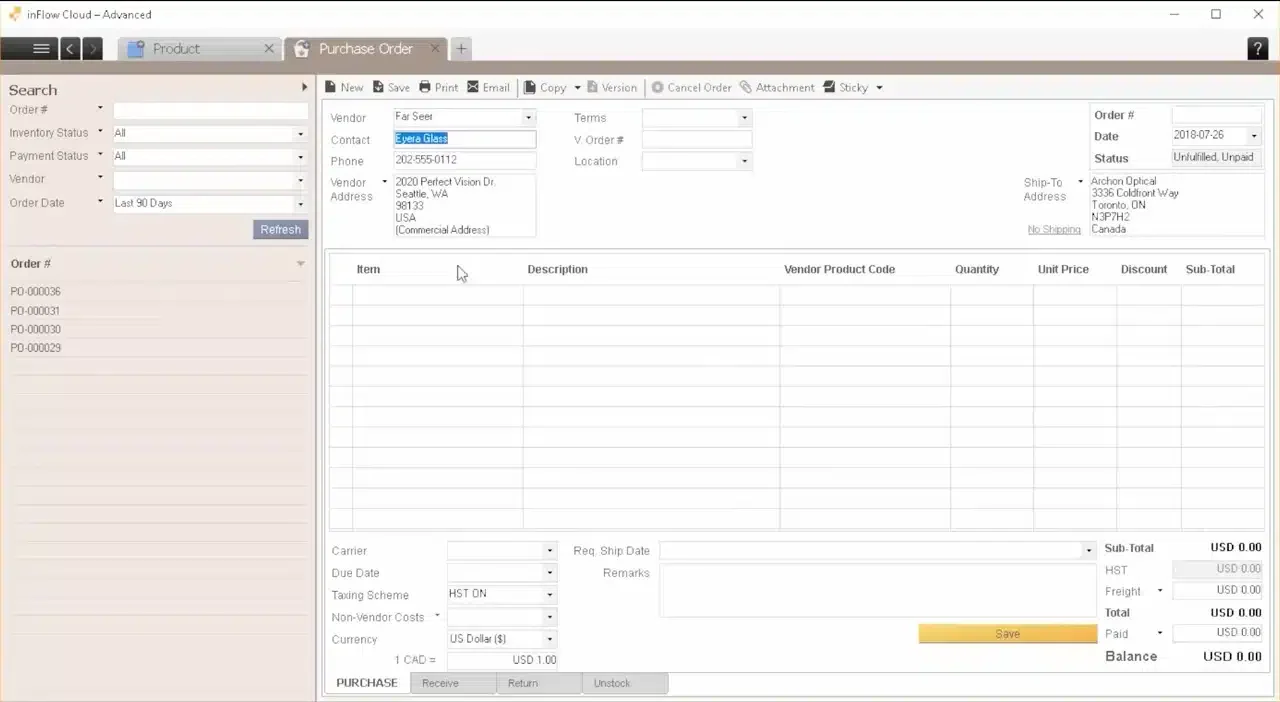 Why I picked inFlow: inFlow Inventory provides a comprehensive solution with robust features tailored for small to mid-sized businesses.
Developed by Archon Systems Inc., inFlow restaurant inventory software Malaysia is designed to simplify inventory management, emphasizing ease of use and comprehensive functionality. It offers a range of tools to manage stock levels, track sales and purchases, and streamline operations.
Key features:
- Inventory tracking control across multiple locations
- Barcode generation and scanning
- Order and invoice management
- Integration with e-commerce platforms
- Comprehensive reporting tools
| Pros | Cons |
| User-friendly interface | Limited offline capabilities |
| Robust barcode support | It may require additional training for complex functionalities |
| Strong integration capabilities | Requires stable internet for optimal use |
| Real-time inventory updates |
Best for: Small to mid-sized restaurants that want simple stock tracking, purchase logging, and barcode support without an enterprise-grade learning curve.
Pricing: Reported from USD $129/month (RM 527/month) for 2 users (annual billing noted).
18. BevSpot
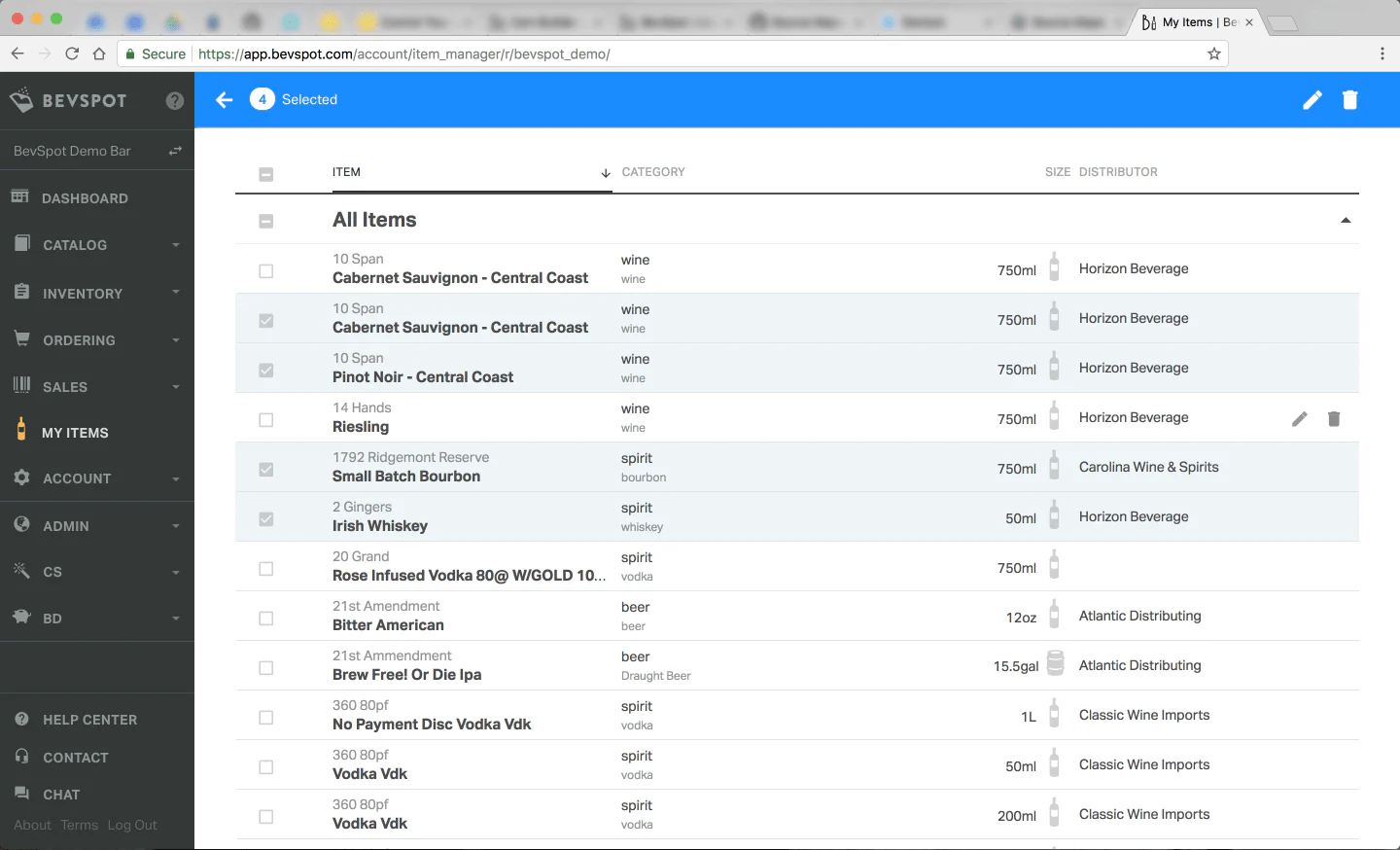
Why I picked BevSpot: It gives restaurant owners complete visibility into real‐time inventory usage, integrates seamlessly with POS systems and vendors.
BevSpot is a cloud-based inventory management system designed for restaurants, bars and hospitality businesses. It supports real-time ingredient and stock tracking, vendor ordering, recipe costing and POS integration.
Key features:
- Real-time inventory updates across location
- One-click vendor ordering
- Recipe and menu cost-management tools
- Sales and variance analytics tied to inventory
- Offline mobile-friendly inventory counting
| Pros | Cons |
| Strong cost‑management. | Initial setup can be time consuming. |
| Real‑time visibility into inventory. | Some users report slower performance. |
| User‑friendly interface | Pricing may become high for larger operations. |
Best for: Bars and beverage-heavy venues that need tighter control over ordering and beverage cost variance tracking.
Pricing: USD $948/year (RM 3,877/year, RM 323/month) or USD $1,428/year (RM 5,838/year, RM 486/month) (annual billing).
19. Toast
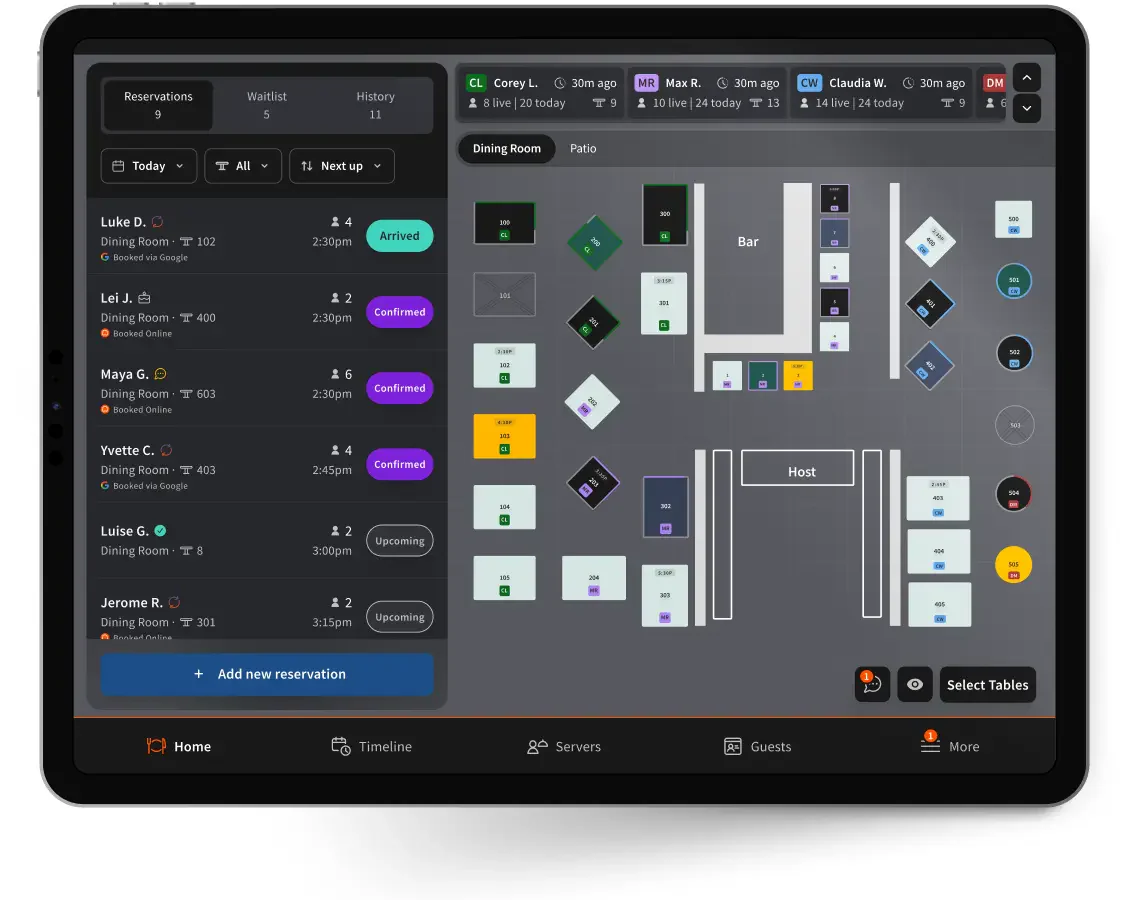
Why I picked Toast: Toast stands out for its intuitive interface and seamless integration with various restaurant functions. It’s particularly useful for restaurants that handle a high volume of online orders and want a unified system for POS, inventory, and loyalty programs.
Toast offers restaurant inventory software that integrates menu management, online ordering, and stock control into a single platform. Its loyalty tools help track customer rewards, while real-time reporting supports smarter restaurant operations.
Key Features:
- Real-time inventory tracking and online ordering sync
- Customer loyalty program integration
- Unified dashboard for POS, billing, and menu updates
- Cloud-based access with offline fallback options
| Pros | Cons |
| Easy-to-use interface, even for non-technical users | Dependent on stable internet connection |
| Supports loyalty programs and customer engagement | Limited customization in advanced reports |
| Strong integration with online ordering platforms |
Best for: High-volume restaurants that want a unified POS ecosystem with inventory and menu control, plus real-time performance and cost insights for operators.
Pricing: Quote-based (Toast typically requires a tailored quote by business needs/location).
20. xtraCHEF
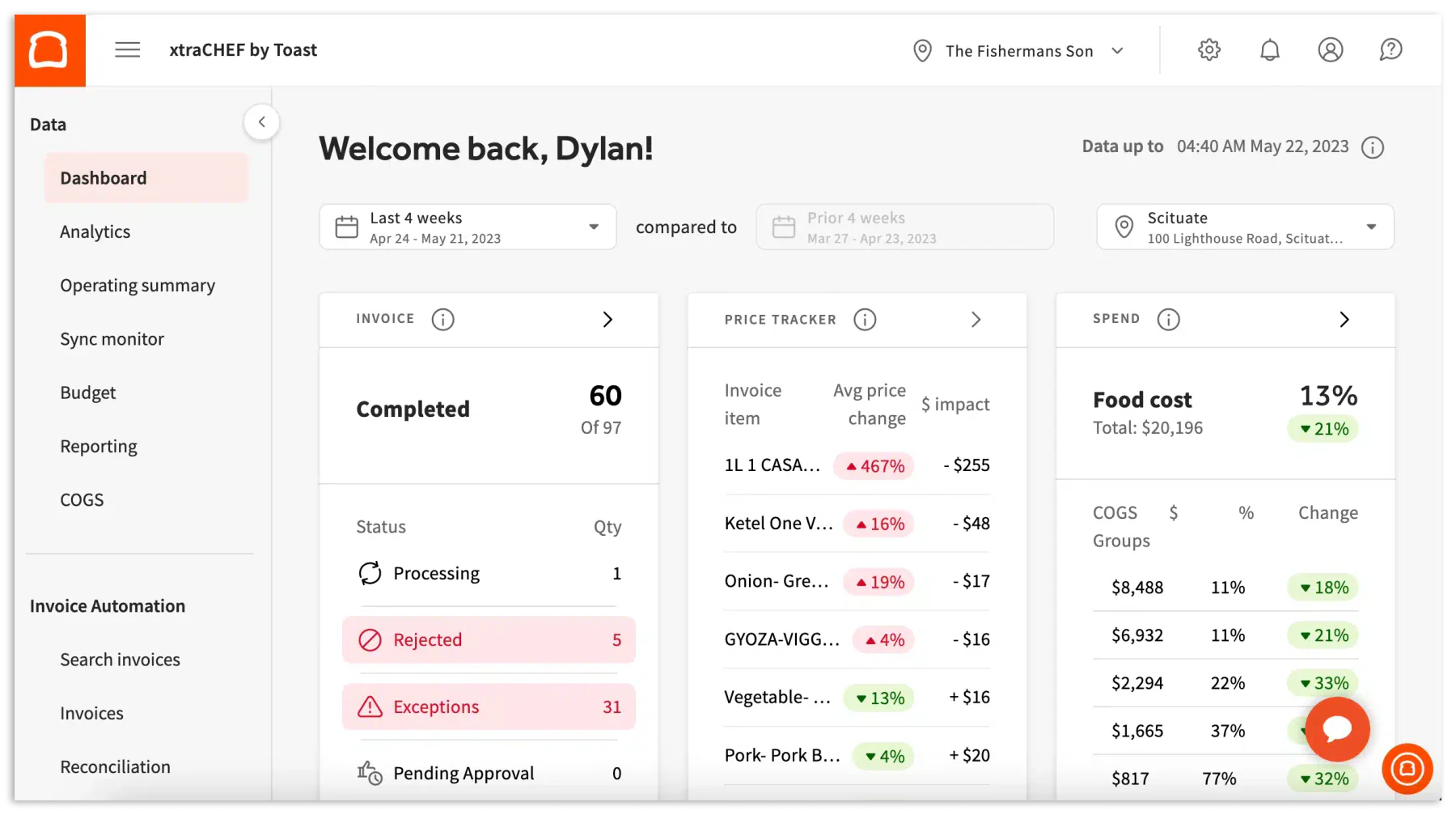
Why I picked xtraCHEF: XtraChef stands out for its strong back-office automation and deep cost-control capabilities. It’s ideal for restaurants that want better visibility into food costs and spending without manual tracking.
XtraChef offers inventory software for restaurants that automates invoice processing and real-time food costing tied directly to menu performance. Seamless integration with Toast POS helps restaurants monitor expenses and make smarter purchasing decisions.
Key Features:
- Automates invoice capture for fast and accurate input
- Turns detailed cost data into clear and digestible reports
- Matches purchase records with available manufacturer rebates through Buyer’s Edge
- Supports full EDI for streamlined ordering and supplier payments
| Pros | Cons |
| Includes vendor EDI integrations for orders and payments | It is locked into Toast’s POS system |
| Integrates directly with Toast’s industry-leading POS system | Pricing is not publicly disclosed, and contracts are typically longer |
| Has an affordable base POS software to access the inventory tool | Fewer integration options compared to other providers |
Best for: Operators who want faster back-office workflows, especially invoice capture and cost tracking, so food spend is visible without manual data entry.
Pricing: Available upon request.
Why Restaurant Inventory Management Software Matters for Your Business?
 Implementing the best restaurant inventory software throughout your business always matters. One thing to keep in mind is that managing a restaurant is more than just serving great food, it’s about keeping track of supplies to ensure smooth operations.
The other reasons why this software is important are:
- Real-time inventory tracking: Through real-time tracking inside the inventory control system Malaysia, you always know what’s in stock, what’s running low, and what needs reordering.
- Cost control and waste reduction: The best gila part of using the best restaurant inventory management software is that it helps you to identify areas of overstocking or wastage.
- Improved order accuracy: Restaurant inventory management software automates inventory data, ensures accurate orders from suppliers, and reduces the chances of over-purchasing.
- Data-driven decision making: Detailed reports provide insights into usage patterns, helping you make informed decisions about purchasing and pricing strategies to increase revenue.
- Time-saving automation: By automating inventory tasks, you can save your staff time, allowing them to focus on customer service and core restaurant operations.
But do not hurry. Before deciding which restaurant inventory software to choose in Malaysia, consider the system’s price first. This will help you manage your budget and avoid operational issues by implementing the best restaurant inventory software.
Which Restaurant Inventory Software Suits The Most for Your Business?
Choosing the right restaurant inventory software depends on your business size, operational complexity, and daily workflow needs. The comparison below highlights which solutions are most suitable for different restaurant scenarios, helping businesses in Malaysia make a more practical and informed decision.
| Business Scenario | Recommended Software | Why It Fits |
|---|---|---|
Restaurant groups managing multiple branches |
HashMicro or Restaurant365 | Both support centralized inventory control, purchasing, and reporting across multiple restaurant outlets. |
Restaurants wanting POS-connected inventory tracking |
Upserve or Lightspeed | Both integrate inventory directly with POS systems for real-time ingredient usage and stock updates. |
F&B businesses focused on reducing food waste and controlling costs |
Optimum Control or MarketMan | Both provide recipe costing, waste tracking, and food cost monitoring tools to improve profitability. |
Small restaurants needing simple inventory management |
SimpleOrder or inFlow | Both offer user-friendly inventory tracking and supplier management without complex setup. |
Restaurants needing forecasting and replenishment planning |
NetStock or HashMicro | Both help businesses forecast inventory demand and prevent overstocking or stock shortages. |
Businesses already using integrated cloud ecosystems |
Zoho Inventory or NetSuite | Both integrate with broader business systems and support centralized inventory and operational management. |
Bars and beverage-focused venues |
BevSpot or Toast | Both provide beverage inventory visibility, cost tracking, and operational reporting for high-volume drink sales. |
Restaurants prioritizing supplier and purchasing management |
SimpleOrder or MarketMan | Both simplify supplier ordering, invoice management, and purchasing workflows. |
Large restaurant chains needing enterprise-level controls |
NetSuite or CrunchTime | Both provide advanced inventory, procurement, and operational controls for large-scale restaurant operations. |
Restaurants wanting all-in-one POS and inventory management |
Foodics or Toast | Both combine POS, inventory tracking, and operational tools within one platform for daily restaurant management. |
Hybrid restaurant-retail businesses managing multiple sales channels |
Orderhive or Ordoro | Both support centralized inventory, order management, and multi-channel operations. |
Restaurants focused on back-office automation and invoice processing |
xtraCHEF or Upserve | Both help automate food-cost tracking, invoice management, and operational reporting. |
Businesses managing complex supply chains and warehouses |
Cin7 or NetStock | Both support warehouse management, forecasting, and inventory synchronization across locations. |
Multi-outlet restaurants wanting practical and easy inventory workflows |
Jalebi.io or HashMicro | Both provide recipe management, stock visibility, and operational tracking for growing restaurant businesses. |
Growing restaurants needing scalable cloud inventory software |
Lightspeed or Zoho Inventory | Both offer cloud-based inventory management with scalable tools for expanding operations. |
Overall Comparison of Restaurant Inventory Software for Culinary Business
Choosing the right restaurant inventory software is essential for culinary businesses looking to reduce waste, control food costs, and streamline back-of-house operations. Here I present you the overal comparison of restaurant inventory software:
| Provider | Connection Quality | Bank Coverage | Ease of Integration | Data Enrichment |
|---|---|---|---|---|
| HashMicro | ||||
| Netstock | ||||
| Zoho | ||||
| NetSuite | ||||
| Ordoroo |
Key Features of Restaurant Inventory Management
Effective restaurant inventory management involves various key processes that ensure smooth operations and optimal stock levels. Here are the essential parts of managing inventory in a restaurant:
- Inventory Tracking and Monitoring: This involves continuously tracking stock levels to ensure that ingredients and supplies are adequately stocked. Real-time updates and automated alerts help prevent shortages or overstocking, ensuring that restaurants can meet customer demand without waste.
- Waste Reduction: One of the biggest challenges in restaurant inventory management is minimizing food waste. By tracking the shelf life of ingredients, implementing first-in-first-out (FIFO) or first-expired-first-out (FEFO) systems, and analyzing inventory usage, restaurants can cut down on spoilage and waste.
- Stock Replenishment: Efficient inventory restocking requires calculating reorder points for ingredients and supplies using sales trends, inventory levels, and lead times. This ensures that restaurants have the right amount of stock at all times, preventing overstocking or running out of items during peak demand periods.
- Data and Reporting: Inventory software provides detailed reports on stock levels, purchase history, and consumption patterns. This data helps restaurant managers make informed purchasing decisions, streamline operations, and forecast demand more accurately.
-
Recipe Costing: Calculating the cost of each menu item based on ingredient usage helps restaurants control margins and set profitable pricing. It also ensures better budgeting and food cost management.
-
Integration: Seamless integration with POS and accounting systems provides a unified view of inventory, sales, and finances, essential for optimizing procurement and financial reporting.
By managing these key components effectively, restaurants can maintain a balance between meeting customer needs and minimizing waste and costs.
How Do Restaurants Take Inventory?
Taking inventory in a restaurant is essential for accurate stock management and informed decision-making. Here’s how restaurants typically manage this process:
- Manual Inventory: Restaurants often conduct physical counts of their stock. This process can be time-consuming and error-prone, but it may be necessary for smaller operations with simpler needs.
- Automated Systems: More restaurants are turning to digital inventory management systems, which integrate with POS systems, barcodes, and RFID technology. These tools update stock levels automatically as items are sold or restocked, reducing human error and saving time. Automated inventory management provides real-time tracking, enabling restaurants to monitor stock without manual counts.
Automating inventory management allows for better control over stock, reduces errors, and improves operational efficiency, making it essential for growing restaurant businesses.
Top Tips to Evaluate the Best Restaurant Inventory Management Systems
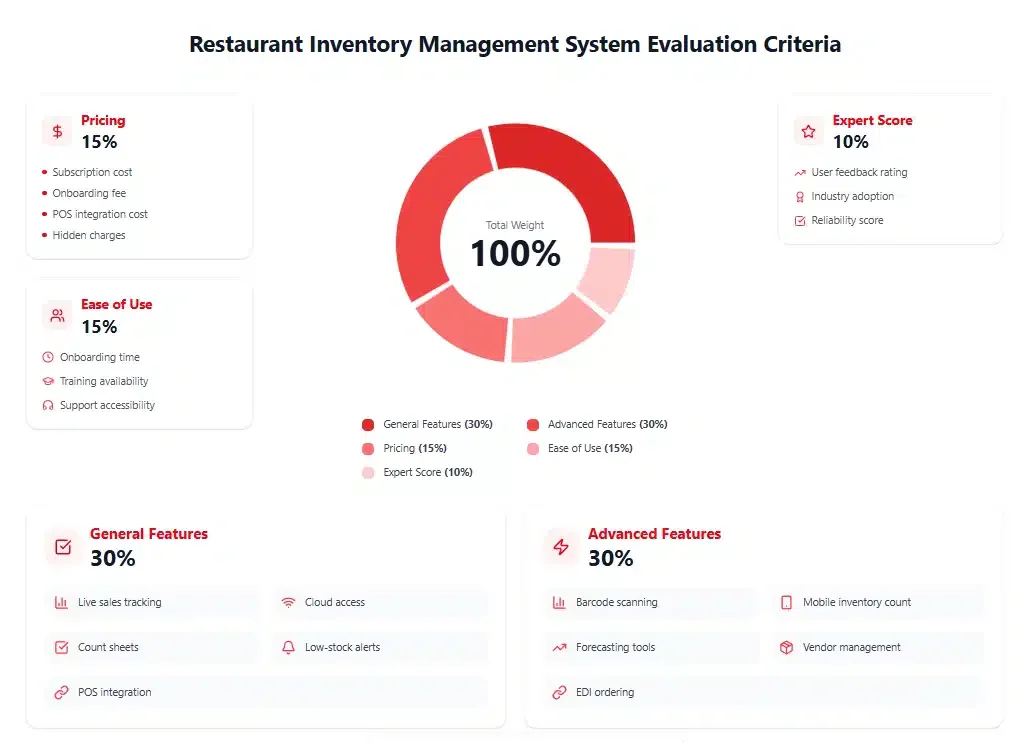
The evaluation focused on what actually matters in day-to-day restaurant operations, cost control, speed, accuracy, and how easily teams can adopt the system. To rank the tools in this guide, I used a weighted scoring system focused on real operational impact, not just feature lists.
- Pricing (15%): Pricing was assessed beyond the monthly fee, including contract terms, onboarding or installation costs, and any hidden charges. The evaluation also considered the total cost after adding POS integrations and other required add-ons.
- General Features (30%): This category covered the essentials every modern restaurant inventory system should have, such as live sales tracking, cloud access, and easy-to-use count sheets. Low-stock alerts and core integrations were also included since they directly impact daily replenishment and accuracy.
- Advanced Features (30%): Advanced capabilities were scored based on whether the software helps restaurants run smarter, not just track stock. This included barcode scanning, mobile counting, forecasting, vendor management, and EDI options for smoother ordering workflows.
- Ease of Use (15%): Ease of use focused on how quickly teams can get value without heavy training or complicated setup. Support availability, training resources, and onboarding experience were treated as key indicators of usability.
- Expert Score (10%): This score reflected real-world credibility, combining user feedback with the overall value delivered for the price paid. It also considered product reliability and how commonly the tool is used within the restaurant industry.
How to Choose the Most Suitable Inventory Vendor for Your Restaurant

Choosing the right restaurant inventory management software can make a real difference in cost control, workflow speed, and day-to-day consistency. Instead of judging tools by “how many features” they claim to have, these are the practical factors worth checking before deciding:
- Identify your business needs: Understand the specific challenges you face, such as stock tracking, waste reduction, or multi-location management.
- Ease of use: Choose software with an intuitive interface to which your team can quickly adapt.
- Integration capabilities: Ensure the restaurant stock control software integrates seamlessly with your existing systems, like POS, accounting, and supply chain tools.
- Customer support: Look for vendors that offer responsive and reliable customer service to address any issues promptly.
- Scalability: Consider whether the software can grow with your business and support future expansion.
- Request a free demo: Test the software with your team to evaluate its functionality and suitability for your operations.
Conclusion
Ultimately, selecting the right restaurant inventory software is about finding the perfect balance between robust features and ease of use. The ideal system should simplify your back-of-house operations, from ingredient tracking to cost control, without adding unnecessary complexity to your daily workflow.
For Malaysian F&B businesses looking to scale, prioritising a system that supports multi-outlet synchronisation and local compliance is key. The right platform should serve as a reliable backbone for your operations, ensuring data accuracy and preventing costly inventory discrepancies across branches.
Finding the perfect fit shouldn’t be a guessing game. To ensure the solution aligns with your operational goals, you can schedule a free consultation with our expert team for personalised guidance on optimizing your kitchen’s efficiency.

FAQ about Restaurant Inventory Software
What is the best inventory method for restaurants?
The FIFO (First In, First Out) method is best for restaurants. It ensures older stock is used first, reducing waste and keeping ingredients fresh and safe.
What is ABC inventory analysis?
ABC inventory analysis categorizes items based on value and importance. A-items are high-value, B-items are moderate, and C-items are low-cost. This helps prioritize stock management effectively.
What are the 4 types of inventory?
The four types are raw materials, work-in-progress (WIP), merchandise and supplies, and finished goods. Raw materials are basic items, while WIP includes items still being prepared. Finished goods are ready-to-serve products, and supplies support daily operations.
How to do a daily inventory for a restaurant?
To perform daily inventory for a restaurant, start by creating a standardized checklist of all key ingredients and supplies, categorized by storage area (such as dry storage, refrigerator, and freezer). Then at the same time each day, manually count the physical stock of each item and record the quantities using consistent units of measurement. Compare these counts with your POS or inventory management system to identify discrepancies between actual and theoretical usage. Note any items that are low, expired, or overstocked and update purchase orders accordingly. This daily process helps control food costs, reduce waste, maintain stock accuracy, and ensure smooth kitchen operations.
What makes a restaurant inventory management software effective?
A good restaurant inventory system reduces costs and manual work with real-time tracking, automation, POS integration, low-stock alerts, and usage reports.