














Distribution accounting software helps you manage financial operations more efficiently by tracking inventory, sales, and expenses in one system. It integrates with existing systems, automates processes, and provides real time data analysis.
According to research by the International Monetary Fund, implementing an accounting system can help businesses cut distribution costs by 58% compared to manual processes. Without the right distribution accounting software, daily operations can feel more complicated and harder to control.
If you are reading this article, chances are you are already considering accounting software for your business. With so many accounting software vendors available in Malaysia, finding the right fit can feel overwhelming. To make it easier, here are the 15 best distribution accounting software options in Malaysia.
Key Takeaways
Distribution accounting software connects finance, inventory, and customer data to help businesses manage operations more efficiently.
This system can support better cost control, improve accuracy, and make daily processes easier to monitor.
With many software options available in Malaysia, choosing the right vendor starts with understanding your business needs and system priorities.
Some platforms offer broader integration, automation, and flexibility, which can be more relevant for growing distribution businesses.
As performance tracking becomes more structured, many businesses also start looking at accounting software to keep budgeting, cost reporting, and financial records easier to manage.

 Sage
Sage

 SAP S/4HANA
Best Because
SAP S/4HANA centralizes financial control and procurement visibility. .
 QuickBooks
Best Because
QuickBooks automates small business accounting and expense tracking.
 Acumatica
Best Because
Acumatica integrates cloud based business management and financial visibility.
Quick Comparison of Distribution Accounting Software in Malaysia
| Software | Best For | Strength | Key Features | Notes |
|---|---|---|---|---|
| HashMicro | Medium–large enterprises | All-in-one ERP with strong automation | Cash flow forecasting, bank reconciliation, financial dashboard, analytical reporting | Highly customizable, unlimited users |
| NetSuite | Growing companies | Scalable cloud ERP | Financial management, billing, dashboards, inventory | Strong Oracle ecosystem |
| Odoo | SMEs needing flexibility | Modular and customizable | Inventory, invoicing, multi-company | Open-source approach |
| Sage Intacct | Mid-sized businesses | Advanced financial reporting | Multi-entity accounting, automation, dashboards | Strong compliance support |
| SAP S/4HANA | Large enterprises | Enterprise-grade analytics | Real-time analytics, financial modules | High implementation cost |
| Epicor Kinetic | Distribution & manufacturing | Industry-focused ERP | Cost accounting, production tracking | Cloud-based scalability |
| Dynamics 365 Business Central | Microsoft ecosystem users | Integrated business solution | Financials, CRM, BI analytics | Seamless Microsoft integration |
| QuickBooks | Small businesses | Easy-to-use accounting | Invoicing, payroll, expenses | Limited scalability |
| Acumatica | Growing SMEs | Flexible cloud ERP | Automation, real-time insights | Highly customizable |
| Brightpearl | Retail & wholesale | Operations automation | Inventory, CRM, order management | Multi-channel support |
| TallyPrime | Mid-sized businesses | Simple accounting | Inventory, invoicing, reporting | Not cloud-based |
| Vyapar | Small retailers | Mobile-friendly | Billing, payments, inventory | Affordable solution |
| AlignBooks | SMEs | Affordable accounting | Billing, bookkeeping, GST | Limited integrations |
| FreshBooks | Freelancers | User-friendly | Invoicing, time tracking | Limited advanced features |
| Patriot Accounting | Small businesses | Affordable payroll + accounting | Payroll, bookkeeping | Basic reporting features |
What is Distribution Accounting Software?
Distribution accounting software is a system that combines financial tasks such as billing, stock control, and transaction recording. It streamlines operations by automating processes, minimizing errors, and offering up to date analytics for strategic decisions.
It sounds great when a system can streamline your business operations. That is exactly how distribution accounting software should do, right? But, what makes this software different from the others?
Designed to handle the complexities of large scale distribution businesses, the top distribution accounting software offers scalability and customization to meet specific industry needs, whereas basic financial systems are more generic.
Distribution accounting software also integrates with sales management and CRM capabilities, allowing you to track sales performance and manage customer accounts effectively. This not only helps you gain better visibility into your business finances but all of your business processes can be tracked efficiently.
Why Distribution Businesses in Malaysia Need Better Financial Visibility
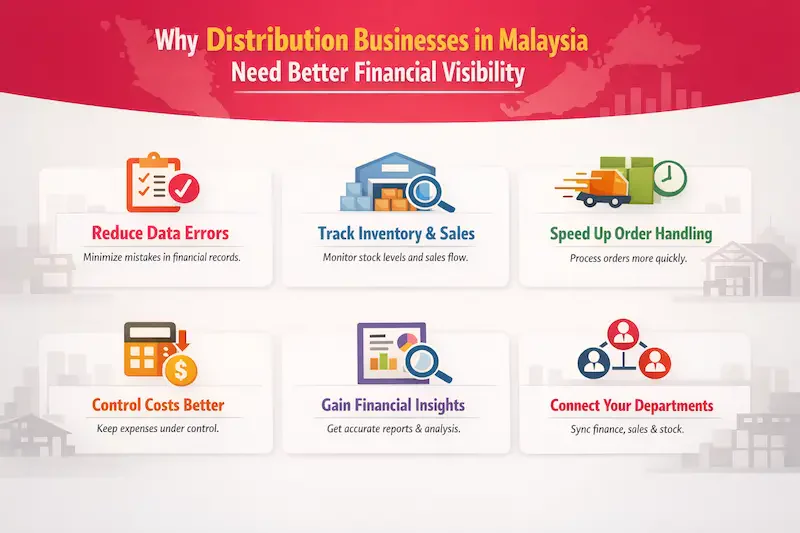
Running a distribution business in Malaysia is rarely simple. You need to deal with moving stock, changing customer demand, supplier timelines, and financial records that all need to stay in sync. When those areas are handled separately, small issues can quickly turn into bigger operational problems.
That is why better financial visibility matters. When you can see inventory movement, sales activity, expenses, and incoming payments in one place, it becomes easier to spot delays, control costs, and make faster decisions without relying on manual updates.
For distribution businesses in Malaysia, this matters even more as operations grow more complex and compliance expectations continue to shift. A connected system can help you reduce guesswork, improve coordination between teams, and keep daily processes easier to manage.

Benefits of Using Distribution Accounting Software

If you are a distributor, implementing distribution accounting software can significantly enhance the efficiency and profitability of your business. Beyond that, here are the key benefits you can get when using the right system for your distribution business:
- Enhanced financial accuracy: Automated financial processes reduce the risk of human error, resulting in more accurate and reliable financial records and reports.
- Cost efficiency: By automating routine tasks, the software helps reduce labor costs and improve operational efficiency, leading to greater cost savings.
- Scalability and customization: The software can be tailored to fit the specific needs of your business and scale as your business grows, so it stays relevant over time.
- Real time data access: Access to real time data and analytics supports better decision making, helping you respond faster to market changes and business needs.
- Improved inventory management: The software provides real time tracking of inventory levels, helping you avoid stockouts and overstock situations while improving stock control.
- Streamlined order processing: The system connects order processing from entry to fulfillment, improving order accuracy and speeding up the delivery process.
15 Best Distribution Accounting Software in Malaysia
Choosing the best distribution accounting software is crucial for optimizing your business operations and financial management. Below is a brief list to consider when selecting the most suitable accounting system for your business.
- HashMicro: ERP & accounting platform for medium–large enterprises with automation for financials, procurement, inventory, and reporting, plus unlimited users.
- NetSuite: Cloud ERP with strong financial management, real-time reporting, and multi-subsidiary support for fast-growing companies.
- Odoo: Modular open-source ERP offering customizable accounting, invoicing, expenses, and multi-company features.
- Sage Intacct: Advanced financial management with strong multi-entity accounting and compliance-ready reporting.
- SAP S/4HANA: Enterprise-grade ERP with robust financial, asset, and performance management for complex operations.
- Epicor Kinetic: ERP built for manufacturing and distribution, offering cost accounting, production tracking, and financial planning.
- Dynamics 365 Business Central: Microsoft cloud ERP for SMBs integrating financials, sales, purchasing, and BI analytics.
- QuickBooks: Popular accounting system for SMEs with invoicing, expenses, payroll, and tax tools.
- Acumatica: Cloud-native ERP offering automated financials, real-time insights, and scalability.
- Brightpearl: Retail-focused system automating accounting, inventory, and multi-channel order workflows.
- TallyPrime: Simple SME accounting solution for invoicing, inventory, GST, and reporting.
- Vyapar: Mobile-friendly accounting app for small retailers needing invoicing, payments, and inventory tracking.
- AlignBooks: Affordable SME software with billing, bookkeeping, finance control, and GST compliance.
- FreshBooks: User-friendly platform for freelancers with invoicing, time tracking, and expenses.
- Patriot Accounting: A Simple small-business tool offering affordable payroll, bookkeeping, and basic reporting.
Here are our top 15 recommendations for distribution accounting software in Malaysia, each offering unique features and benefits to enhance your business performance.
1. HashMicro Accounting Software
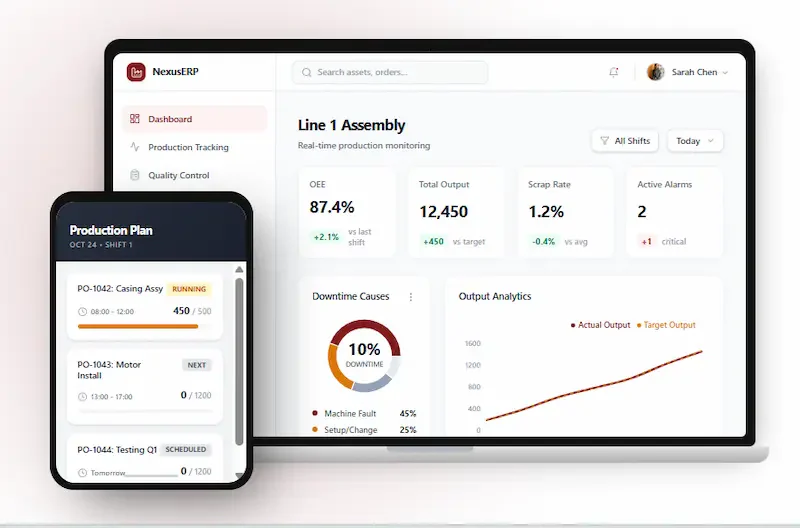
HashMicro is widely used by businesses in Malaysia because it offers comprehensive features and integrates smoothly with other systems. It supports financial management, inventory tracking, and order processing in one platform.
Founded in 2015, HashMicro has grown across various industries, including distribution. Several companies from different sectors have also adopted its system as part of their operational and financial management processes.
If your business often struggles with uneven cash flow and inefficient distribution processes, this platform can help improve visibility and coordination across daily operations.
HashMicro also offers a user friendly interface and supports business needs that require customization and system integration. This makes it more suitable for medium to large companies that need a flexible platform to support operational growth.
Key features:
- IRBM standardized: Also known as LHDN or Lembaga Hasil Dalam Negeri Malaysia, this feature helps ensure the system aligns with local regulatory requirements, making it more relevant for distribution businesses in Malaysia.
- Cash flow forecasting: Helps you estimate future income and expenses more accurately for a specific period.
- Fast bank reconciliation: The system can automatically import bank transactions securely, helping you reconcile records faster.
- Accrual and amortization: It helps reduce manual errors by automating the recording and calculation of accruals and amortization.
- Analytical reporting: The system can generate income statements, cash flow statements, balance sheets, and capital change reports in much less time.
- Financial dashboard: You can monitor the financial condition of your business, including revenue, cash flow, accounts receivable, accounts payable, and more in one dashboard.
| Pros | Cons |
|---|---|
| Easy to use | Implementation time varies depending on your customization request |
| Free to add users at no additional cost | Feature comprehensive |
| Flexible scalability | Highly customization |
Before making a final decision, it helps to review the pricing structure first so you can see which setup fits your business needs and budget more comfortably.
2. Netsuite
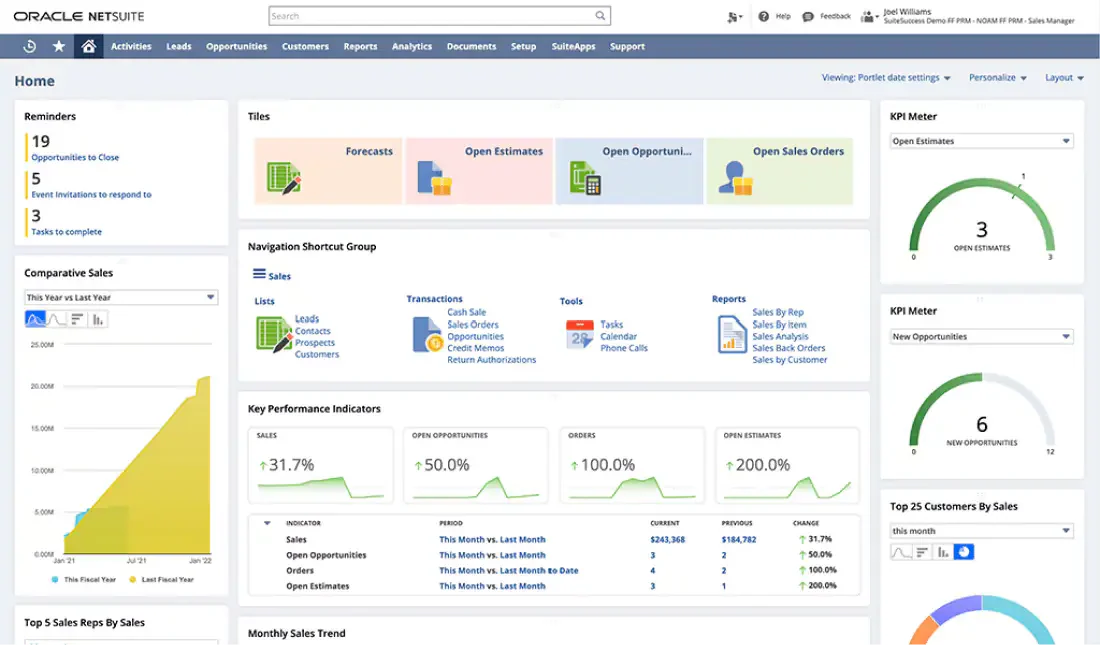
NetSuite was established in 1998 and later acquired by Oracle in 2016. It offers a comprehensive suite of applications for businesses of various sizes, including features that support distribution related financial operations.
NetSuite stands out for its scalability and solid finance features. Its integration with Oracle’s ecosystem adds more functionality, while the cloud based system supports easier access and flexibility. This platform is often considered suitable for growing businesses that need a system that can scale over time.
Key features:
- Comprehensive financial management
- Order and billing management
- Real-time bookkeeping software dashboards
- Advanced inventory control
| Pros | Cons |
|---|---|
| Cloud-based accessibility | Higher cost of ownership |
| Extensive features | Requires extensive training |
| Regular updates and support | Can be complex to implement |
| Dependent on internet connectivity |
3. Odoo
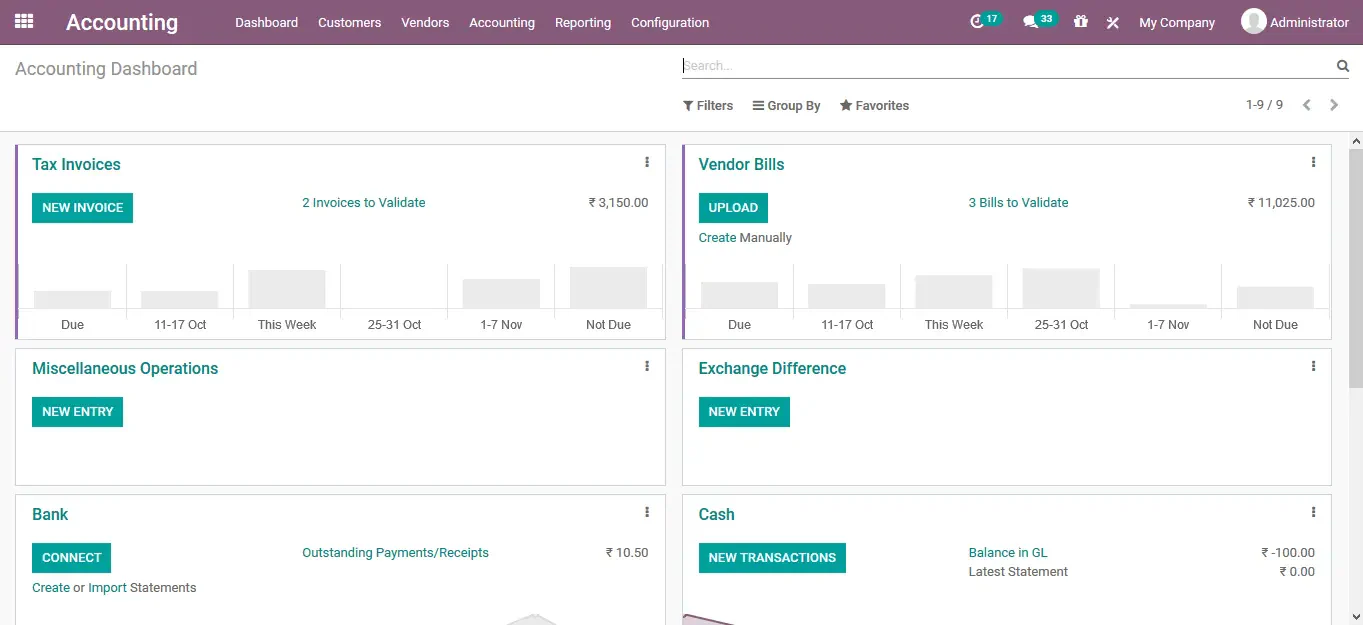
Odoo is an open source ERP solution that was introduced in Belgium in 2005. It uses a modular approach, allowing businesses to choose and implement only the features they need, including tools for distribution operations. Its flexibility and relatively accessible pricing have made it a popular option among small to medium sized businesses worldwide.
Odoo’s modular structure and open source model give businesses more room for customization while helping control software costs. Its active user community and regular updates also contribute to ongoing improvements and support.
Key features:
- Modular distribution ERP
- Customizable workflows
- Integrated inventory management
- Multi-language support
| Pros | Cons |
|---|---|
| Flexible and customizable | Requires technical expertise |
| Regular updates | Less robust customer support |
| Open-source | Limited features in the free version |
| Active community | Can require additional modules |
4. Sage Intacct
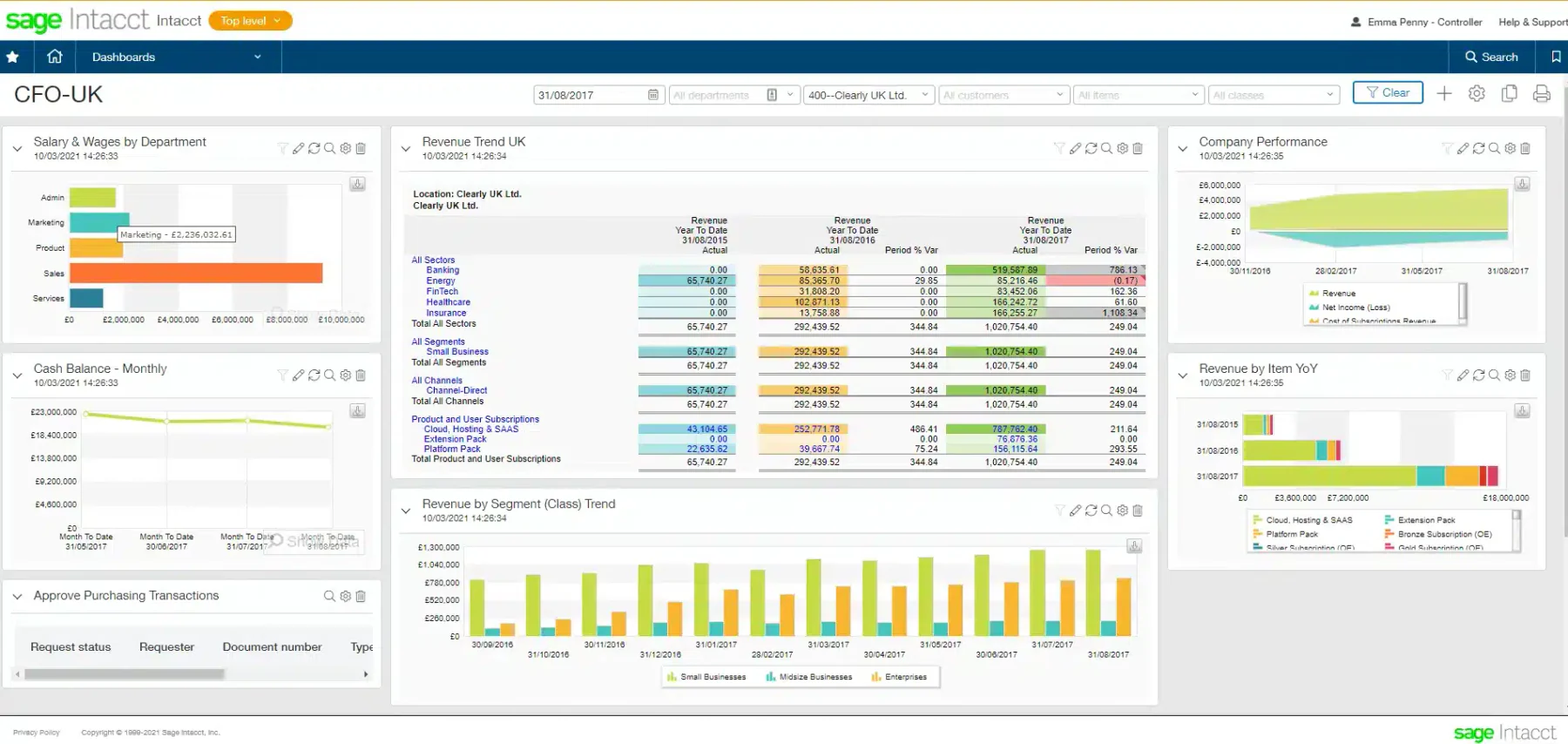
Sage Intacct is a cloud based financial system. It offers advanced features for financial consolidation, reporting, and compliance, making it a practical option for businesses that need more control over their financial processes.
Sage Intacct is known for detailed financial visibility and process automation, which can help simplify day to day finance work. This system is often used by mid sized businesses in Malaysia that need more structured financial reporting.
Key features:
- Advanced financial management
- Automation of core financial processes
- Multi-entity and global consolidations
- Real-time reporting and dashboards
| Pros | Cons |
|---|---|
| Advanced financial features | Higher subscription costs |
| Good reporting capabilities | Can be complex for new users |
| Real-time data access | Requires internet access |
| Multi-entity support | Limited customization options |
5. SAP S/4HANA
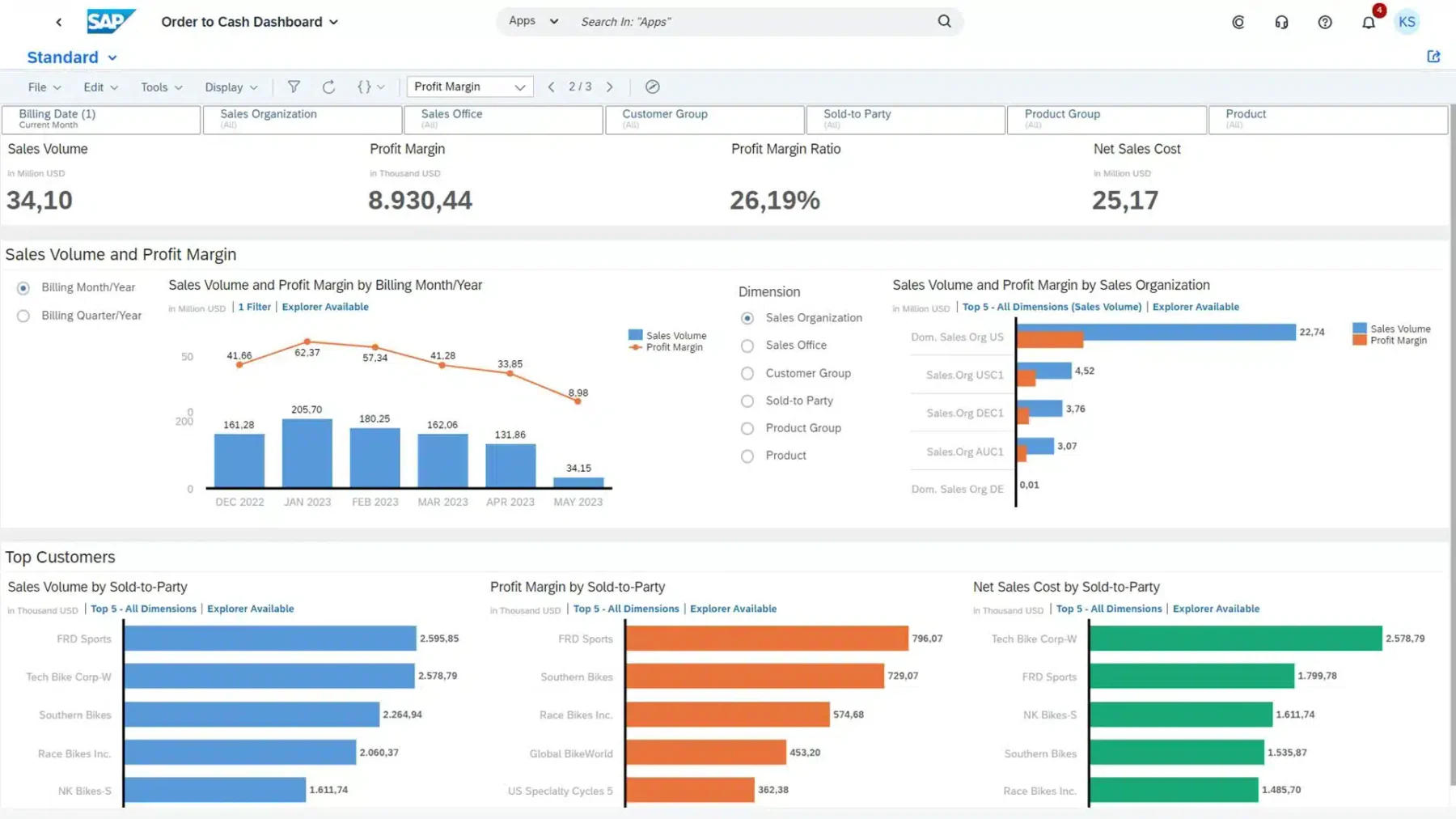 SAP S/4HANA is one of the systems often used for distribution and finance operations, offering advanced features that help streamline processes and support faster decision making. Its performance is more suitable for large enterprises that need advanced data processing and analytics capabilities.
Key features:
- In-memory database technology
- Comprehensive financial management
- Integrated business modules
- Real-time bookkeeping software analytics
| Pros | Cons |
|---|---|
| Advanced data processing | High implementation costs |
| Real-time analytics | Requires extensive training |
| Scalable software | Complex integration process |
| Strong support network | Can be overkill for smaller companies |
6. Epicor Kinetic
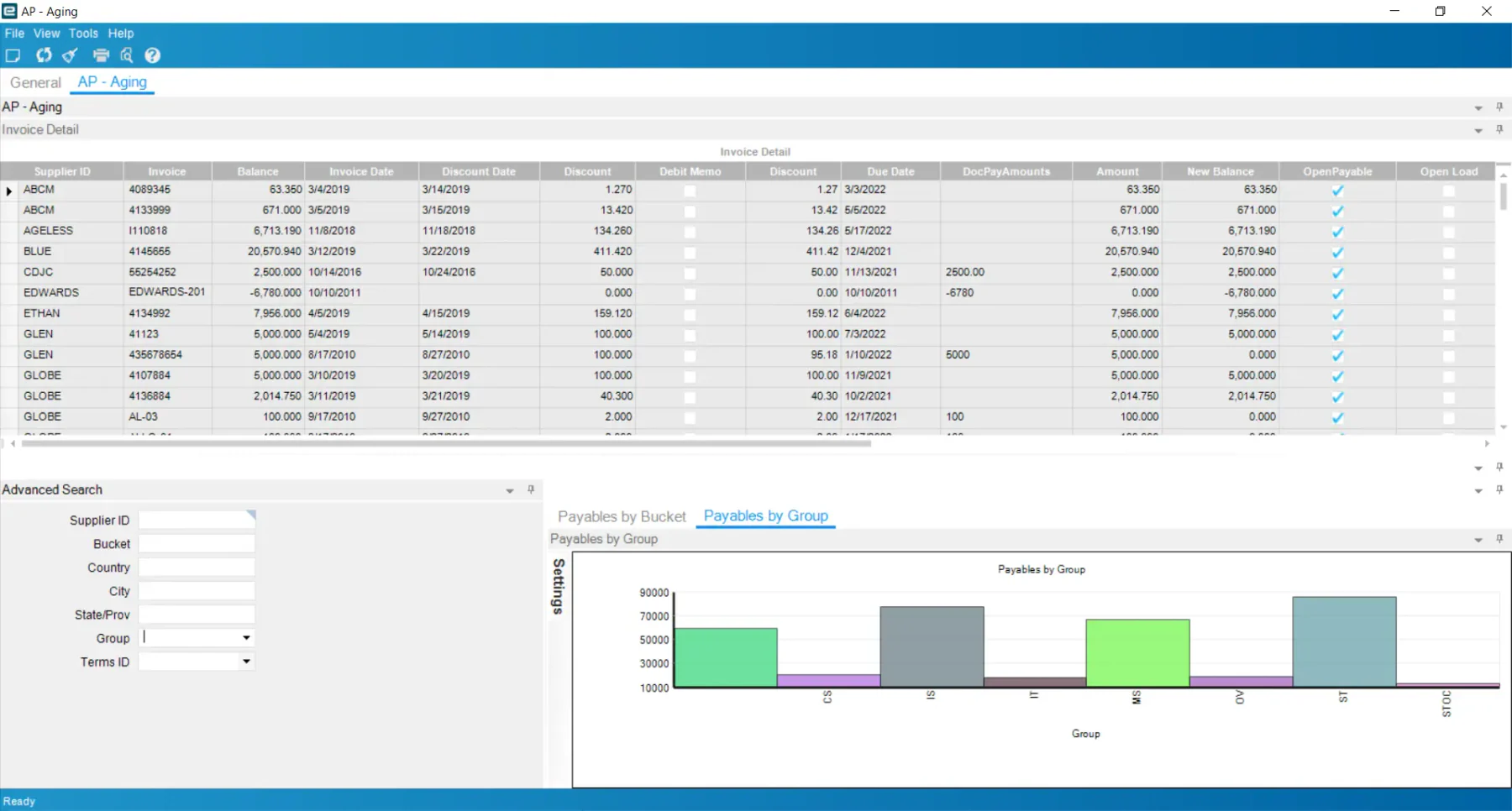 Epicor Kinetic has been a wholesale ERP provider since 1972. It focuses on usability, system performance, and features that support distribution operations. Its cloud based setup gives businesses more flexibility and room to scale. This platform is often considered suitable for mid sized businesses.
Key features:
- Modern interface
- Cloud-based
- Industry-specific features
- Comprehensive reporting tools
| Pros | Cons |
|---|---|
| User-friendly interface | Requires customization |
| Industry-specific features | Higher cost for additional features |
| Cloud-based and scalable | Steep learning curve |
| Comprehensive support and training | May require additional modules |
7. Dynamics 365 Business Central
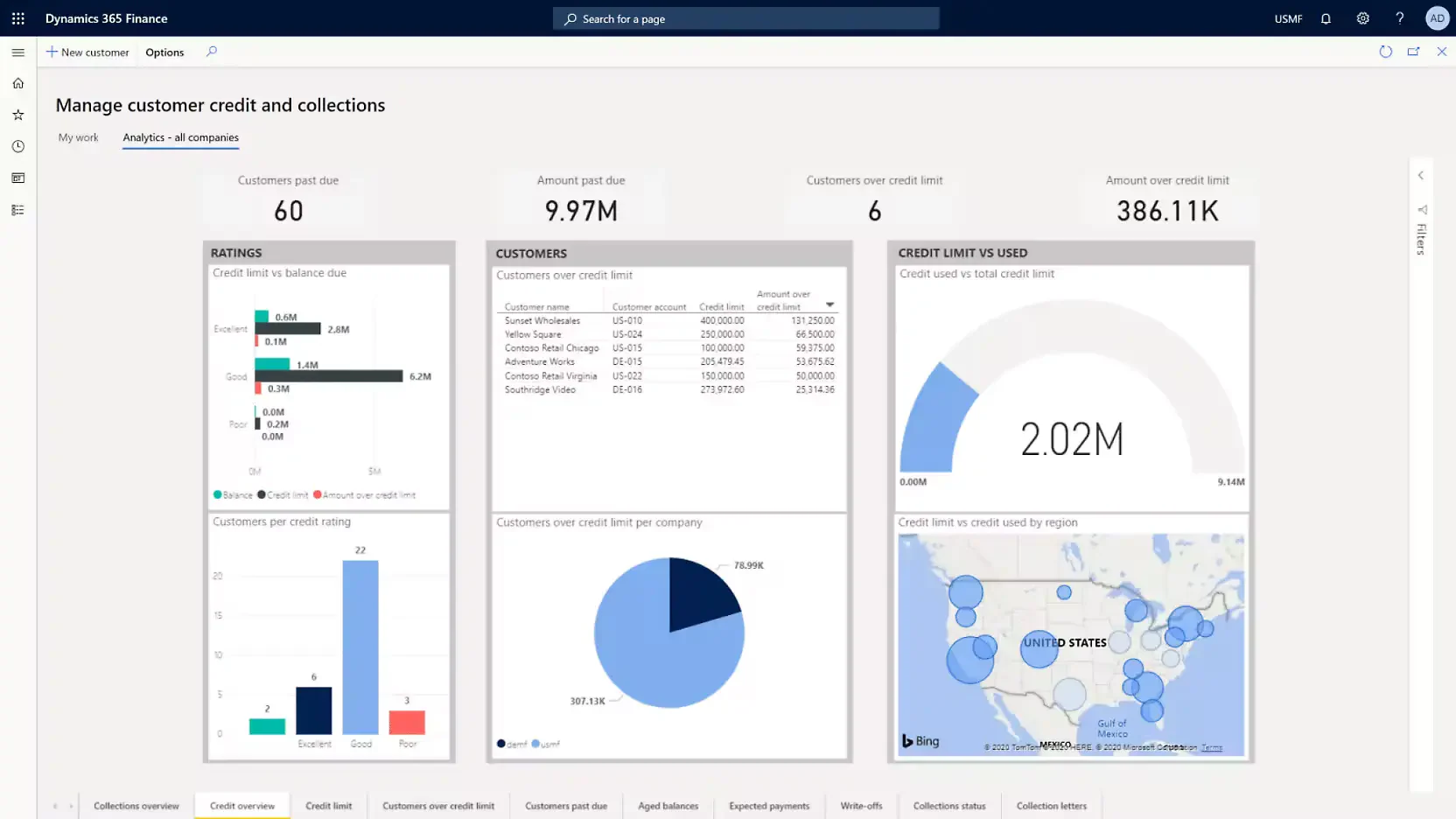
Microsoft Dynamics 365 Business Central is a cloud based system that integrates with other Microsoft products. It offers a broad set of tools for financial management, supply chain operations, and customer relationship management.
This platform offers the flexibility to support different operational needs. It is often a suitable option for businesses that already rely on Microsoft products and need an ERP system that works across multiple functions.
Key features:
- Seamless integration with Microsoft products
- Comprehensive financial management
- CRM capabilities
| Pros | Cons |
|---|---|
| Seamless Microsoft integration | Can be costly for smaller businesses |
| User-friendly interface | Requires training for full utilization |
| Regular updates | May have more features than needed |
| Strong customer support | Dependent on the Microsoft ecosystem |
8. QuickBooks
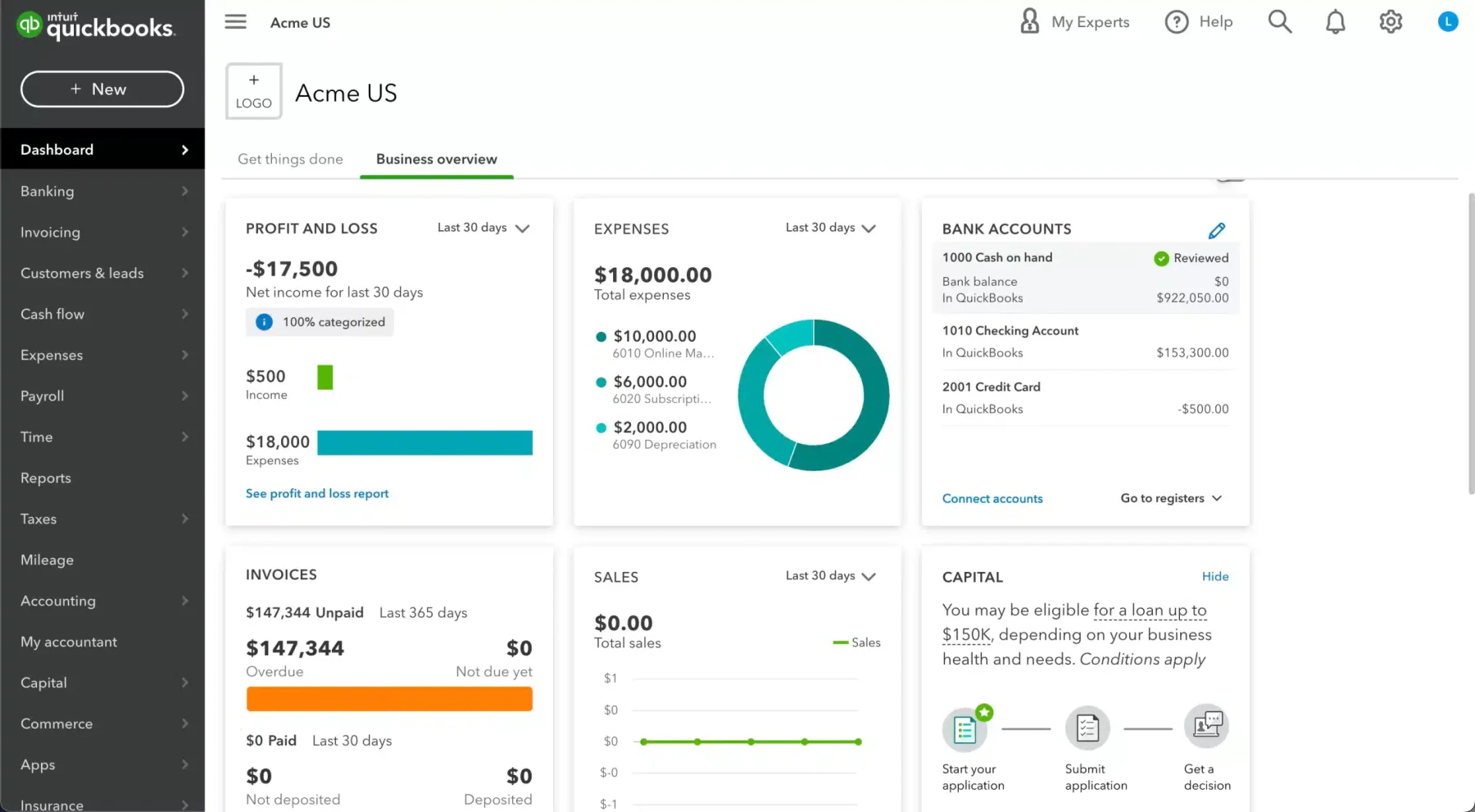
QuickBooks, developed by Intuit, has provided business finance software since 1983. It offers various versions tailored to different business needs, including options that can support distribution related operations. It is known for its user friendly interface and features that help manage day to day financial tasks.
This system is often used by small and medium sized businesses. Regular updates and ongoing support also make it a practical option for companies looking for a tool that is easier to adopt.
Key features:
- User-friendly interface
- Comprehensive financial management
- Inventory tracking
- Real-time reporting
| Pros | Cons |
|---|---|
| Easy to use | Limited advanced features |
| Comprehensive customer support | May not scale well for larger businesses |
| Regular updates | Subscription costs can add up |
9. Acumatica
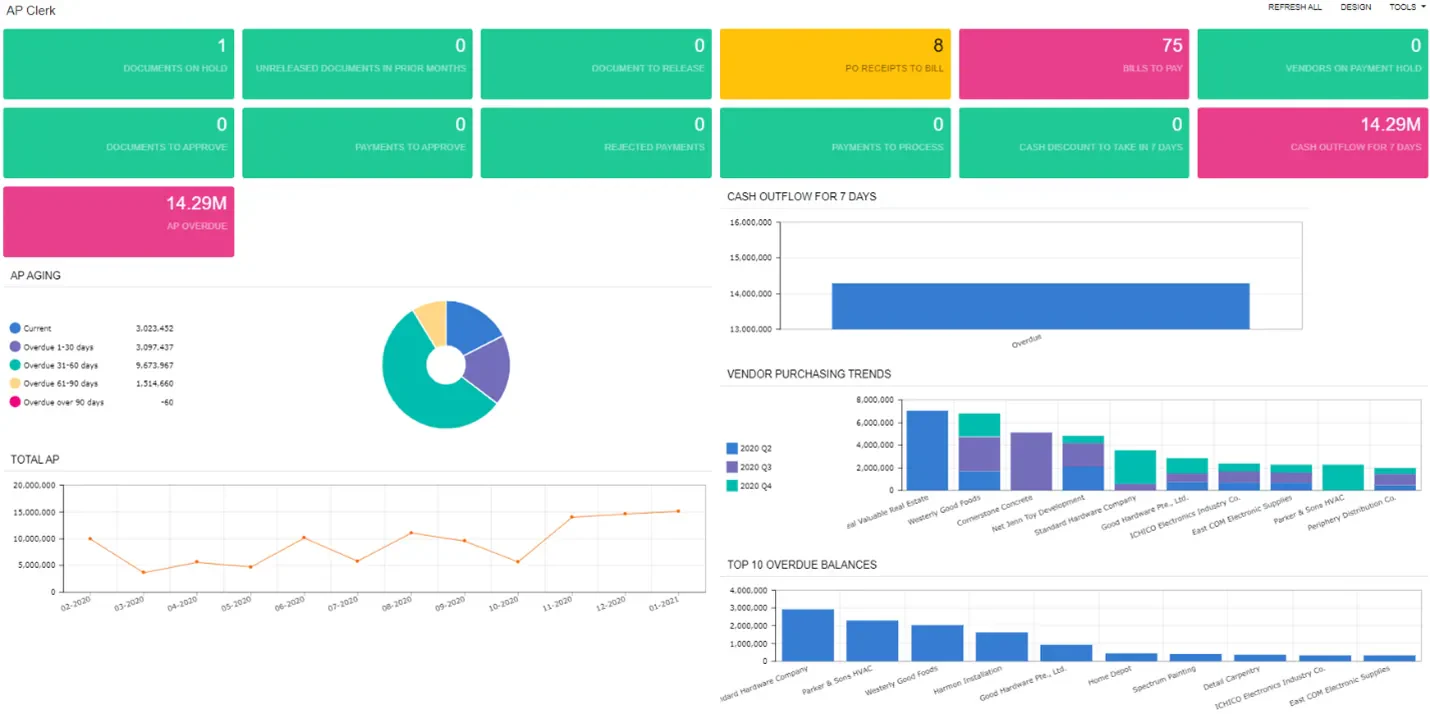 Acumatica is designed for small and medium sized businesses that need a system to support distribution operations. It offers a flexible and scalable platform with features that help manage financial tasks more efficiently. Its cloud based setup also makes the system easier to access and adapt as the business grows.
Key Features:
- Flexible and scalable platform
- Cloud-based accessibility
- Bookkeeping software features
| Pros | Cons |
|---|---|
| Highly customizable | Requires technical expertise |
| Flexible and scalable | Subscription costs can be high |
| User-friendly interface | Limited offline functionality |
| Dependent on internet connectivity |
10. Brightpearl
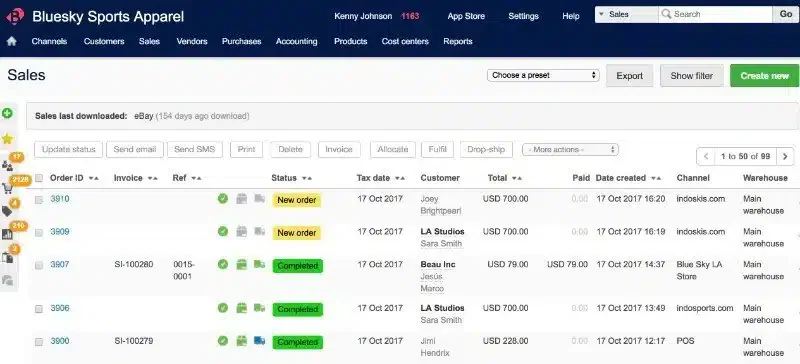
Founded in 2007, Brightpearl is a retail and wholesale management platform built to help businesses manage operations and financial processes more efficiently. It integrates accounting, inventory management, and CRM, making it relevant for distribution businesses that need multiple functions in one system.
Brightpearl is mainly used in retail and wholesale sectors. Its integration features and real time reporting help businesses improve day to day operations and respond faster to changing needs.
Key features:
- Integrated with inventory management
- CRM and order management
- Real-time reporting
| Pros | Cons |
|---|---|
| Good integration with retail management | Can be costly for smaller businesses |
| Focus on retail and wholesale | May have more features than needed |
| Limited customization options |
11. TallyPrime
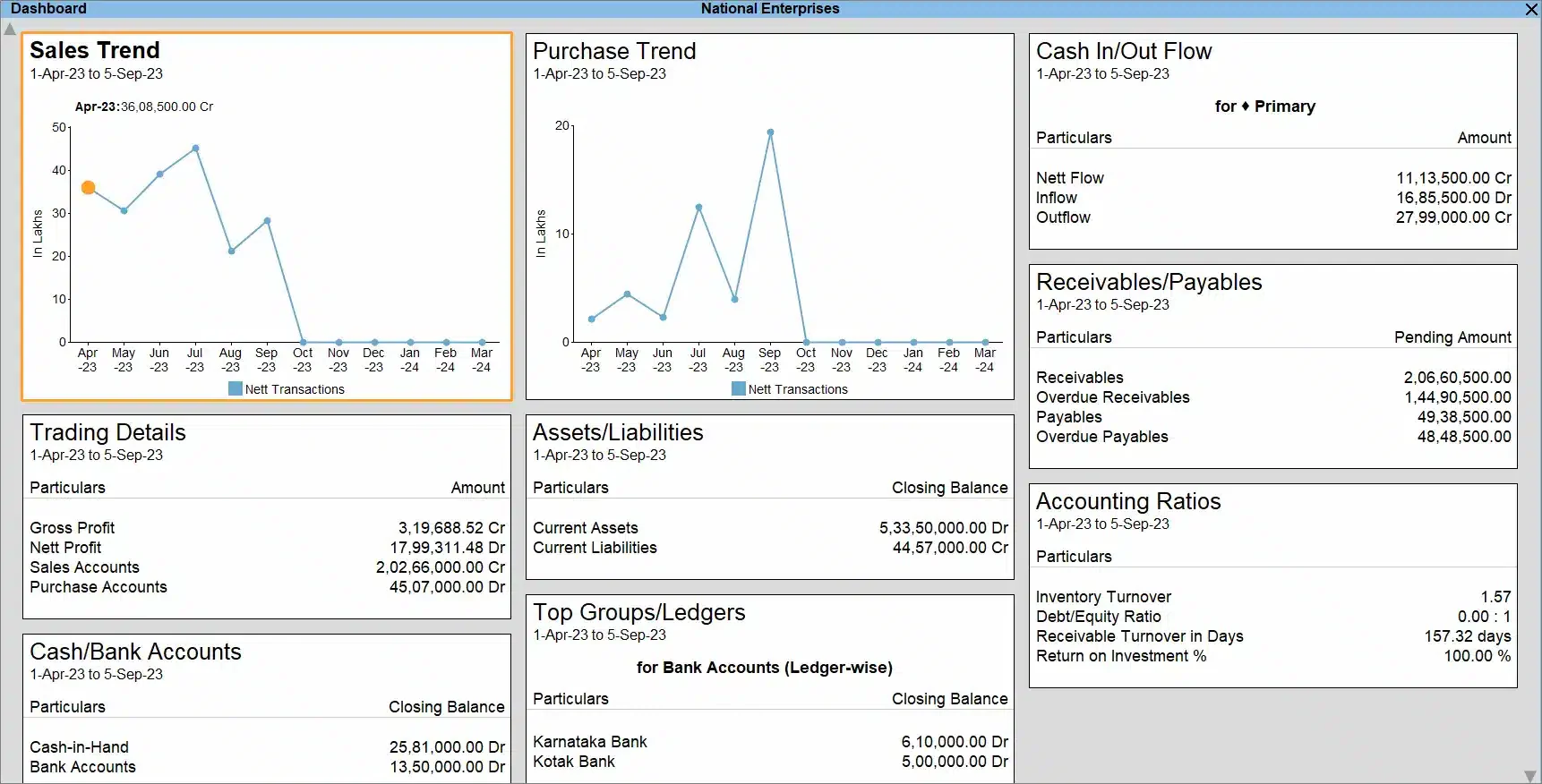
TallyPrime, developed by Tally Solutions, is a widely used financial system in India, known for its simple interface and practical features. Launched in 2020 as an upgrade to Tally ERP 9, it offers improved tools for accounting, inventory management, and compliance.
Its straightforward interface and focus on essential finance and inventory functions make it a practical option for mid sized businesses. The availability of support and training resources also helps businesses adapt to the system more easily.
Key Features:
- Comprehensive accounting features
- Inventory management
- Compliance management
| Pros | Cons |
|---|---|
| Easy to use | Limited advanced features |
| Comprehensive accounting tools | Limited customization options |
| Effective inventory management | Requires training for advanced use |
| Compliance management | Not cloud-based |
12. Vyapar
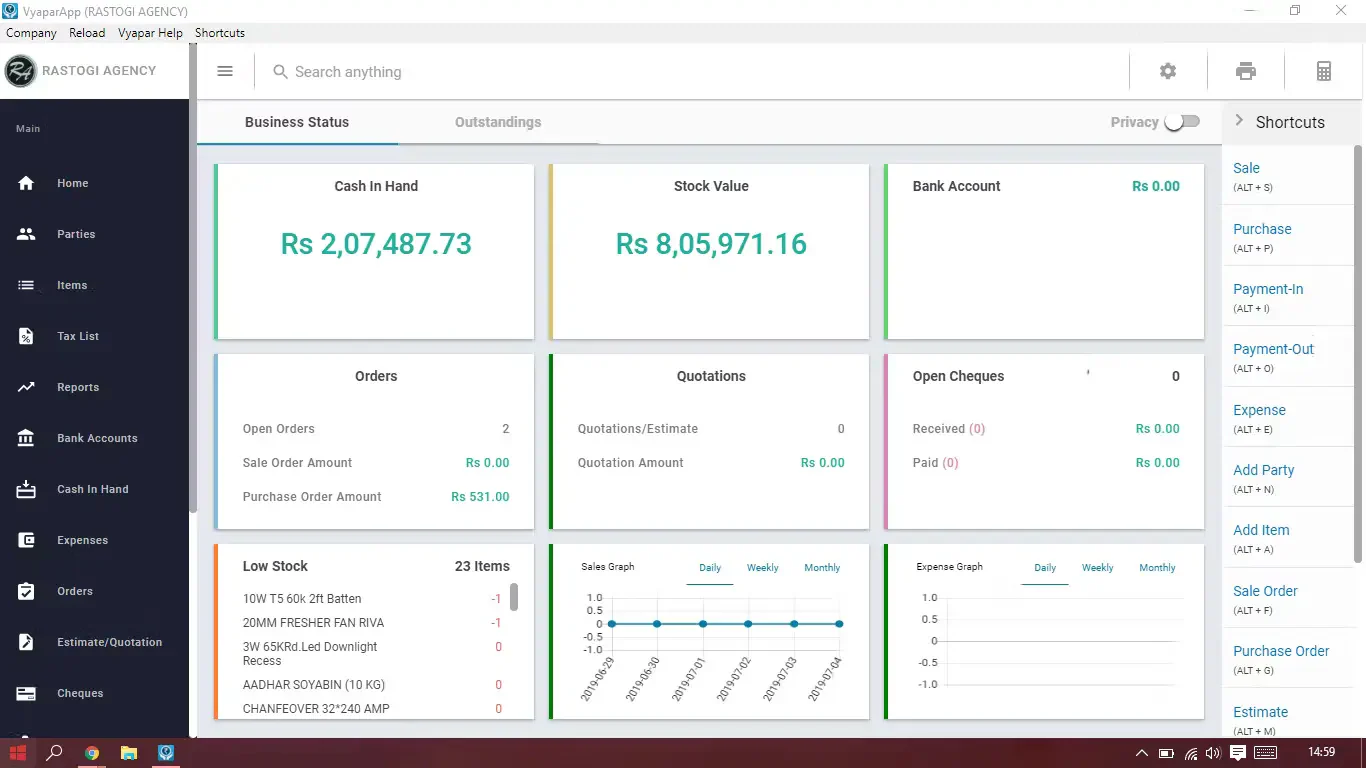
Vyapar, established in 2016, is an Indian system for accounting and inventory management designed for small businesses. It offers a range of features to simplify billing, inventory tracking, and financial management.
Vyapar mainly focuses on small businesses, and its easy to use interface makes it a practical option for companies looking for a more affordable system.
Key features:
- Billing and invoicing
- Inventory management
- Mobile app
| Pros | Cons |
|---|---|
| Easy to use | Limited advanced features |
| Mobile-friendly | May not scale well for larger businesses |
| Affordable solution | Limited integration options |
| Regular updates | Limited customer support |
13. AlignBooks
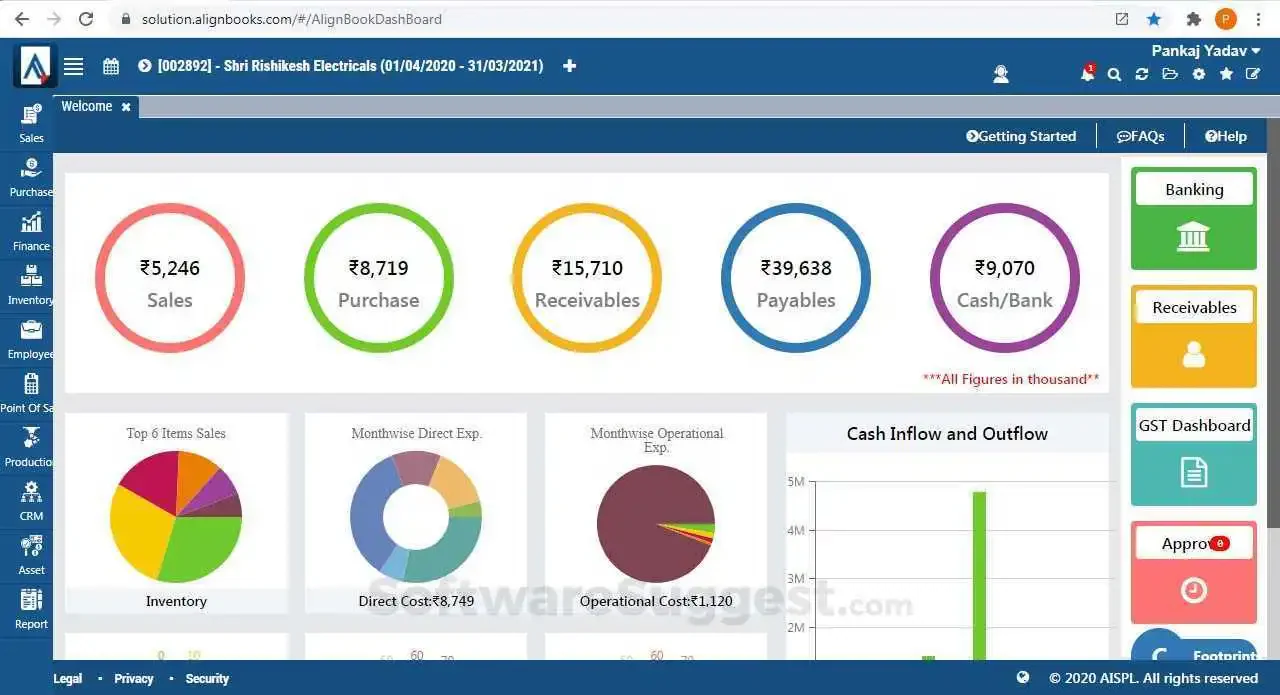
This cloud based system from India is designed for SMEs, offering features such as accounting, inventory management, and sales tracking. AlignBooks is built to make financial tasks easier to manage with a more intuitive interface.
AlignBooks focuses on small to medium sized businesses. Its pricing and feature coverage make it a practical option for businesses that need core finance and inventory tools in one system.
Key features:
- Cloud-based platform
- Comprehensive accounting features
- Inventory management
- Sales tracking
| Pros | Cons |
|---|---|
| Affordable solution | Limited advanced features |
| User-friendly interface | Requires internet access |
| Comprehensive feature | Limited customization options |
| Limited third-party integrations |
14. FreshBooks
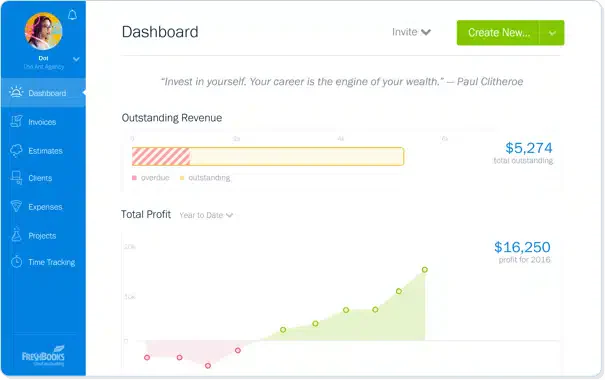 Founded
Founded in 2003, FreshBooks is a cloud based financial system designed for small businesses and freelancers. It offers an intuitive interface and a range of features for invoicing, expense tracking, and time management, which makes it a practical option for service based businesses.
Regular updates and customer support help keep the system easy to use over time. This platform is often suitable for small businesses and freelancers who need a simpler way to manage financial tasks.
Key features:
- Invoicing and expense tracking
- Time management
- Cloud-based accessibility
| Pros | Cons |
|---|---|
| Easy to use | Limited advanced features |
| Strong customer support | May not scale well for larger businesses |
| Effective invoicing tools | Limited customization options |
| Regular updates | Subscription costs can add up |
15. Patriot Accounting
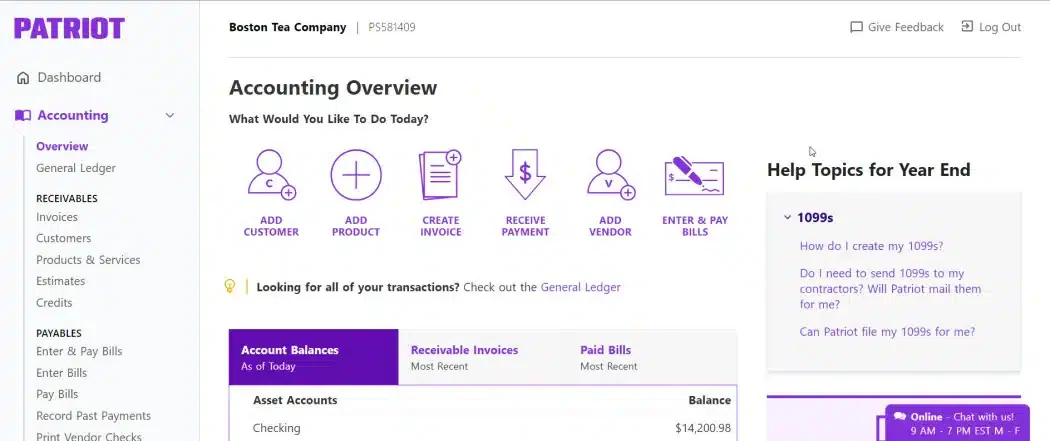
Developed in the US, this system was launched in 2002. It is designed for small distribution businesses, offering affordable and easy to use features for managing accounting and payroll.
Patriot Accounting focuses on simplicity and affordability, which makes it suitable for small businesses. Its payroll features and customer support also make it a practical option for businesses that need a straightforward system for day to day financial tasks.
Key features:
- Simple wholesale ERP interface
- Comprehensive payroll
- Accounting management
| Pros | Cons |
|---|---|
| Easy to use | Limited advanced features |
| Affordable solution | Limited customization options |
| Strong customer support | Limited integration options |
Overall Comparison of Accounting Systems in Malaysia
| Provider | LHDN Compliance | Inventory Control | Scalability | Financial Insights |
|---|---|---|---|---|
| HashMicro | ||||
| QuickBooks | ||||
| Sage | ||||
| SAP | ||||
| Epicor | ||||
| Acumatica |
How to Choose the Top Distribution Accounting Software for Your Distribution Industry
Selecting the right distribution accounting software for your business is important if you want to improve operational efficiency and keep financial processes more organized. Here are practical steps to guide your decision:
- Identify your business needs: Assess your current accounting processes and determine which features are necessary to support your operations, such as financial tracking and inventory control.
- Conduct market research: Review the available software options designed for distribution businesses. Compare their features, scalability, and user feedback to narrow down the most relevant choices.
- Evaluate integration capabilities: Ensure the system integrates smoothly with your existing tools so data can move more efficiently across departments.
- Request product walkthroughs: Use consultations or guided product reviews to evaluate the software’s functionality, user interface, and fit with your business processes.
- Check customization options: Look for a system that can be adjusted to match the specific needs of your business, so it can support your workflows more effectively.
- Consider user training and support: Review the availability of training resources and customer support to help your team adapt more quickly and handle issues when they come up.
By following these steps, you can choose a system that supports your distribution business more effectively and fits your long term operational needs.
Which Accounting Software Suits Your Distribution Business?
| Business Scenario | Recommended Software | Why It Fits |
|---|---|---|
| Medium–large distributor needing full ERP integration | HashMicro | Offers end-to-end automation across accounting, procurement, inventory, and reporting with strong customization and scalability. |
| Fast-growing company with multi-entity operations | NetSuite | Cloud ERP with strong financial consolidation, real-time reporting, and multi-subsidiary support. |
| SME needing flexible and customizable system | Odoo | Modular open-source ERP allowing businesses to implement only the features they need. |
| Company requiring strong financial reporting and compliance | Sage Intacct | Advanced financial management with automation, multi-entity consolidation, and real-time insights. |
| Large enterprise with complex operations | SAP S/4HANA | Enterprise-grade ERP with real-time analytics and high-performance data processing. |
| Distribution or manufacturing-focused company | Epicor Kinetic | Industry-specific ERP supporting cost accounting, production tracking, and financial planning. |
| SMB using Microsoft ecosystem | Dynamics 365 Business Central | Seamless integration with Microsoft tools and strong financial plus operational capabilities. |
| Small business needing simple accounting | QuickBooks | User-friendly system for invoicing, expenses, payroll, and tax management. |
| Growing SME needing scalable cloud ERP | Acumatica | Flexible, cloud-based ERP with real-time insights and strong scalability. |
| Retail and wholesale distributor | Brightpearl | Integrated accounting, inventory, and order management tailored for retail workflows. |
| Mid-sized business needing simple finance + inventory | TallyPrime | Practical accounting solution with strong compliance and inventory tracking features. |
| Small retailer needing mobile solution | Vyapar | Mobile-friendly system for invoicing, payments, and inventory tracking. |
| Budget-conscious SME | AlignBooks | Affordable cloud accounting software with core finance and inventory features. |
| Freelancer or service-based business | FreshBooks | Simple invoicing, time tracking, and expense management tools. |
| Small business needing payroll + accounting | Patriot Accounting | Affordable solution combining bookkeeping, payroll, and basic reporting. |
Conclusion
Choosing the right distribution accounting software can make a real difference when you want better financial visibility, smoother operations, and a system that can support long term growth. As your processes become more complex, it helps to have software that gives you clearer control over finance, inventory, and distribution in one connected workflow.
Some of the options in this article may be a better fit for businesses in Malaysia that need stronger coordination across daily operations. In the end, the best choice depends on how well the system matches your workflow, how easily it connects with your existing tools, and whether it can adapt as your business continues to grow.
If you are still comparing your options, taking a closer look through a free demo can help you understand how the system works in practice before making a final decision.
FAQ About Distribution Accounting Software
What is the difference between distribution accounting software and regular accounting software?
Distribution accounting software is built to handle financial tasks that are closely connected to inventory, order processing, and sales activity. Regular accounting tools usually focus more on basic bookkeeping and reporting.
Why do distribution businesses need accounting software?
Distribution businesses often deal with large volumes of stock movement, supplier transactions, and customer orders. A connected system helps reduce manual work, improve accuracy, and give better visibility into daily operations.
How do you choose the right distribution accounting software in Malaysia?
Start by reviewing your business needs, existing workflows, and reporting priorities. The right system should be easy to use, flexible enough to support your operations, and relevant to local business requirements in Malaysia.
Can distribution accounting software help reduce my operational costs?
Yes. Implementing an automated system can help businesses cut distribution costs by up to 58% compared to manual processes. It eliminates human error and provides real time data to help you identify areas for immediate savings.
Can I sync inventory data directly with my financial reports?
Yes. Distribution accounting software connects your warehouse movements to the general ledger. This provides real time visibility into how stock levels impact your company cash flow and overall profit margins.