














Have you ever wondered why some companies attract investors and customers effortlessly, while others struggle to keep up? It’s not just about flashy branding or aggressive marketing. Rather, they actually run their business responsibly, which they show–among other things–with ESG reporting.
It’s not just another corporate buzzword; it’s how companies show whether they’re truly committed to sustainability and good governance (or just paying lip service). In the Philippines, ESG rules are tightening as investors and the government have been pushing for responsibility.
However, from a business perspective, you might still not grasp the importance: What does an ESG report actually involve? Is it just another paperwork nightmare, or can businesses actually use it to their advantage?
Hatiin natin ito sa paraang may katuturan. Read on further to discover more about ESG reporting, why it’s essential, and how you can make sure that your company comply with the enforced rules.
Key Takeaways
ESG reporting is now essential in the Philippines as companies must disclose their sustainability efforts.
The SEC has set global-aligned rules, with stricter enforcement and a proposed law for mandatory ESG reporting.
ESG reports help businesses stay compliant, attract investors, and prove their commitment to sustainability.
HashMicro ERP makes ESG reporting easier by automating data tracking and streamlining compliance.

What is ESG Reporting?
ESG reporting involves sharing data on environmental, social, and corporate governance efforts. Its goal is to highlight a company’s ESG initiatives and encourage other businesses to follow suit. It also proves that the commitments are real, not just empty promises or greenwashing.
Consumers rely on ESG reports to ensure their spending supports companies that share their values. At the same time, investors seek both qualitative and quantitative insights to evaluate investment opportunities.
It comprises of three values, which are:
- Environmental: How do organizations manage energy use and minimize their environmental footprint as responsible stewards of the planet? Examples include carbon accounting for emission, climate change impact, pollution, waste management, renewable energy, and resource conservation.
- Social: How do organizations support their workforce and culture, and what impact does this have on the broader community? Examples include supply chain practices, discrimination policies, political donations, diversity efforts, human rights, and community engagement.
- Governance: How are organizations structured, managed, and held accountable by leadership? Examples include executive pay, shareholder rights, takeover defenses, staggered boards, independent directors, and board election processes.
Hashy AI Fact

Need to know!
AI helps streamline operations and reduce errors, making it easier to enhance your ESG rating. Try Hashy AI by HashMicro for smart automation. Try the free demo today!
Get a Free Demo Now!
Is ESG Reporting Mandatory in the Philippines?
Sustainability reporting is still a developing practice in the Philippines. While global disclosure of sustainability impact has been increasing, publicly listed companies (PLCs) in the country had low compliance rates.
A 2017 KPMG survey revealed that only 22% of PLCs published sustainability reports, compared to 93% of the world’s largest 250 companies and 75% of the top 100 companies across 49 countries.
Recognizing the need to align Philippine companies with global standards, the SEC Philippines took action in 2019. They introduced sustainability reporting guidelines for PLCs to encourage greater transparency and disclosure on non-financial and sustainability matters.
As of 2023, publicly listed companies (PLCs) in the Philippines with at least 50% public ownership must submit annual ESG reports. This follows the 2019 SEC guidelines, which align with GRI standards.
Medium to large companies and other PLCs are encouraged to follow these guidelines voluntarily. The SEC has also introduced a new Sustainability Report (SuRe) form for listed companies to provide more detailed disclosures.
What are the ESG Regulations in the Philippines?
 The Philippines has implemented several Environmental, Social, and Governance (ESG) regulations to promote sustainable and responsible business practices, which include:
- Sustainability Reporting for Publicly Listed Companies (2019) – The SEC requires publicly listed companies to submit annual sustainability reports. It started as a “comply or explain” rule, but stricter enforcement is expected soon.
- Extended Producer Responsibility (EPR) Act (2022) – Large companies must manage their plastic waste by ensuring proper recycling and disposal to reduce environmental damage.
- Proposed Mandatory ESG Reporting Act (2024) – A Senate bill aims to require all corporations registered with the SEC to submit ESG reports annually. It also pushes for independent verification of ESG data to ensure accuracy.
What do ESG Reports Include?
The overall sustainability reporting framework for Philippine publicly listed companies (PLCs) is structured as follows, according to the Securities and Exchange Commission (SEC):
- Ethical and Responsible Business: Companies must operate with strong corporate governance.
- Sustainable Business: The company should ensure long-term sustainability.
- Key Impacts Management: Economic, environmental, and social factors must be addressed.
- Value to Society: Products and services should contribute positively to the community.
- Sustainable Development: Businesses should align with sustainability goals.
Beyond those principal values, ESG reports in the Philippines cover both qualitative and quantitative data across three main areas:
1. Environmental: How is a company protecting the environment?
This includes:
- Efforts to address climate change and extreme weather events
- Strategies to reduce carbon emissions and pollution
- Waste management practices, including reducing plastic use and promoting recycling
- Sustainable resource use, such as responsible water consumption and energy efficiency
- Compliance with environmental laws, especially regarding deforestation, mining, and air/water quality
2. Social: How is a company improving lives?
This focuses on:
- Employee well-being, fair wages, and workplace safety
- Diversity and inclusion initiatives, including equal opportunities for women and marginalized communities
- Labor rights, ensuring compliance with local labor laws and fair treatment of workers
- Data privacy and security in a digital economy
- Community programs, such as education, disaster relief, and livelihood projects
3. Governance: How does a company prevent corruption and ensure long-term sustainability?
This covers:
- Strong corporate governance policies and internal controls
- Transparent board structures, executive compensation, and fair shareholder rights
- Anti-corruption measures, including policies on bribery, lobbying, and political contributions
- Whistleblower protection programs to promote accountability and ethical business practices
These reporting guidelines aim to make sustainability reporting useful and meaningful for PLCs. They focus on economic, environmental, and social aspects.
Then, the governance-related disclosures are submitted separately through the Integrated Annual Corporate Governance Report (I-ACGR) to the SEC. The SEC also provides a mandated ESG report template that every company can use to file their reports.
However, it means that companies should track all key indicators, including environmental policies, carbon emissions, carbon credits, and other relevant metrics. To make the job easier and ensure that the data is consolidated, many companies turn to using ERP systems.
What is an ESG Score?
 As investors and companies focus more on ESG, ESG scoring helps measure how well a company meets its sustainability for ESG strategy goals. Similar to a credit score or bond rating, an ESG score reflects a company’s efforts, performance, and risks related to environmental, social, and governance factors.
Independent agencies assign ESG scores using specific criteria. However, each agency has its own method for evaluating and rating companies, leading to different scores depending on the metrics used.
Below are several agencies that usually evaluate and give a company’s ESG score:
- International Rating Agencies: Global firms such as MSCI, S&P Global, and Sustainalytics evaluate Philippine companies’ ESG performance.
- Local Initiatives: The Philippine Green Building Council (PHILGBC) promotes sustainable building practices through the Building for Ecologically Responsive Design Excellence (BERDE) program, which assesses and certifies green buildings in the country.
- Consultancy Services: Firms like SGS Philippines offer ESG certification services to assist organizations evaluate and improve their ESG practices.
How is the Philippines Stepping Up in Implementing ESG?
The Philippines is stepping up its ESG game with several key initiatives:
- Sustainable Finance Roadmap (2021) – A plan to boost sustainable investments and support the shift to a low-carbon economy.
- SEC Sustainability Reporting Guidelines (2019) – Publicly listed companies are encouraged to disclose ESG practices, with plans to make reporting mandatory.
- Proposed Mandatory ESG Reporting Act – A bill that would require all corporations registered with the SEC to submit annual ESG reports with verified data.
These efforts aim to improve transparency, attract responsible investors, and align the country with global sustainability standards.
Effortless ESG Reporting with HashMicro ERP System
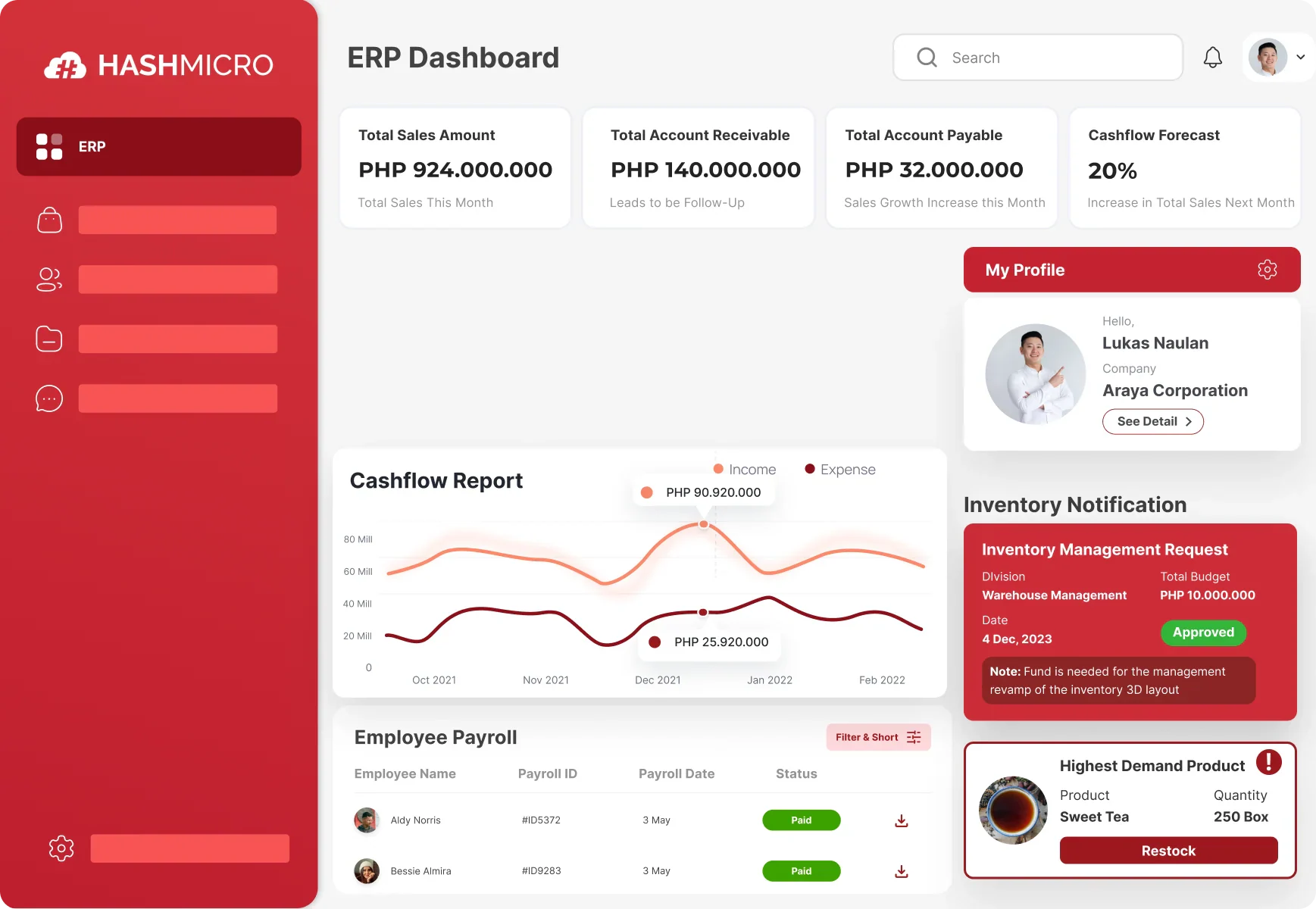 ESG rules aren’t getting any simpler, and companies that don’t keep up might find themselves scrambling to comply. Instead of making last-minute fixes, many businesses are starting to use tech that helps them keep ESG tracking on autopilot.
One solution companies are turning to? A centralized system that keeps ESG reporting organized, tracks sustainability goals in real time, and streamline the whole process of making the reports themselves without the extra hassle.
HashMicro ERP makes this easy by integrating ESG data into your business processes, so reporting isn’t a periodic headache you deal with every once in a while. How does this system enhance your reporting? It’s easy, as HashMicro ERP offers these features:
- Track ESG Data with Ease: Get real-time insights on sustainability goals using smart BI tools like Pivot, KPI Scorecard, and Custom Dashboards.
- Keep Finances Transparent: Automate financial reports, monitor expenses, and meet ESG compliance without the manual work.
- Reduce Waste & Optimize Resources: Manage inventory efficiently, cut excess waste, and ensure suppliers follow sustainability standards.
- Improve Workplace Ethics: Handle payroll, employee records, and fair labor policies in one system for better accountability.
- Access ESG Reports Anytime: Use mobile-friendly dashboards to monitor key data wherever you are, no delays, no hassle.
As long as your data is consolidated (and tidied up, and this system helps so much with it), then creating reports wouldn’t be much trouble anymore for you and your company.
Conclusion
ESG reports show a company’s sustainability efforts, compliance, and commitment to responsible business practices. In the Philippines, stricter ESG regulations push businesses to adopt structured reporting.
Managing ESG data manually is time-consuming, error-prone, and stressful, but HashMicro ERP makes everything easier. With automated tracking, real-time reporting, and seamless integration, companies can ensure compliance without the extra workload.
Instead of scrambling to meet deadlines, businesses can simplify ESG reporting with HashMicro ERP’s smart automation tools. It’s time to focus on real sustainability, not paperwork, and let technology handle the rest.
Kaya, interesado ka bang maranasan ang mga benepisyo? Try the free demo now and speak with our expert team!
Frequently Asked Questions on ESG Reports
What are the penalties for non-compliance with ESG reporting requirements in the Philippines?
Penalties vary based on the nature and frequency of the offense, ranging from reprimands and monetary fines to suspension or revocation of licenses for repeated violations.
How does the SEC’s Sustainability Reporting Guidelines align with international standards?
The SEC’s Sustainability Reporting Guidelines are designed to align with global sustainability frameworks, including the International Financial Reporting Standards (IFRS) S1 and S2, which focus on general sustainability-related financial disclosures and climate-related disclosures, respectively.
Are there specific guidelines for industry-specific metrics in ESG reporting?
While the SEC’s current guidelines provide a general framework for sustainability reporting, they have indicated that specific guidelines addressing industry-specific metrics will be issued in the future.
What is the SuRe Form, and when is it required to be submitted?
The Sustainability Report (SuRe) Form is a standardized reporting template introduced by the SEC for publicly listed companies in the Philippines. It is required to be submitted annually through the SEC’s Electronic Filing and Submission Tool (eFAST) platform, with the deadline set on or before April 15th of the year following the reporting period.