















Imagine running a business where you always know exactly how much stock you have at any given moment. No surprises, no shortages, and no need for a last-minute rush to restock. Sounds perfect, right? But how is this possible? Many businesses still rely on outdated systems that lead to costly errors and inefficiencies.
This is where a perpetual inventory system comes in. It promises to keep your inventory updated in real-time, ensuring smooth operations. But what exactly is a perpetual inventory system, and how does it work? Let’s explore.
Key Takeaways
A perpetual inventory system tracks stock levels in real-time, updating with every sale, return, or restock. This helps businesses avoid stockouts, reduce overstocking, and make faster, informed decisions.
Perpetual inventory provides real-time updates, unlike periodic systems, which update at intervals. While it requires an investment in technology, the benefits of accurate, automated data make it a more efficient choice.
The perpetual inventory system is calculated using the EOQ formula for optimal order quantity, COGS for cost of goods sold, and the ending inventory is acquired by subtracting COGS from the total goods.
How to Use a Perpetual Inventory System

Using a perpetual inventory system involves several key steps that streamline inventory management. Each step contributes to more accurate, automated, and efficient stock control. Let’s walk through the process.
Step 1: Recording Sales and Purchases
The first step in using a perpetual inventory system involves automatically recording transactions. When a sale occurs or inventory is purchased, the system immediately adjusts stock levels. For instance, if a business sells 10 units of a product, the system reduces the inventory count by 10, ensuring that inventory levels remain current.
Step 2: Updating Inventory Levels Automatically
One of the greatest advantages of a perpetual system is its ability to automatically update inventory in real-time. As transactions occur, the system adjusts stock levels without manual input. This automation gives businesses accurate and current information on available stock, reducing the risk of discrepancies.
Step 3: Tracking Cost of Goods Sold (COGS)
The system also tracks the cost of goods sold (COGS). Each time an item is sold, the system automatically updates the COGS, ensuring that financial records accurately reflect the cost of inventory sold during a specific period. This is essential for calculating profitability and maintaining precise financial statements.
Step 4: Automating Purchase Orders
When stock levels fall below a preset threshold, the perpetual inventory system can automatically generate purchase orders to replenish inventory. This automation saves time, ensures stock availability, and prevents the risk of running out of popular items. Businesses can set up specific order management points to trigger these orders, making the process more efficient.
Once you have these steps in place, using specific formulas can further optimize your inventory management.
Common Formulas in Perpetual Inventory
Several key formulas help businesses optimize stock management within a perpetual inventory system.
Economic Order Quantity (EOQ)
The EOQ formula helps businesses calculate the optimal order quantity that minimizes the total costs of inventory, including holding and ordering costs. It ensures that you order just the right amount, avoiding excess stock or frequent reordering.
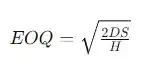
Where:
D = Demand (units per year)
S = Ordering cost per order
H = Holding cost per unit per year
Cost of Goods Sold (COGS)
COGS is calculated by adding the beginning inventory to purchases made during the period, then subtracting the ending inventory:

Ending Inventory
Formula Ending inventory is calculated by subtracting the cost of goods sold (COGS) from the total goods available for sale:

With these formulas, businesses can further refine their perpetual inventory processes, but they also need to apply the right valuation methods.
Examples of Inventory Valuation Methods in Perpetual Systems
Choosing the right valuation method is essential for accurate inventory accounting. Here are three common methods used in a perpetual system.
FIFO (First-In, First-Out) Method
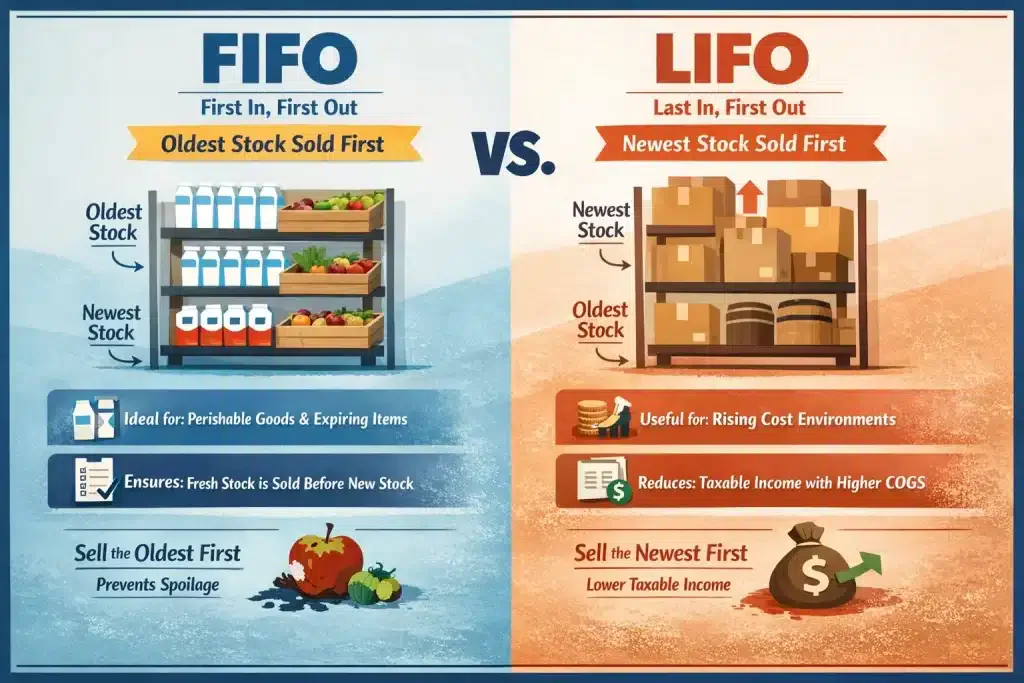
The FIFO method assumes that the first items added to inventory are the first ones sold. This method is common in industries dealing with perishable goods or items with expiration dates, ensuring older stock is sold before newer stock.
LIFO (Last-In, First-Out) Method
The LIFO method assumes that the last items added to inventory are sold first. While less commonly used, this method can be useful in industries where prices are rising, helping businesses reduce taxable income by reporting higher COGS.
Weighted Average Cost Method
This method calculates the average cost of all items in stock, dividing the total cost of goods available for sale by the total number of units. It smooths out price fluctuations and provides a fair valuation of inventory and COGS.
Managing inventory with these methods and formulas helps businesses stay efficient and cost-effective. If all of this seems complex, a robust inventory management system solution can simplify the process.
Conclusion
In today’s fast-moving business world, sticking to outdated inventory methods is like trying to use a flip phone in the age of smartphones, it will never work. A perpetual inventory system is your secret weapon for staying ahead, offering real-time updates and seamless automation that keep your stock in check and your business on point.
Why settle for good enough when you can have the best? With the help of the best inventory system, you can witness your business booming in perpetual efficiency, out beating other businesses and even rivaling bigger competitors.
Frequently Asked Questions
Is perpetual inventory lifo or fifo?
Perpetual inventory is flexible—it can use LIFO or FIFO, depending on how you want to track stock flow. Think of it as customizing how your inventory gets accounted for, in real-time or at intervals.
What is perpetual and continuous inventory system?
Perpetual and continuous inventory systems are like having a smart assistant for your stock—every sale, return, or restock gets logged instantly, so you’re always in the loop with up-to-date inventory levels.
What is the difference between FIFO perpetual and FIFO?
FIFO perpetual updates your stock in real-time with every transaction, while regular FIFO is more relaxed, only updating during specific intervals, such as at the end of a reporting period.