
















Imagine your company’s procurement process running without clear controls. Purchase requests are submitted haphazardly, and goods are ordered without proper approval. Such a situation risks leading to budget wastage, process delays, and potential fraud.
In Singapore, the adoption of e-procurement has become an important strategy in improving efficiency and competitiveness. A study shows that the application of internet-based technology in the procurement function helps organizations improve their competitiveness, although challenges in implementation remain.
This article will examine the differences between purchase requisition and purchase order, the importance of these two processes in business, and how systems like HashMicro ERP can simplify and optimize them. Companies can achieve more structured and efficient procurement by understanding and effectively implementing these two documents.
Key Takeaways
A purchase requisition is an internal document used to request the procurement of goods or services, ensuring proper approval before purchase.
A purchase order is a formal agreement between a buyer and supplier, outlining transaction details like quantity, price, and delivery terms.
Implementing both processes enhances procurement control, reduces unauthorized spending, strengthens supplier communication, and improves budget management.
HashMicro offers a comprehensive procurement management solution, streamlining processes with advanced features like automated approvals and vendor comparisons. Book a Demo Now!
Understanding the Difference Between Purchase Requisition and Purchase Order
In the procurement process, two essential documents ensure proper control over purchasing: the purchase requisition and the purchase order. Although they may appear similar, each serves a distinct purpose in guiding procurement activities. Understanding these differences is key for businesses that maintain organized and transparent purchasing workflows.
A purchase requisition is an internal document used to request the procurement of goods or services. It acts as the first step in the process, allowing employees or departments to propose purchases formally. This request undergoes an approval process to ensure the need is justified and aligns with the company’s budget and policies.
On the other hand, a purchase order is a formal document issued to a supplier after the requisition is approved. It serves as a legally binding agreement that outlines critical details like item descriptions, quantities, prices, and payment terms. By using both documents, businesses can ensure accountability, prevent unauthorized spending, and maintain smoother supplier relationships.
Choosing the right procurement management solution can enhance efficiency while controlling costs. HashMicro’s flexible pricing allows businesses to access advanced features tailored to their needs. Click the banner below to explore pricing schemes and discover the perfect solution for your procurement process!


What is a Purchase Requisition?
A purchase requisition is an internal document submitted by an employee or department to request the purchase of goods or services. It acts as the initial step in the procurement process, ensuring that there is a formal approval before committing to any expenditures.
The purpose of a purchase requisition is to maintain control over company spending by introducing a layer of oversight. When a department identifies the need for new materials, equipment, or services, a purchase requisition is created. This document typically includes details such as:
- The items or services required
- Quantity needed
- Estimated cost
- Reason for the purchase
- Preferred vendors (if applicable)
Once submitted, the requisition undergoes an approval process. Managers or procurement teams review the request to ensure it aligns with the company’s budget and policies. Upon approval, the procurement team can proceed by issuing a purchase order to the vendor.
What is a Purchase Order?
A purchase order (PO) is a formal document sent from a buyer to a supplier authorizing the purchase of specified goods or services. Unlike a purchase requisition, which is internal, a purchase order serves as a binding agreement between the buyer and the vendor.
A purchase order typically includes:
- Purchase order number (for tracking)
- Supplier information
- Item descriptions, quantities, and prices
- Delivery date and location
- Payment terms
The issuance of a purchase order confirms that the company has approved the purchase and is ready to proceed with the transaction. For businesses, purchase orders provide a legal framework that safeguards against misunderstandings, ensures accurate record-keeping, and strengthens supplier relationships.
Key Differences Between Purchase Requisition and Purchase Order
A purchase requisition is an internal request to procure goods or services, while a purchase order is a formal agreement with a supplier. These documents serve different roles in the procurement process, ensuring proper control and accountability. The table below outlines their key differences:
| Aspect | Purchase Requisition | Purchase Order |
| Purpose | Internal request to procure goods or services | Formal agreement to purchase goods or services from a supplier |
| Initiated By | Employees or department heads | Procurement or purchasing team |
| Approval Process | Requires internal approval before progressing | Issued only after requisition approval |
| Legal Binding | Not legally binding | Legally binding |
| Involved Parties | Internal departments | Buyer and supplier |
| Key Components | Item description, quantity, estimated cost, reason for purchase | Supplier details, item description, price, payment terms |
| Outcome | Authorization to proceed with a purchase | Formal purchase agreement and supplier contract initiation |
Why Businesses Need Both Purchase Requisition and Purchase Order Processes

Incorporating both purchase requisition and purchase order processes is vital for maintaining proper procurement controls, improving transparency, and ensuring accountability. Here’s why businesses benefit from having both:
1. Enhanced control and approval
The purchase requisition acts as the first line of control, ensuring that procurement requests undergo a thorough review before funds are allocated. By requiring authorization from relevant departments, businesses prevent unnecessary or impulsive spending. This step ensures that only essential purchases aligned with organizational goals are approved.
2. Reduced risk of unauthorized spending
Requisitions serve as a formal mechanism to prevent unauthorized purchases by requiring proper documentation and management oversight. This process minimizes the chances of employees making unapproved or unnecessary transactions. As a result, businesses maintain tighter financial control and reduce the risk of fraud or budget misuse.
3. Clear communication with suppliers
Purchase orders create a formal agreement between the buyer and supplier, ensuring all parties are aligned on expectations. This document outlines critical details such as quantities, pricing, delivery timelines, and payment terms. Clear communication reduces misunderstandings, helping to build stronger supplier relationships and ensuring the timely delivery of goods or services.
4. Audit and compliance
Both purchase requisitions and purchase orders provide a transparent record of procurement activities, making audits smoother and more accurate. These documents serve as evidence of compliance with internal policies and external regulations. Having a clear audit trail simplifies financial tracking, reduces errors, and enhances accountability.
5. Budget management
Implementing purchase requisition and purchase order processes improves spending visibility and prevents overspending. Requiring prior approvals ensures expenses align with budgets, enhancing financial control.
How HashMicro’s Procurement Software Simplifies the Purchasing Process
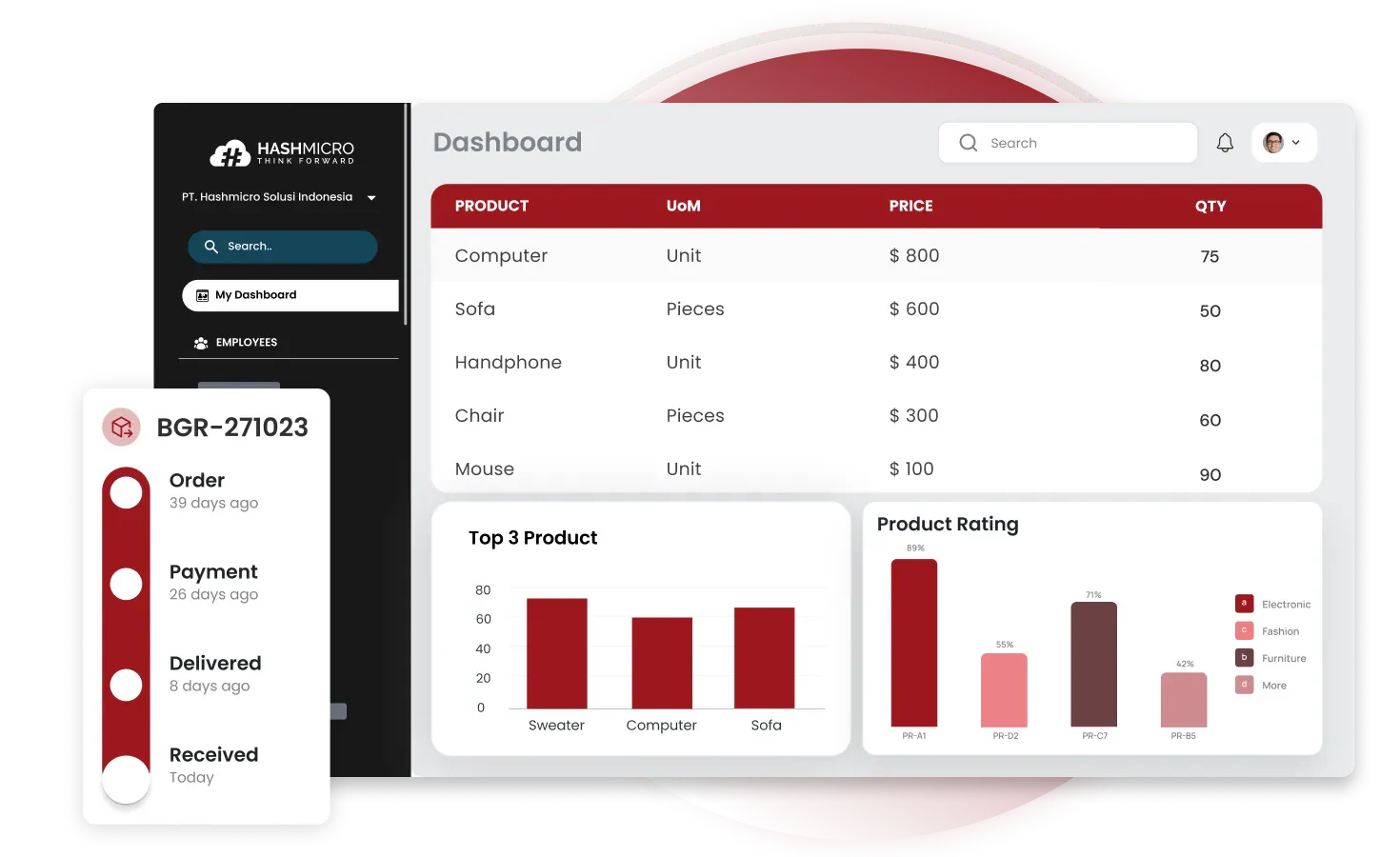
Managing procurement processes requires the right tools to ensure accuracy, efficiency, and transparency. While traditional methods can be time-consuming, HashMicro Procurement Management Software offers a more advanced and automated solution. It helps businesses streamline every step of their procurement journey with AI-powered features and customizable workflows.
This purchase order system simplifies complex procurement tasks, from handling purchase requests to managing supplier relationships. Its web-based and mobile access ensures seamless procurement management anytime, anywhere, making it ideal for businesses of all sizes.
HashMicro provides a robust set of features designed to enhance procurement efficiency and optimize decision-making. Let’s take a closer look:
- Hashy AI: Simplify procurement with AI-based vendor comparison and RFQ approval management. Easily assess vendor quotes based on price, quality, delivery time, and past performance. Automate approval workflows with real-time tracking and notifications, ensuring timely responses and a smoother procurement process.
- E-Procurement: Automate purchase requests and instantly convert them into purchase orders. Send RFQs to multiple suppliers with ease.
- PR approval management: Approve or reject purchase requests from any department with one click, preventing unauthorized purchases.
- Online portal for suppliers: Through a supplier portal, vendors can share digital catalogs, simplifying the tender process and securing the best offers.
- Vendor/supplier rating: To improve supplier management, assess vendors by evaluating product quality, pricing, delivery time, and overall performance.
- Blanket order management: A blanket order system allows businesses to place recurring orders based on pre-agreed prices and schedules, ensuring a consistent and predictable supply chain process.
- Landed cost calculation: Accurately calculate total item costs, including taxes, shipping fees, insurance, and currency conversion.
Conclusion
While purchase requisitions and purchase orders serve different purposes, both are critical for effective procurement management. Requisitions ensure proper approvals, while POs formalize transactions with suppliers.
Implementing procurement management software like HashMicro further enhances control, efficiency, and cost savings. For businesses looking to optimize their procurement process, adopting a structured approach with these tools is a strategic advantage.
To learn more about how HashMicro can optimize your procurement process, schedule a free demo today. Experience firsthand how this powerful solution can help you manage purchase requisitions and purchase orders more effectively, improve workflow efficiency, and drive business success.
Question About Purchase Requisition vs Purchase Order
-
Which comes first, PO or PR?
The Purchase Requisition (PR) is the first internal document used to request the purchase of goods or services. After the PR is approved, the purchase order (PO) is created to formally place the order with a supplier.
-
Does PR come before PO?
Yes, in a standard procurement process, the PR always comes before the PO. The PR initiates the request and approval process, ensuring proper authorization before generating a PO
-
What is the process flow of PR to PO?
The process starts with the requester creating a PR detailing the required items or services. The relevant department then reviews and approves the PR. Once approved, the procurement team generates a PO based on the PR, which is then sent to the supplier to place the order officially.
-
Can there be a PO without a PR?
A PR is required before creating a PO to ensure approval and control in standard procurement processes. However, depending on the organization’s policy, a PO can be issued without a PR in urgent cases or for specific direct purchases.