















Understanding workforce trends is crucial for both businesses and employees. One key resource for gaining these insights is the Occupational Employment Dataset (OED). OED provides valuable information about employment patterns, wage levels, and job outlooks across various sectors.
The OED enables wage comparisons across sectors, helping businesses align compensation with market standards. For instance, the US’s annual average wage for customer service representatives is $47,940, which can be a benchmark for similar positions in Singapore.
HRM systems optimize OED usage by integrating data into daily operations. With real-time insights and automated compliance, these systems help businesses align workforce strategies with OED trends, boosting growth and employee satisfaction.
In this article, we will explore the significance of the Occupational Employment Dataset and how HRM systems can help businesses and employees leverage this information for better workforce planning and career development.
Key Takeaways
The Occupational Employment Dataset (OED) provides valuable insights into employment trends, wages, and workforce data to support informed decision-making in Singapore.
Businesses can leverage OED to improve workforce planning, align wages with market standards, and ensure compliance with labor regulations like the Progressive Wage Model.
HashMicro HRM simplifies the integration of OED data, automates compliance tracking, and optimizes HR operations, ensuring efficiency and regulatory alignment.
What is the Occupational Employment Dataset (OED) in Singapore?
The Occupational Employment Dataset is a collection of data on employment levels, wages, and job classifications across industries. It helps businesses, policymakers, and job seekers understand labor market trends and aids in decision-making and workforce planning.
OED is compiled and published by the Ministry of Manpower (MOM) and other government agencies, serving as a crucial resource for businesses, policymakers, and job seekers.
This system categorizes the workforce into different sectors, job roles, and skill levels, helping to identify emerging job trends and workforce needs. It also tracks wage variations based on occupation, industry, and experience, providing valuable benchmarks for businesses.
For employers, the OED is a powerful tool for making informed decisions about hiring, workforce development, and compensation strategies. It allows businesses to understand labor market trends, identify skill gaps, and ensure they are offering competitive wages to attract and retain top talent.
The Benefits of Using Occupational Employment Dataset
The Occupational Employment Dataset (OED) offers several key benefits for organizations and employees. It provides valuable insights into employment trends, wages, and job classifications, helping to optimize decision-making across various sectors.
- Informed workforce planning: OED helps organizations understand current labor market trends, enabling better workforce planning and allocation of resources. Companies can use this data to predict future hiring needs and adjust staffing strategies accordingly.
- Competitive compensation strategies: By analyzing wage data, organizations can ensure they offer competitive salaries that attract and retain talent. Benchmarking against industry standards helps businesses maintain a fair and attractive compensation structure.
- Identifying skill gaps: OED enables organizations to spot emerging skill gaps within their workforce and the industry. This information can drive training programs, improve recruitment processes, and help businesses stay competitive.
- Career development insights: For employees, OED provides valuable information about in-demand occupations, potential earnings, and career growth opportunities. Employees can make informed decisions about their career paths and skill development by examining the data.
- Better job matching: Job seekers can use the dataset to identify high-demand roles that align with their skills and interests. Understanding the job market helps individuals make strategic career decisions and increases their chances of securing stable employment.
- Enhanced policy development: For policymakers, OED is essential in shaping labor market policies and economic strategies. It offers data that can help address unemployment, guide skill development initiatives, and promote industry growth.
In conclusion, the Occupational Employment Dataset is an essential resource that benefits organizations and employees by providing the necessary insights to drive effective workforce planning, career development, and economic growth.
Why is the OED Important in Singapore?
The Occupational Employment Dataset (OED) plays a critical role in shaping the labor market landscape in Singapore. Here are some key reasons why the OED is particularly important in Singapore:
1. Supports economic growth and workforce development:
Singapore’s economy constantly evolves, with new industries and existing ones transforming. The OED provides up-to-date data on employment trends, helping policymakers and businesses align workforce strategies with the country’s economic goals.
2. Helps employers make data-driven decisions:
For employers in Singapore, the OED is an essential tool for recruitment and workforce planning. It helps businesses identify high-demand occupations, understand wage trends, and assess skill shortages.
3. Guides career development for employees:
For job seekers and employees, the OED is an invaluable resource in navigating the labor market. It provides insights into the demand for specific skills, industries, and occupations, allowing employees to align their career development with current and future market needs.
4. Enhances labor market transparency:
The OED helps enhance transparency in Singapore’s labor market by making employment data publicly available. This transparency allows businesses to evaluate wage standards and work conditions in their respective industries, while employees can make more informed decisions about job offers, compensation, and career paths.
Occupational Employment Dataset is vital for Singapore’s continued economic growth, labor market efficiency, and workforce development. It serves as a key resource for both employers and employees, ensuring that the country remains competitive and capable of adapting to changing market demands.
To learn more about the pricing plans offered by HashMicro and explore the different options available, simply click on the banner below for detailed information.


How Is OED Data Utilized to Evaluate Eligibility for Progressive Wage (PW) Mark?

The Progressive Wage (PW) Mark is a certification introduced by the Singapore government to encourage businesses to implement fair and transparent wage practices while ensuring their workers benefit from meaningful career progression.
To evaluate whether a company meets the eligibility requirements for the PW Mark, the Occupational Employment Dataset (OED) plays a critical role in assessing workforce data, wage structures, and career advancement opportunities. Here’s how OED data is utilized in the process:
1. Wage benchmarking against industry standards:
One of the main criteria for the PW Mark is ensuring that employees receive wages that align with industry standards. OED data provides detailed wage information across various occupations and industries, enabling businesses to benchmark their wages against these standards.
2. Identifying job roles and skill levels:
The OED comprehensively classifies job roles and skill levels within different sectors. This data is crucial in evaluating whether employees are placed in roles that align with the progressive wage structure.
3. Tracking workforce development and training:
The Progressive Wage Model emphasizes the importance of training and skill development for employees to progress in their careers. OED data can help companies track which occupations require upskilling or reskilling to meet market demands and to fulfill PW Mark requirements.
4. Ensuring compliance with wage growth requirements:
The PW Mark requires businesses to demonstrate a clear wage progression structure, allowing employees to see tangible improvements in their earnings as they acquire new skills and experience.
5. Reporting and verification:
To gain the PW Mark, businesses must submit data demonstrating compliance with the Progressive Wage Model. The OED helps organizations verify their employment practices align with industry norms and PW requirements.
How to Submit or Update OED in Singapore
In Singapore, the Occupational Employment Dataset (OED) is essential for collecting and analyzing employment data across various industries. Here’s a step-by-step guide on how to submit or update the OED in Singapore:
- Understand the data requirements: It’s essential to understand them before submitting or updating the OED. The OED typically includes information on employment levels, wages, job classifications, and other workforce-related metrics across different sectors and occupations.
- Register with the relevant authorities: Businesses must first register with the appropriate authorities, such as the Ministry of Manpower (MOM) or other government agencies involved in workforce data collection, to submit or update OED data.
- Access the submission portal: The Singapore government provides an online submission portal for businesses to report their OED data. You can access this portal through the Ministry of Manpower’s website or other government platforms.
- Gather and compile the required data: Once you can access the submission portal, gather and compile the required employment data for your organization. This includes information about the number of employees, job roles, wages, work hours, and any other relevant employment statistics.
- Submit the data: After gathering the necessary data, follow the instructions on the portal to submit your OED. Typically, the submission process involves entering data directly into online forms or uploading spreadsheets that contain the required information.
- Review and update regularly: OED data should be reviewed and updated regularly to reflect changes in your workforce, wages, and job classifications. Updates may be required annually or when your organization has significant changes.
- Ensure compliance with ongoing data requests: Once your OED data is submitted, you may receive requests for updates or additional data from government agencies. It’s important to comply with these requests promptly to ensure that your business complies with the data reporting requirements.
You can also read related articles on the best HR software, including comprehensive reviews and comparisons to help you choose the right solution for your business needs.
Optimize Progressive Wage Compliance with HashMicro HRM
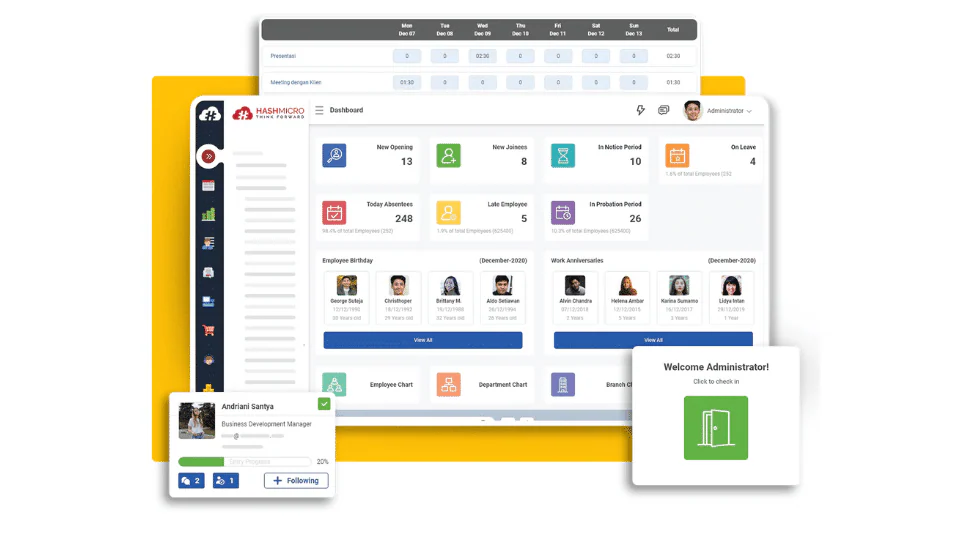
HashMicro HRM is a comprehensive human resource management system designed to simplify and optimize HR operations. It makes it easier for businesses to manage their workforce and ensure compliance with regulations like the Progressive Wage Model (PWM).
By automating key HR functions, HashMicro HRM helps businesses maintain accurate and up-to-date records, reducing the risk of errors and enhancing operational efficiency. Additionally, it provides tools for monitoring employee development, ensuring that businesses can effectively manage career progression.
Here are the key features of HashMicro that can help businesses optimize their HR operations:
- Roster & Dynamic Employee Working Schedule Management: This feature allows businesses to manage and adjust employee schedules efficiently, ensuring that shifts and working hours are optimized according to operational needs and compliance with labor regulations.
- Daily Worker, Hourly Worker Payslip Management: This system automates the calculation and generation of payslips for daily and hourly workers, ensuring accurate wage distribution based on worked hours and agreed rates.
- Approval Delegation with Auto Follow-up Notification: This feature streamlines the approval process by allowing the delegation of tasks with automatic follow-up notifications, ensuring timely approvals, and reducing delays in HR workflows.
- Employee Development: Helps track and manage employee training, skill development, and career growth, ensuring workers progress according to development plans and organizational goals.
- Competency Gap and Competency Match in Evaluation: Allows businesses to assess employee skills by identifying competency gaps and matching them with the required competencies for their roles, enhancing performance evaluations.
- Compliance with Local Regulation: Ensures that HR processes, from payroll to benefits management, are aligned with local labor laws and regulations, reducing the risk of non-compliance and legal issues.
Conclusions
The Occupational Employment Dataset (OED) is a crucial tool for gathering and analyzing labor market data in Singapore, providing insights into employment patterns, wages, and job classifications across various industries.
Utilizing the OED has immense benefits, including enhanced decision-making, improved workforce planning, and better alignment with government policies such as the Progressive Wage Model (PWM).
HashMicro HRM offers a powerful solution to help businesses efficiently manage workforce data, automate compliance tracking, and streamline HR processes. By integrating OED into its system, HashMicro ensures that companies comply with regulations while promoting employee growth and organizational success.
Schedule a free demo today to experience HashMicro HRM’s full potential. Discover how our system can optimize your HR operations and help your business achieve greater efficiency and compliance.
FAQ About Occupational Employment Dataset (OED)
Is the occupational employment dataset mandatory?
All registered businesses must submit updated occupational and employment details for all employees—Citizens, Permanent Residents, and Foreigners—on their payroll to the Ministry of Manpower (MOM).
Who is eligible for PWM?
Who is PWM for? It applies to all worker levels, including lower-wage workers, rank-and-file employees, and Professionals, Managers, and Executives (PMEs).
What is employment data?
National Employment Data: A monthly survey of business payroll records offers insights into employment, hours worked, and earnings of workers nationwide.