















From my experience, inventory management techniques are vital in helping businesses balance supply and demand, prevent stock issues, and reduce unnecessary costs. I’ve seen how outdated methods often lead to discrepancies and missed sales opportunities, which is why adopting modern systems has become essential in today’s complex supply chains.
With the Asia Pacific inventory management software market expected to grow at an impressive 11.9% CAGR by 2030, I believe these systems will continue to play a critical role in driving business success.
In this article, I’ll walk you through 24 key inventory management techniques and share insights on how to choose the right one for your company. If you’d like to see how it works in practice, you can try a free demo from HashMicro today.
Key Takeaways
Inventory management is the process of overseeing and managing a company’s stocked goods.
Businesses must implement practical inventory management techniques to enhance efficiency and accuracy.
Selecting the right techniques of inventory management depends on several factors unique to your business.
HashMicro’s Inventory Management Software is a robust solution to streamline inventory management.
What is Inventory Management?
From my perspective, inventory management is the process of overseeing and controlling stock, starting from purchasing raw materials to selling finished products. I see it as a vital practice that helps businesses maintain the correct stock quantity at the right time, ensuring smooth operations while preventing both shortages and overstocking.
What are the Benefits of Inventory Management?
From my experience, understanding how the right strategy and inventory management system features can streamline workflows is essential. I’ve found that when companies apply these strategies effectively, they gain significant advantages that improve efficiency and overall performance.
Below are some of the key benefits I’ve observed from effective inventory management methods.
- Cost savings: Reduces excess inventory and associated storage costs.
- Increased efficiency: Streamlines operations by automating tasks.
- Improved accuracy: Minimizes errors in inventory counts and order fulfilment.
- Better forecasting: Enhances demand predictions through data-driven insights.
- Customer satisfaction: Ensures products are always available at the right time.
- Inventory optimization: Balances supply and demand.
24 Inventory Management Techniques for Businesses

To optimize your business operations, you need practical techniques to enhance efficiency and accuracy. Here, I outline 24 essential inventory management tools and techniques to help maximize your inventory management processes.
1. ABC analysis
ABC analysis is one of the best inventory management techniques that classify stock into three categories based on importance. It ensures resources are allocated effectively, with high-value items receiving the most attention, optimizing inventory costs.
2. FIFO (First In, First Out)
The FIFO (First In, First Out) inventory management method ensures that older stock is sold first, reducing waste and keeping products fresh. This technique benefits perishable goods or items with a limited shelf life, supporting proper stock rotation.
3. LIFO (Last In, First Out)
LIFO (Last In, First Out) is one of the types of inventory management techniques where the most recently added stock is sold first. It’s often used in industries where prices fluctuate, helping businesses minimize tax liabilities in inflationary times.
4. Inventory management software
Using inventory management software is one of the best types of inventory management techniques for automating processes and tracking stock. It improves accuracy, reduces human error, and increases efficiency.
If you’re looking for the right software, we have curated a list of inventory management software for you to explore. HashMicro is among the best solutions available—click the banner below to explore the pricing schemes and see how it can benefit your business.


5. Safety stock inventory
Safety stock inventory is an effective inventory management technique that involves keeping extra stock on hand to avoid stockouts. It acts as a buffer against unexpected demand spikes or supply chain disruptions.
6. Dropshipping
Dropshipping is a modern inventory management technique where businesses don’t hold inventory but transfer orders to a third-party supplier. This method reduces storage costs and simplifies the supply chain.
7. Cross-docking
Cross-docking is one of the most efficient techniques of inventory management. Incoming shipments are transferred directly to outbound transportation, reducing storage time and streamlining logistics for faster delivery.
8. Just-in-Case (JIC) stock control
JIC stock control maintains excess inventory to prepare for unforeseen demand spikes. This inventory management method prioritizes preparation over cost efficiency and is often used in unpredictable markets.
9. Reorder points
Reorder points are a critical inventory management tool and technique that triggers stock replenishment when levels fall below a certain threshold. This technique helps businesses avoid stockouts by ordering just in time.
10. PAR levels
Setting par levels is one of the effective inventory management techniques where a minimum stock threshold is established. Once inventory falls below this level, businesses know to reorder to maintain operations smoothly.
11. Batch tracking
Batch tracking allows businesses to trace products to specific production batches, helping with recalls or quality control report. This inventory management method ensures accountability and traceability throughout the supply chain.
12. Consignment inventory
Consignment inventory involves suppliers retaining ownership of stock until the retailer sells it. This inventory management method lowers the retailer’s financial risk while ensuring continuous product availability.
13. Cycle counting
Cycle counting is an inventory management technique that involves counting portions of inventory regularly rather than conducting full-scale audits. This method increases accuracy and reduces the disruption caused by traditional inventory checks.
14. Minimum Order Quantity (MOQ)
The Minimum Order Quantity (MOQ) is a key inventory management technique in which a minimum purchase quantity is set to ensure cost efficiency. This helps businesses maintain profitable margins while meeting supplier requirements.
15. Demand forecasting
Demand forecasting uses historical data to predict future inventory needs. It’s a robust inventory management tool that helps businesses maintain optimal stock levels and meet customer demand efficiently.
16. Material Requirements Planning (MRP)
MRP is one of the most important techniques of inventory management that calculates material needs based on production schedules. It ensures raw materials are available for manufacturing while minimizing excess inventory.
17. Economic Order Quantity (EOQ)
EOQ is a formula-based inventory management method that helps businesses determine the optimal order size to minimize costs. It balances ordering and holding costs, ensuring efficient inventory replenishment.
18. Weighted average cost
The weighted average cost inventory management method calculates the cost of goods based on the average price of all items. It’s commonly used to smooth out price fluctuations and provide a stable cost basis for stock valuation.
19. Vendor Managed Inventory (VMI)
In VMI, suppliers are responsible for managing and replenishing retailer inventory levels. This inventory management technique improves supply chain efficiency by reducing the retailer’s need to monitor stock levels closely.
20. Perpetual inventory management
Perpetual inventory system tracks stock as sales and purchases occur. This inventory management method provides businesses with up-to-date stock data, improving accuracy and decision-making.
21. Six sigma and lean six sigma
Six Sigma focuses on reducing waste and errors in inventory management. Lean Six Sigma combines these principles with continuous improvement, helping businesses streamline operations and improve efficiency.
22. Bulk shipping
Bulk shipping involves purchasing and shipping large quantities of stock at once to reduce overall shipping costs. This inventory management tool is ideal for companies looking to minimize transportation expenses.
23. Just-in-Time (JIT)
JIT is one of the most effective inventory management techniques, where stock is ordered just in time to meet demand. This reduces holding costs and minimizes excess inventory, improving cash flow and efficiency.
24. Batch tracking
Batch tracking ensures each group of products is monitored throughout the supply chain. This inventory management method is essential for industries where quality control and traceability are priorities, like pharmaceuticals or food.
Which Inventory Management Techniques Does Your Business Need?

In my experience, selecting the right inventory management techniques depends on several factors that are unique to your business. I’ve learned that understanding these factors is crucial to implementing the most effective strategies for managing inventory efficiently.
Here are the key factors I consider when guiding this decision:
Size and complexity of operations
- Larger businesses with multiple locations may need advanced systems like perpetual inventory management.
- Smaller businesses can benefit from more straightforward methods such as FIFO or cycle counting.
Nature of products
- Perishable goods or items with a limited shelf life should use FIFO or batch tracking techniques.
- Non-perishable items can be managed with methods like JIT or ABC analysis to optimize stock.
Current resources and technology:
- Businesses with the necessary infrastructure can implement automated systems like cloud based inventory management software or VMI.
- Companies with limited resources may prefer straightforward techniques like reorder points or minimum order quantities.
Storage capacity:
- Businesses with limited storage space may benefit from JIT or drop shipping to reduce inventory on hand.
- Companies with ample storage can use bulk shipping or EOQ to maximize cost savings.
Budget constraints:
- Businesses with limited budgets might opt for basic techniques like cycle counting or ABC analysis.
- Companies with larger budgets could invest in automated solutions like inventory management software.
HashMicro as an All-in-One Inventory Management Solution
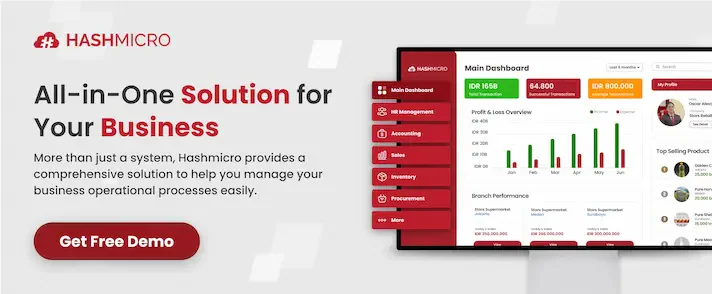
Inventory software is a powerful tool that streamlines the entire inventory management process. I’ve seen how automating tasks like tracking stock levels, managing orders, and forecasting demand can give businesses real-time visibility and greater control over their operations.
To help you get started, I recommend trying HashMicro’s free product tour and consultation. You’ll be able to explore the system’s capabilities firsthand and receive expert guidance to tailor the solution to your specific business goals.
Having worked with trusted brands such as McDonald’s, Toyota, and Hino, I’ve witnessed how HashMicro consistently delivers reliable and scalable inventory management solutions across various industries. Its proven track record reflects a strong commitment to efficiency and long-term success.
Features:
- Stock Forecasting: This feature uses data-driven insights to predict inventory needs, helping businesses maintain the right stock levels and avoid overstocking or stockouts.
- Stock Optimizer per Warehouse: This feature helps manage stock across multiple warehouses by optimizing stock levels in each location.
- Run Rate Reordering Rules: Automates reordering based on stock consumption, ensuring timely replenishment and preventing stock shortages.
- FEFO (First Expiry, First Out): Ensures that products nearing expiration are sold or used first, reducing waste and improving inventory turnover for perishable goods.
- Stock Reservations & Reporting: Manages stock allocation efficiently by reserving items for orders and generating detailed reports for better inventory visibility and control.
- Stock Aging Report: This inventory report tracks how long inventory has been in stock, helping businesses identify slow-moving items and reduce the risk of obsolescence.
- Integrated with Barcode & QR Code: This feature also connects with inventory tracking software, optimizing accuracy by automating data entry and allowing for quicker stocktaking, while reducing human errors.
“Effective inventory management techniques are the backbone of operational efficiency. By applying methods like ABC analysis, Just-In-Time, and safety stock optimization, businesses can strike the perfect balance between supply and demand”
— Angela Tan, Regional Manager
Conclusion
Inventory management techniques are crucial to optimize stock levels, reduce costs, and improve efficiency. Implementing the right strategies can help businesses meet customer demand, leading to long-term success and growth.
From my experience, HashMicro Inventory Management Software is an all-in-one tool that streamlines operations. Its automation and real-time data make it easier to monitor inventory and make smarter business decisions.
Ready to take control of your inventory? Sign up for a free demo with HashMicro today and experience how our solution can transform your business.

FAQ About Inventory Management Techniques
What are the 5 elements of inventory management?
The five key elements of inventory management are:
- Demand Forecasting
- Stock Tracking
- Inventory Optimization
- Replenishment
- Reporting
What are the 4 inventory methods?
The four main inventory methods are:
- FIFO (First In, First Out)
- LIFO (Last In, First Out)
- Weighted Average Cost
- Specific Identification
What is the most common method of inventory management?
The most common method of inventory management is FIFO (First In, First Out). It ensures that older stock is used or sold first, helping businesses prevent spoilage, manage perishable goods, and maintain inventory freshness.