















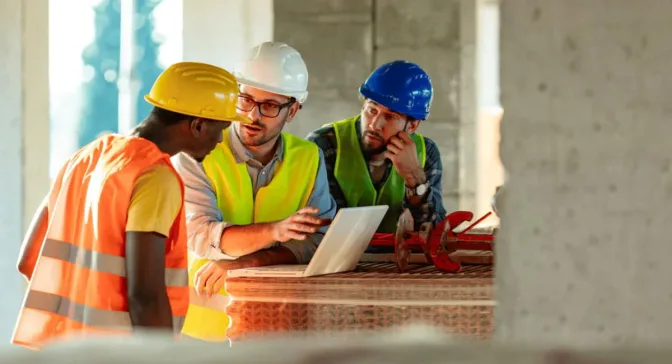
ERP software in construction is a system used to manage every construction business process such as tracking sub-contractors, building materials, human resources, and other operational costs that do not appear on the daily balance sheet in the construction industry. ERP in construction can increase both the overall profitability and employee productivity of your business.
Eventually, you will have the accuracy, control, and visibility to determine whether the project will be profitable or not. Construction companies require advanced ERP software solutions to help them optimize workflows throughout all departments.
ERP software was developed to provide solutions for all sizes and types of businesses, not just large companies. It provides a wide range of integrated solutions to support all aspects of the construction industry.
ERP solution consists of features that help integrate core business processes, such as accounting and financials, project management, inventory management, payroll, human resource management, and more. In this article, we will try to get a better understanding of this software and what benefits it could bring to your company.
What is ERP in Construction?

ERP (Enterprise Resource Planning) in construction software is a software or system used by companies to manage their daily business activities such as employees, procurement, project management, and human resources financial management. It’s also able to facilitate business from data generated in real-time so that it can help make the right business decisions.
A complete ERP in construction also can assist in planning, budgeting, predicting, and reporting on a construction company’s financial results. This system will also provide transparency into your complete business process by tracking all aspects of production, logistics, and financials. Integrated ERP systems act as a business’s central hub for end-to-end workflow and data, allowing a variety of departments to access it.
The cloud-based ERP software connects and binds various business processes within an organization so that everything can run smoothly, efficiently, and productively, with its ultimate goal being business growth and making it profitable. Moreover, ERP systems support multiple functions across the enterprise, mid-sized, or small businesses, including customizations for your industry.
Also Read: 6 Main Benefits of ERP Software in the Construction Industry
What are the Main Features of ERP in Construction?

Similar to any other industry, the construction industry has its own set of requirements and challenges. The following is a list of all the required construction resources:
Human resources:
The workforce is the most essential resource in the construction industry. The people behind the project are the ones who make it a reality. The construction industry requires the following essential roles:
- Estimator: The estimator is responsible for estimating the costs, materials, and labor needed to complete a project.
- Architect: The architect’s job is to envision the client’s needs and develop a creative solution in a blueprint.
- Supervisor: The supervisor acts as an intermediary between the field workers and the management office. They ensure effective communication between the two parties.
- Quantity Surveyor: The quantity surveyor provides the client with advice on building costs and contractual matters throughout the building process and acts as a consultant to the architect.
- Engineer: Engineers are essential on construction sites and may specialize in areas, such as building, electrical, mechanical, highway, and other fields. Civil engineers, for example, use computer software technology to create project plans. Electrical engineers keep an eye on the project’s power needs and make sure there are no potential hazards.
- Construction Worker: Every project relies on the contributions of construction workers. After successfully planning the project, the workers get their hands dirty to make it a reality.
Equipment:
Construction projects necessitate the use of heavy machinery. The selection of the equipment depends on the time and cost of the project. Some of the heavy equipment used in construction projects are bulldozers, excavators, cranes, trenchers, etc.
Materials:
Materials such as wood, cement, metals, bricks, concrete, clay, etc., are the most common type of building materials used in construction. Selection criteria such as cost-effectiveness and quality play a significant role.
Facilities:
Facilities not only improve workers’ welfare but also enhance efficiency. As per the CDM regulations, all construction sites must include the following facilities:
- Living accommodations for the workers.
- Sanitary and toilet facilities.
- Drinking water facilities.
- Changing rooms and lockers.
- Canteen.
How to Choose a Construction ERP System
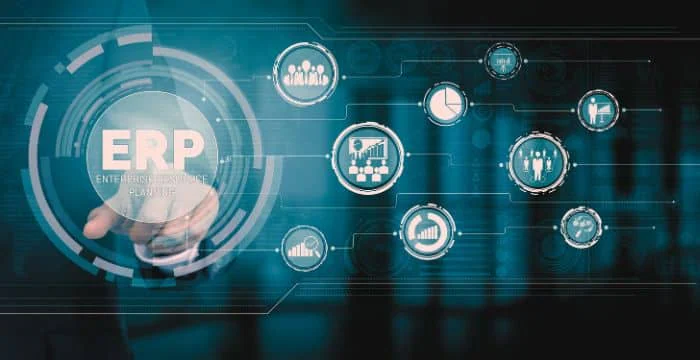
Choosing the right construction Enterprise Resource Planning (ERP) system is crucial for the success and efficiency of any construction project. When selecting a construction ERP system, here are several factors to consider:
Evaluate the scalability
When choosing a construction ERP system, it is important to ensure that the system can adapt to the size and complexity of construction projects, while also accommodating future growth and changing business requirements. Moreover, you should look for a system that supports multi-site or multi-company operations, particularly if the construction company operates in different locations.
Look for integration capabilities
Integration capabilities are another vital aspect to consider. A construction ERP system should seamlessly integrate with other software solutions that you already use, for example accounting software, project management tools, and document management systems. This integration will definitely benefit you as it enables smooth data flow and eliminates the need for duplicate data entry.
Consider the user-friendliness and ease of implementation
It is also important to consider the user-friendliness and ease of implementation of the ERP system. The system should be intuitive and easy to navigate, catering to the needs of both technical and non-technical users. Additionally, it is advisable to seek a vendor who offers comprehensive training and ongoing support to ensure a smooth implementation process and encourage user adoption.
Best ERP Software in Construction Industry
If you’re interested in investing in excellent ERP construction software, there are several best ERP you can find in the industry. Here are some recommendations.
HashMicro
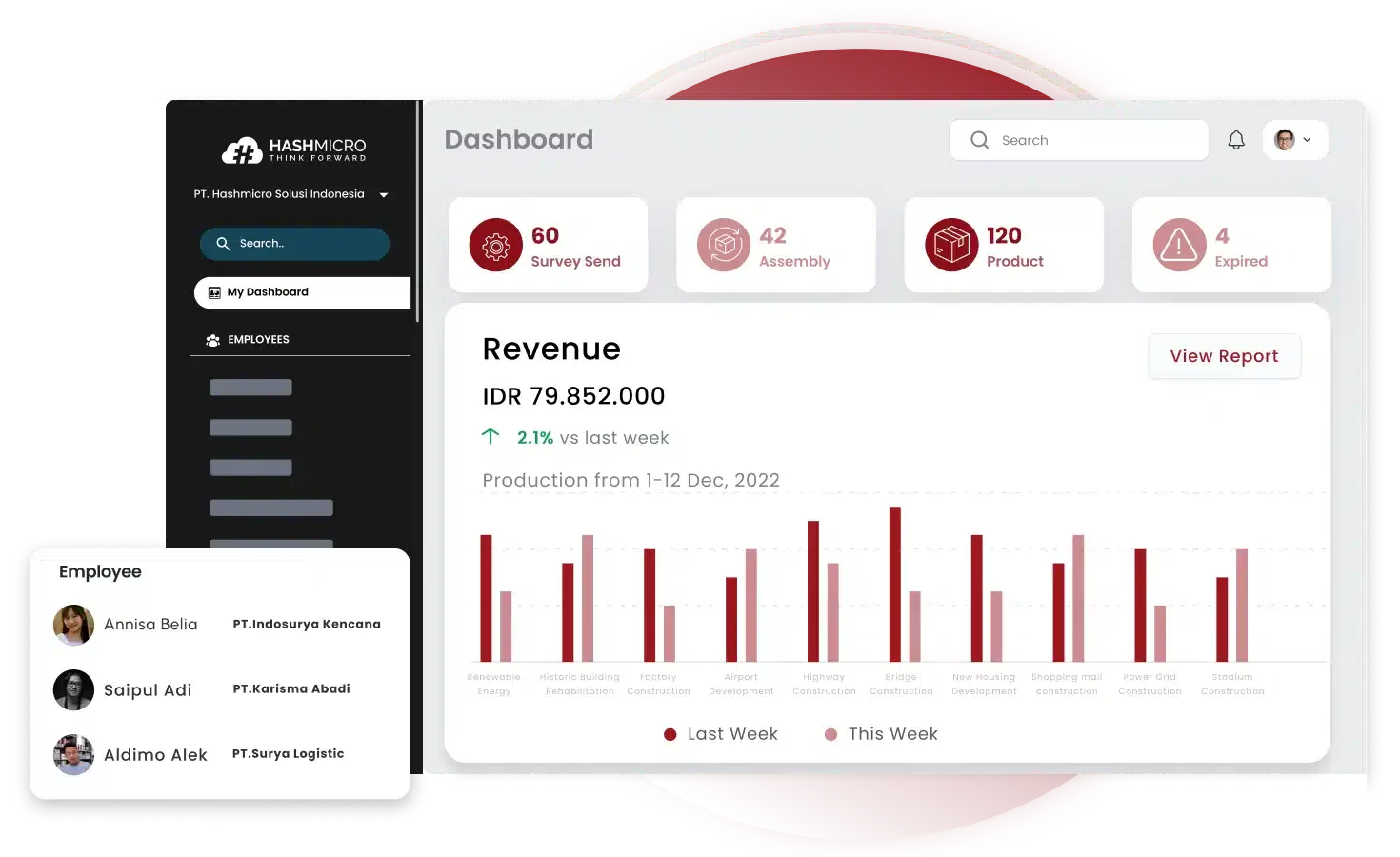
The reliability and effectiveness of HashMicro’s ERP software are further evidenced by the trust it has garnered from notable companies and institutions. Among its esteemed clientele are industry giants and prominent organizations like Danone, UOB, and the Singapore Ministry of Education. This widespread acceptance and trust is not limited to a single region; HashMicro has successfully established its presence and reputation in multiple countries, including Singapore and Indonesia, showcasing its global appeal and adaptability to various business environments and regulatory landscapes.
In summary, HashMicro’s ERP solution emerges as a comprehensive, flexible, and highly integrable system, making it an optimal choice for businesses in the construction industry and beyond. Its proven track record with prestigious clients and its international presence underscore its status as a leading ERP provider, capable of meeting the complex and evolving needs of modern enterprises.


Oracle
This software can present data in real-time with graphical indicators, including reports displayed on the dashboards and work areas. Companies can use this software for business operations, financial management, inventory, purchasing, sales, and customer relationships besides accounting.
In addition, Oracle is completely customizable and built to support any scale of business. As your company grows, it’s simple to add new features and resources. As a result, this ERP in construction is ideal for mid-sized businesses that plan to expand in the future.
Microsoft dynamic
Microsoft Dynamics 365 is a combination of ERP software and CRM software that allows businesses to centralize their customer data and business insights. This ERP feature can help you integrate and increase productivity, such as sales, marketing, and customer service even though it can be managed by this software.
The software offers a variety of products based on your company’s requirements. Other Microsoft applications, such as Power BI, Microsoft Teams, and Power Automate, are also easily integrated with Dynamics 365 to collect more data from all over the company.
SAP
SAP has various ERP solutions that allow customers to manage their business processes in an integrated solution, with data from every module generated in a centralized database. Good integration and general data storage help to carry out the financial, process, and legal controls by assuring that the data flows from one element to another without the need for unnecessary data entry.
Sage
 This ERP software in construction is suitable for small to large-scale businesses. The benefit is that it can assist your company in addition to increasing growth and scaling. Sage ERP is also categorized as a system that is quite efficient in carrying out the performances of all management efficiency, improvement of business management processes such as fixed assets, customer relationship management, and human capital management.
Procore
Procore is a construction ERP software that is known for its ease of use. It provides a range of functionalities for managing construction projects, resources, and financials. Procore aims to connect all project contributors, including owners, general contractors, and specialty contractors, with industry-specific solutions.
It caters to a mix of mid-market and small-business segments, enabling their teams to communicate and collaborate effectively. Procore also offers access to the necessary information for project managers and engineers in the construction and architecture & planning industries.
Also Read: Revolutionize Industry with The Construction ERP Software
Acumatica
Acumatica is a construction ERP software aiming to provide a business management solution for companies seeking digital resilience. It emphasizes rapid integrations, remote collaboration, and business resilience. Overall, this platform is designed for growing small and mid-market organizations, catering to industries such as construction and accounting.
BuildTopia
BuildTopia is a construction software that offers integration with popular accounting software options, allowing for real-time visibility and informed decision-making. With features such as project scheduling, sales management, document management, and more, BuildTopia provides the necessary tools to streamline the construction process.
Archdesk
This software is a business management platform specifically tailored for the construction industry, mainly serving small and mid-market businesses in the construction sector. This solution is designed to optimize workflows and automate processes based on your specific business operations. Archdesk also provides a consolidated view of your information with its real-time data integration and customizable dashboards.
Corecon
Corecon is a software suite specifically designed for engineering and construction firms. With a cloud-based approach, this software aims to enhance project management efficiency for users across different roles and locations. It provides access to project information anytime, anywhere, allowing contracting firms to make informed decisions on the go.
Computer Guidance Corp

This cloud-hosted construction enterprise resource planning (ERP) software offers financial and project management, business intelligence, mobile capabilities, and enterprise content management. It aims to assist commercial contractors in managing their financials and operations, covering all aspects of project management.
Extracker
Extracker is a construction software solution that focuses on change order communication. With a user-friendly cloud-based platform, Extracker aims to facilitate communication between general contractors, specialty contractors, and owners regarding change order requests and time and material tags. It offers features such as digital time and material tags and change order templates to simplify the process.
Also Read: 5 Important Software Systems for Construction Companies
AccuBuild
AccuBuild is a construction business management software, offering fully integrated solutions to assist contractors in making informed decisions and gaining a competitive edge.
Designed to meet the needs of executives, accounting staff, project managers, and field staff, AccuBuild aims to improve business performance and profitability through tailored insights and strategies.
Premier Construction Software

Premier Construction Software is a solution designed for the construction industry. It is specifically tailored to cater to the needs of general contractors, construction management firms, land developers, and homebuilders. The software features integrated modules for accounting, billing, time and expense tracking, reporting, and more.
RedTeam Flex
This construction management software offers reliable performance and standard features as RedTeam Flex aims to provide a straightforward experience for construction ERP software users.
It is positioned as an entry-level solution with a focus on small businesses in the construction industry. In addition to the software itself, RedTeam Flex also offers basic training and support resources to ensure users can effectively utilize the platform.
Conclusion
Businesses are constantly attempting to use company resource management, they always struggle to balance all of the various practices by sacrificing resources somewhere else. However, with the right ERP system technology in place, it can provide significant practical advantages in order to keep your business on track.
The ERP in construction enables you to connect all business lines within a construction company. Specialized ERP system advancement can assist your business in transitioning away from old systems and achieving maximum productivity and efficiency.

With a growing number of modules offered, integrated ERP software becoming more complex. It also involves more people in the ERP software development process, which then affects the cost of its establishment. Our company provides the best ERP software solutions to assist your company in streamlining your business processes and significantly enhancing your company’s growth. Click here to get a free demo for our product tour now!